Discover what is micro event planning and how to create impactful gatherings. Learn strategies for meaningful, personalized experiences.
TL;DR:
• Micro event planning involves designing small gatherings of 10 to 50 people focused on meaningful interaction and one clear objective. It emphasizes quality over quantity, with detailed attention to ambiance, guest list, and post-event follow-up to ensure impactful experiences. Proper planning, including a budget buffer and tailored atmosphere, is essential for success at this intimate scale.
Micro event planning is the process of designing and executing intimate, targeted gatherings of 10 to 50 attendees that deliver meaningful, personalized experiences and focused outcomes. Unlike large conferences or galas, micro events prioritize depth of connection over breadth of attendance. The industry term used by destination management professionals is “micro event,” though you may also see it called an intimate gathering or small-scale event. Whether you are organizing a private workshop, a corporate roundtable, or a curated dinner party, understanding what is micro event planning gives you a clear framework to work from.
Micro event planning is a specialized discipline focused on small, high-impact gatherings rather than mass attendance. The core difference from traditional event planning is scale and intent. A large conference might host hundreds of attendees across multiple sessions. A micro event hosts a focused group around one clear objective, one audience, and one outcome.
The logistical footprint shrinks considerably. Venue requirements are smaller, catering orders are simpler, and staffing needs are reduced. However, the pressure on quality increases. Every detail becomes visible at this scale, from the seating arrangement to the sound level in the room.
Budgeting works differently too. A 10–15% contingency buffer is the recommended standard for small-scale events. That buffer covers last-minute upgrades, vendor changes, or unexpected guest needs. Without it, a single change can derail the entire budget.
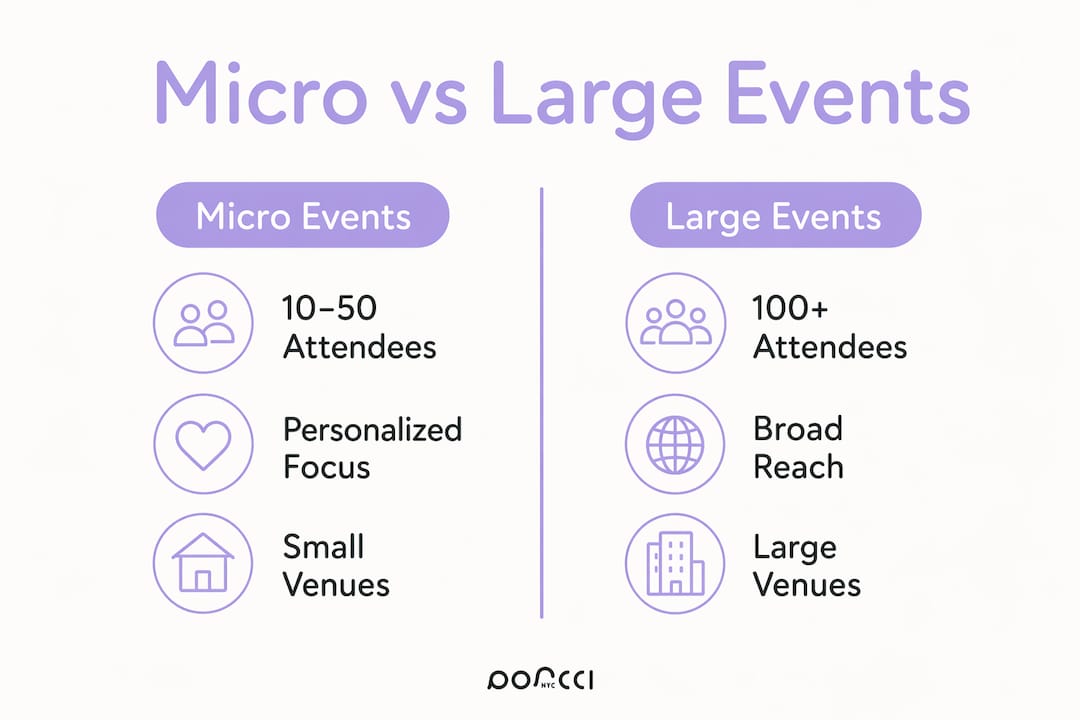
| Feature | Micro events | Large-scale events |
|---|---|---|
| Attendee count | 10–50 | 100+ |
| Primary focus | Personalized interaction | Broad reach and volume |
| Venue size | Intimate spaces | Convention halls, ballrooms |
| Budget flexibility | Higher per-head spend | Economies of scale |
| Logistics complexity | Lower overall, higher per detail | High overall, more standardized |
Pro Tip: When planning a micro event, resist the urge to fill every seat. A room at 80% capacity feels alive and social. A room at 100% capacity feels crowded and stressful.
Micro events deliver advantages that large gatherings structurally cannot. The benefits are not just about cost. They are about the quality of what attendees experience and remember.
• Deeper engagement. Groups of 3–8 people enable more authentic conversation and trust building. Every voice gets heard. Attendees leave feeling genuinely connected rather than lost in a crowd.
• Precise targeting. A micro event focuses on one audience and one problem. That focus makes the content more relevant and the outcomes more measurable.
• Lower resource requirements. Smaller guest lists mean lower catering costs, reduced venue fees, and fewer staff hours. You can redirect those savings toward higher-quality experiences per attendee.
• Flexibility in format. Micro event formats include workshops, roundtables, private demos, and intimate dinners. Each format can be tailored to the specific goal without the constraints of a large-scale production.
• Stronger follow-up potential. With fewer attendees, post-event outreach is personal and specific. You know exactly who attended, what they discussed, and what they need next.
For organizers planning entertainment-driven gatherings, a cultural music experience can add a distinctive layer of personalization that larger events rarely achieve.
A clear planning sequence prevents the most common mistakes. Follow these steps from the start.
1. Define your audience and goal. Identify exactly who you are inviting and what single outcome the event must deliver. Vague goals produce vague events.
2. Choose the right format and venue. Match the format to the goal. A roundtable suits peer discussion. A private demo suits product education. Select a venue that fits 10–50 people comfortably without excess empty space.
3. Build a focused agenda. Keep the program tight. Include at least one interactive element, such as a Q&A, group exercise, or facilitated discussion. Passive listening does not build connection at this scale.
4. Manage invitations carefully. Send personalized invitations rather than mass emails. Collect dietary restrictions, accessibility needs, and any preferences that affect the experience.
5. Budget with a contingency. Use a structured budget approach and build in the recommended 10–15% buffer from the start, not as an afterthought.
6. Plan your data capture before the event. Designing follow-up capture in advance is the only reliable way to verify that your event goals were met. Decide what attendee information you need and how you will collect it before anyone walks through the door.
7. Follow up with purpose. Send a personalized message within 48 hours. Reference specific conversations or moments from the event to reinforce the connection.
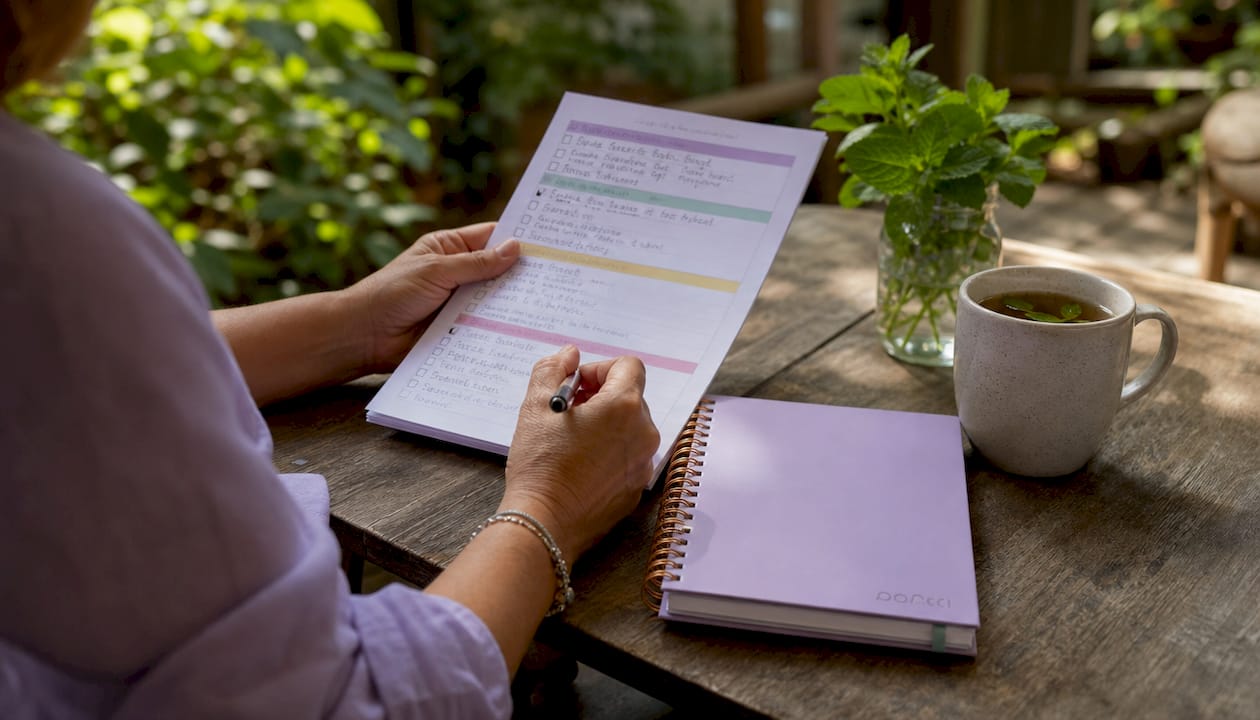
Pro Tip: Use a micro event planning checklist to track every detail from venue confirmation to post-event follow-up. At this scale, one missed item is noticeable.
Micro events come with a specific set of pitfalls. Knowing them in advance keeps your event on track.
• Overstressing the host. At small gatherings, the host is often visible throughout the entire event. Offloading day-of logistics to a coordinator or vendor frees the host to focus on guests.
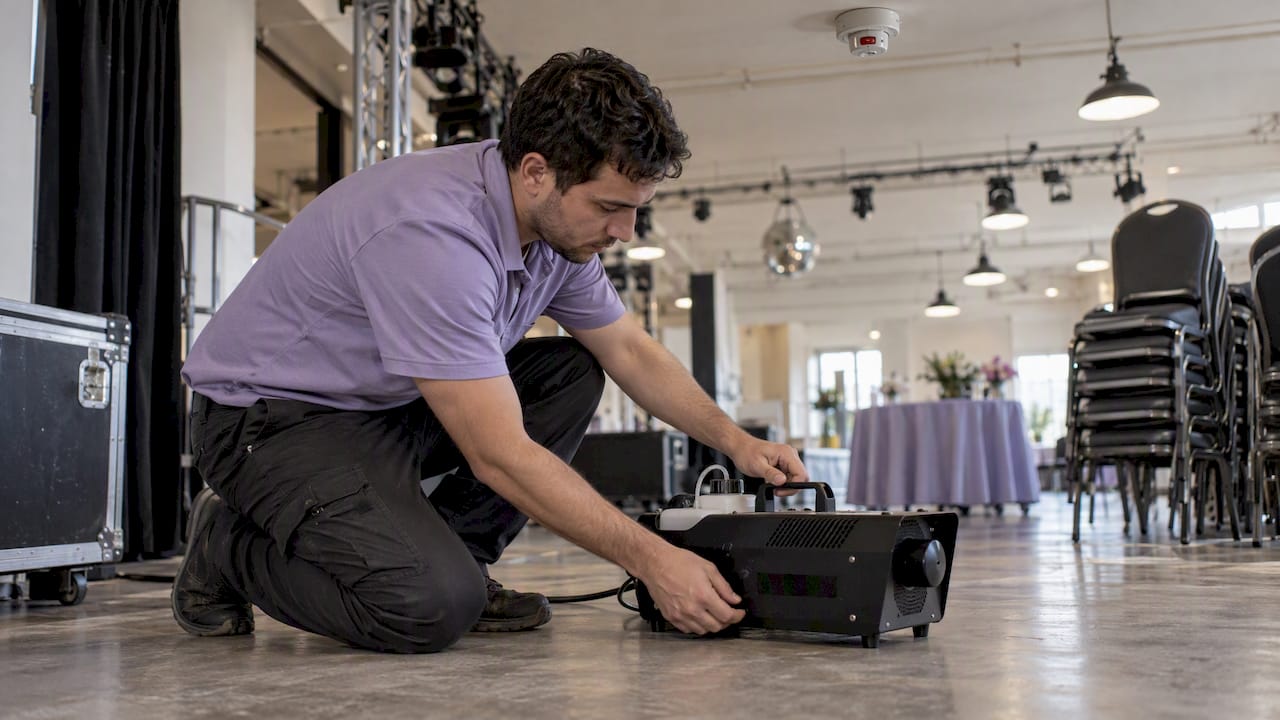
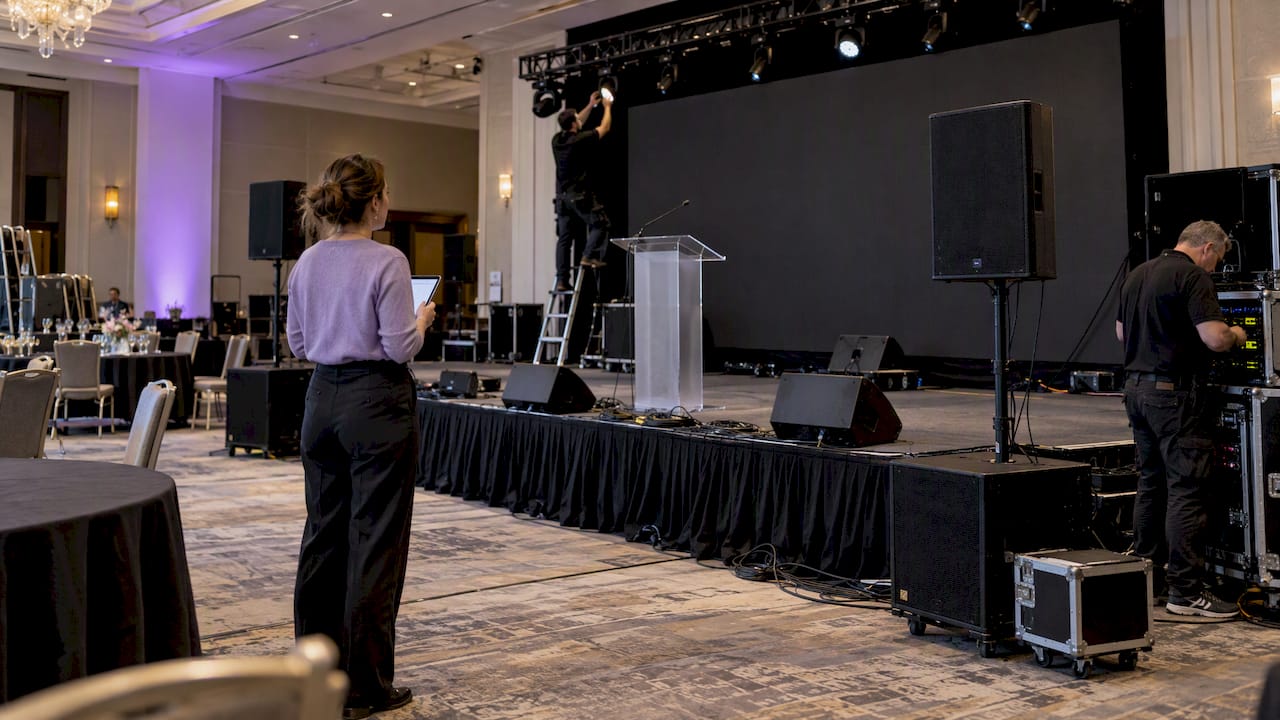
• Neglecting ambiance. Lighting, sound, and scent shape guest perception more powerfully at intimate scale than at large events. A poorly lit room or muddy audio kills the mood immediately. Investing in quality event atmosphere elements pays off directly in guest experience.
• Skipping measurable outcomes. Without defined success metrics, you cannot prove the event delivered value. Set two or three measurable outcomes before the event date.
• Under-curating the guest list. The wrong mix of attendees disrupts the dynamic. For intimate dinner formats, eight guests is considered optimal for conversation flow. Prioritize fit over filling seats.
• Ignoring technology tools. Registration platforms, event apps, and AV management tools reduce day-of friction. Even at small scale, the right technology keeps the flow moving.
“The most common mistake in micro event management is treating a small event like a scaled-down large event. Micro events require a fundamentally different mindset: every detail is amplified, every interaction is intentional, and every attendee matters individually.”
Micro event planning succeeds when organizers prioritize intentional design, precise targeting, and quality execution over attendance volume.
| Point | Details |
|---|---|
| Core definition | Micro events host 10–50 attendees focused on one clear goal or audience. |
| Budget discipline | Always build a 10–15% contingency buffer into your micro event budget. |
| Ambiance matters | Lighting, sound, and atmosphere have outsized impact at intimate scale. |
| Pre-plan data capture | Decide what attendee information to collect before the event, not after. |
| Guest list curation | Prioritize the right mix of attendees over maximizing headcount. |
Micro events reward intentionality in a way that large productions rarely do. We have seen firsthand that the guest list is the single most consequential decision in the entire planning process. Get the mix right and the event runs itself. Get it wrong and no amount of great food or lighting will fix the dynamic.
The second lesson is about follow-up. Most organizers treat post-event outreach as optional. We treat it as part of the event itself. The connection made in the room only compounds if you reinforce it within 48 hours. Attendees remember how you followed up just as clearly as they remember the event.
Atmosphere is the third factor that separates good micro events from great ones. Sound quality, lighting warmth, and even the scent of a room signal to guests whether they are in a thoughtful, curated space or a generic one. These details cost less than most planners expect and deliver more than most planners realize.
The demand for micro events has grown steadily as hybrid and remote work has made in-person connection feel more deliberate and valuable. When people do gather physically, they expect the experience to justify the effort. A well-planned micro event does exactly that.
— PORCCI
Professional audio and visual equipment makes a measurable difference in how guests experience a micro event. At Porcci NYC, we offer AV rental solutions specifically suited to intimate venues and small-group setups across New York City and New Jersey. Our equipment options include compact sound systems, professional lighting rigs, and microphone setups that fit rooms of any size without overwhelming the space. We handle delivery, setup, and breakdown so your focus stays on your guests. For planners in Brooklyn or Jersey City, we also offer local AV rentals with the same professional standard. Contact Porcci NYC for a custom quote tailored to your event size and venue.
Micro event planning is the process of organizing small, focused gatherings of 10 to 50 attendees around one clear goal or audience, prioritizing quality interaction over volume.
A micro event typically hosts between 10 and 50 participants. For intimate dinner formats, 8 guests is considered optimal for natural conversation flow.
Common micro event formats include private workshops, corporate roundtables, intimate dinners, product demos, and small networking sessions, each built around one specific objective.
Micro events focus on personalized, high-quality interaction for a small group, while large events prioritize broad reach and volume across a much larger attendee base.
A 10–15% contingency buffer protects against last-minute logistics changes or upgrades that are more visible and impactful at small scale than at large events.
Discover what is micro event planning and how to create impactful gatherings. Learn strategies for meaningful, personalized experiences.
TL;DR:
• Micro event planning involves designing small gatherings of 10 to 50 people focused on meaningful interaction and one clear objective. It emphasizes quality over quantity, with detailed attention to ambiance, guest list, and post-event follow-up to ensure impactful experiences. Proper planning, including a budget buffer and tailored atmosphere, is essential for success at this intimate scale.
Micro event planning is the process of designing and executing intimate, targeted gatherings of 10 to 50 attendees that deliver meaningful, personalized experiences and focused outcomes. Unlike large conferences or galas, micro events prioritize depth of connection over breadth of attendance. The industry term used by destination management professionals is “micro event,” though you may also see it called an intimate gathering or small-scale event. Whether you are organizing a private workshop, a corporate roundtable, or a curated dinner party, understanding what is micro event planning gives you a clear framework to work from.
Micro event planning is a specialized discipline focused on small, high-impact gatherings rather than mass attendance. The core difference from traditional event planning is scale and intent. A large conference might host hundreds of attendees across multiple sessions. A micro event hosts a focused group around one clear objective, one audience, and one outcome.
The logistical footprint shrinks considerably. Venue requirements are smaller, catering orders are simpler, and staffing needs are reduced. However, the pressure on quality increases. Every detail becomes visible at this scale, from the seating arrangement to the sound level in the room.
Budgeting works differently too. A 10–15% contingency buffer is the recommended standard for small-scale events. That buffer covers last-minute upgrades, vendor changes, or unexpected guest needs. Without it, a single change can derail the entire budget.
| Feature | Micro events | Large-scale events |
|---|---|---|
| Attendee count | 10–50 | 100+ |
| Primary focus | Personalized interaction | Broad reach and volume |
| Venue size | Intimate spaces | Convention halls, ballrooms |
| Budget flexibility | Higher per-head spend | Economies of scale |
| Logistics complexity | Lower overall, higher per detail | High overall, more standardized |
Pro Tip: When planning a micro event, resist the urge to fill every seat. A room at 80% capacity feels alive and social. A room at 100% capacity feels crowded and stressful.
Micro events deliver advantages that large gatherings structurally cannot. The benefits are not just about cost. They are about the quality of what attendees experience and remember.
• Deeper engagement. Groups of 3–8 people enable more authentic conversation and trust building. Every voice gets heard. Attendees leave feeling genuinely connected rather than lost in a crowd.
• Precise targeting. A micro event focuses on one audience and one problem. That focus makes the content more relevant and the outcomes more measurable.
• Lower resource requirements. Smaller guest lists mean lower catering costs, reduced venue fees, and fewer staff hours. You can redirect those savings toward higher-quality experiences per attendee.
• Flexibility in format. Micro event formats include workshops, roundtables, private demos, and intimate dinners. Each format can be tailored to the specific goal without the constraints of a large-scale production.
• Stronger follow-up potential. With fewer attendees, post-event outreach is personal and specific. You know exactly who attended, what they discussed, and what they need next.
For organizers planning entertainment-driven gatherings, a cultural music experience can add a distinctive layer of personalization that larger events rarely achieve.
A clear planning sequence prevents the most common mistakes. Follow these steps from the start.
1. Define your audience and goal. Identify exactly who you are inviting and what single outcome the event must deliver. Vague goals produce vague events.
2. Choose the right format and venue. Match the format to the goal. A roundtable suits peer discussion. A private demo suits product education. Select a venue that fits 10–50 people comfortably without excess empty space.
3. Build a focused agenda. Keep the program tight. Include at least one interactive element, such as a Q&A, group exercise, or facilitated discussion. Passive listening does not build connection at this scale.
4. Manage invitations carefully. Send personalized invitations rather than mass emails. Collect dietary restrictions, accessibility needs, and any preferences that affect the experience.
5. Budget with a contingency. Use a structured budget approach and build in the recommended 10–15% buffer from the start, not as an afterthought.
6. Plan your data capture before the event. Designing follow-up capture in advance is the only reliable way to verify that your event goals were met. Decide what attendee information you need and how you will collect it before anyone walks through the door.
7. Follow up with purpose. Send a personalized message within 48 hours. Reference specific conversations or moments from the event to reinforce the connection.
Pro Tip: Use a micro event planning checklist to track every detail from venue confirmation to post-event follow-up. At this scale, one missed item is noticeable.
Micro events come with a specific set of pitfalls. Knowing them in advance keeps your event on track.
• Overstressing the host. At small gatherings, the host is often visible throughout the entire event. Offloading day-of logistics to a coordinator or vendor frees the host to focus on guests.
• Neglecting ambiance. Lighting, sound, and scent shape guest perception more powerfully at intimate scale than at large events. A poorly lit room or muddy audio kills the mood immediately. Investing in quality event atmosphere elements pays off directly in guest experience.
• Skipping measurable outcomes. Without defined success metrics, you cannot prove the event delivered value. Set two or three measurable outcomes before the event date.
• Under-curating the guest list. The wrong mix of attendees disrupts the dynamic. For intimate dinner formats, eight guests is considered optimal for conversation flow. Prioritize fit over filling seats.
• Ignoring technology tools. Registration platforms, event apps, and AV management tools reduce day-of friction. Even at small scale, the right technology keeps the flow moving.
“The most common mistake in micro event management is treating a small event like a scaled-down large event. Micro events require a fundamentally different mindset: every detail is amplified, every interaction is intentional, and every attendee matters individually.”
Micro event planning succeeds when organizers prioritize intentional design, precise targeting, and quality execution over attendance volume.
| Point | Details |
|---|---|
| Core definition | Micro events host 10–50 attendees focused on one clear goal or audience. |
| Budget discipline | Always build a 10–15% contingency buffer into your micro event budget. |
| Ambiance matters | Lighting, sound, and atmosphere have outsized impact at intimate scale. |
| Pre-plan data capture | Decide what attendee information to collect before the event, not after. |
| Guest list curation | Prioritize the right mix of attendees over maximizing headcount. |
Micro events reward intentionality in a way that large productions rarely do. We have seen firsthand that the guest list is the single most consequential decision in the entire planning process. Get the mix right and the event runs itself. Get it wrong and no amount of great food or lighting will fix the dynamic.
The second lesson is about follow-up. Most organizers treat post-event outreach as optional. We treat it as part of the event itself. The connection made in the room only compounds if you reinforce it within 48 hours. Attendees remember how you followed up just as clearly as they remember the event.
Atmosphere is the third factor that separates good micro events from great ones. Sound quality, lighting warmth, and even the scent of a room signal to guests whether they are in a thoughtful, curated space or a generic one. These details cost less than most planners expect and deliver more than most planners realize.
The demand for micro events has grown steadily as hybrid and remote work has made in-person connection feel more deliberate and valuable. When people do gather physically, they expect the experience to justify the effort. A well-planned micro event does exactly that.
— PORCCI
Professional audio and visual equipment makes a measurable difference in how guests experience a micro event. At Porcci NYC, we offer AV rental solutions specifically suited to intimate venues and small-group setups across New York City and New Jersey. Our equipment options include compact sound systems, professional lighting rigs, and microphone setups that fit rooms of any size without overwhelming the space. We handle delivery, setup, and breakdown so your focus stays on your guests. For planners in Brooklyn or Jersey City, we also offer local AV rentals with the same professional standard. Contact Porcci NYC for a custom quote tailored to your event size and venue.
Micro event planning is the process of organizing small, focused gatherings of 10 to 50 attendees around one clear goal or audience, prioritizing quality interaction over volume.
A micro event typically hosts between 10 and 50 participants. For intimate dinner formats, 8 guests is considered optimal for natural conversation flow.
Common micro event formats include private workshops, corporate roundtables, intimate dinners, product demos, and small networking sessions, each built around one specific objective.
Micro events focus on personalized, high-quality interaction for a small group, while large events prioritize broad reach and volume across a much larger attendee base.
A 10–15% contingency buffer protects against last-minute logistics changes or upgrades that are more visible and impactful at small scale than at large events.