Discover what event production really is and how it shapes successful events in NYC & NJ. Transform your planning today!
TL;DR:
• Event production involves hands-on logistics such as lighting, sound, staging, and on-site coordination.
• Planning should start 6 to 12 months in advance, especially in NYC/NJ due to high demand and logistical complexity.
• Local factors like union labor and permit delays significantly impact budgets and timelines for NYC/NJ events.
Most people assume event production is simply about renting chairs, loading a truck, and setting up a few speakers. That assumption costs NYC and NJ event planners time, money, and a lot of stress. Event production is actually the hands-on logistics and technical execution phase that encompasses everything from lighting design and sound engineering to staging, AV coordination, and live event management, bringing your entire vision to life on the day it matters most. Whether you’re planning a corporate gala in Midtown Manhattan, a wedding in a Brooklyn loft, or a community festival in Jersey City, understanding what production really involves changes how you plan, budget, and execute.
• Defining event production: More than logistics
• Event production phases: What happens when
• Tackling challenges unique to NYC & NJ events
• Making your event vision a reality: Production essentials
• Our perspective: Why real expertise matters in NYC/NJ event production
• Take your NYC/NJ event to the next level with local pros
| Point | Details |
|---|---|
| Event production defined | It’s the hands-on, technical process that brings your event vision to life through logistics, staging, and coordination. |
| Phased process | Successful events follow proven production phases—from planning and vendor selection to on-site execution and wrap-up. |
| Local challenges matter | NYC/NJ presents unique hurdles like union labor and last-minute changes, so tailored preparation is essential. |
| Expertise pays off | Relying on local production experts can save you time, money, and stress—ensuring a flawless event. |
With the basics framed, let’s break down what event production really covers. Many clients come to us having already mapped out their guest list, catering, and invitations, and then ask, “What’s left to handle?” The answer is often the most complex part of the event.
“Event production is the hands-on logistics and technical execution phase of events, encompassing technical setups like lights, sound, staging, AV, and coordination of creative, logistical elements to bring an event vision to life.”
Production is distinct from event planning. Planning is the strategic vision: setting goals, choosing a theme, coordinating vendors at a high level. Production is where that vision becomes physical reality. It’s the team that rigs the trussing, programs the lighting console, runs the soundcheck at 7 a.m., and troubleshoots a feedback loop before guests arrive.
Core production elements include:
• Staging and rigging: Physical structures that give performers and speakers a platform, including risers, backdrops, and pipe-and-drape setups
• Lighting design: Ambient, accent, and dynamic lighting that transforms an empty ballroom into an experience
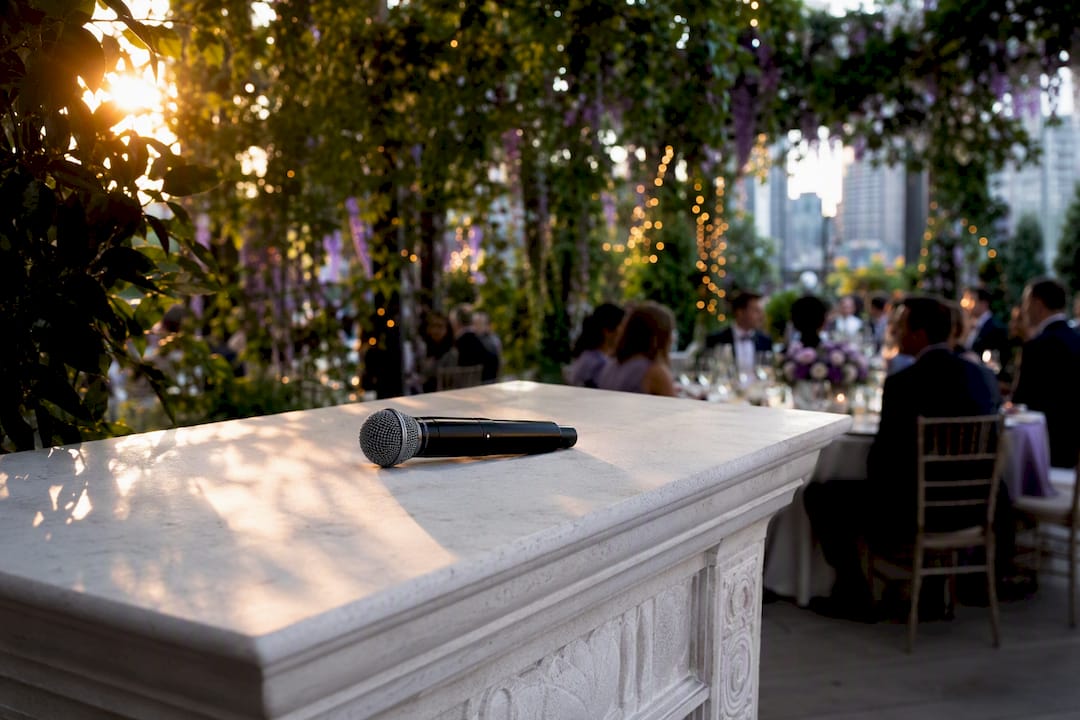
• Sound systems: Speaker arrays, subwoofers, monitors, and mixing consoles calibrated for each unique room
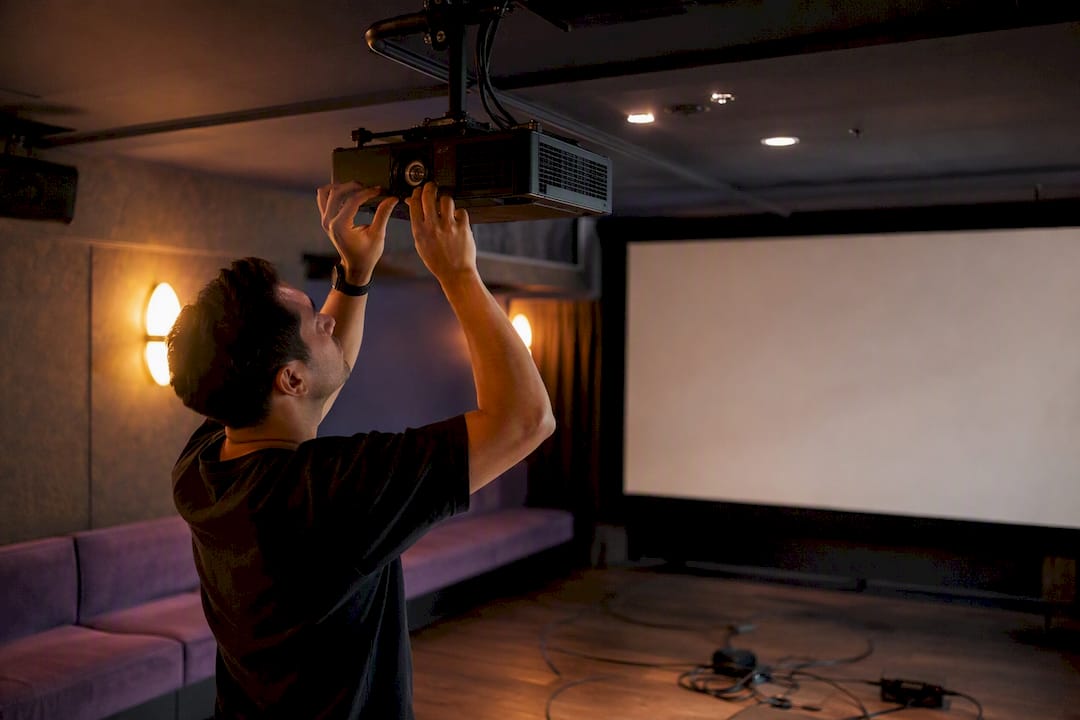
• Audiovisual (AV): Projectors, LED walls, confidence monitors, and video switching for presentations and live feeds
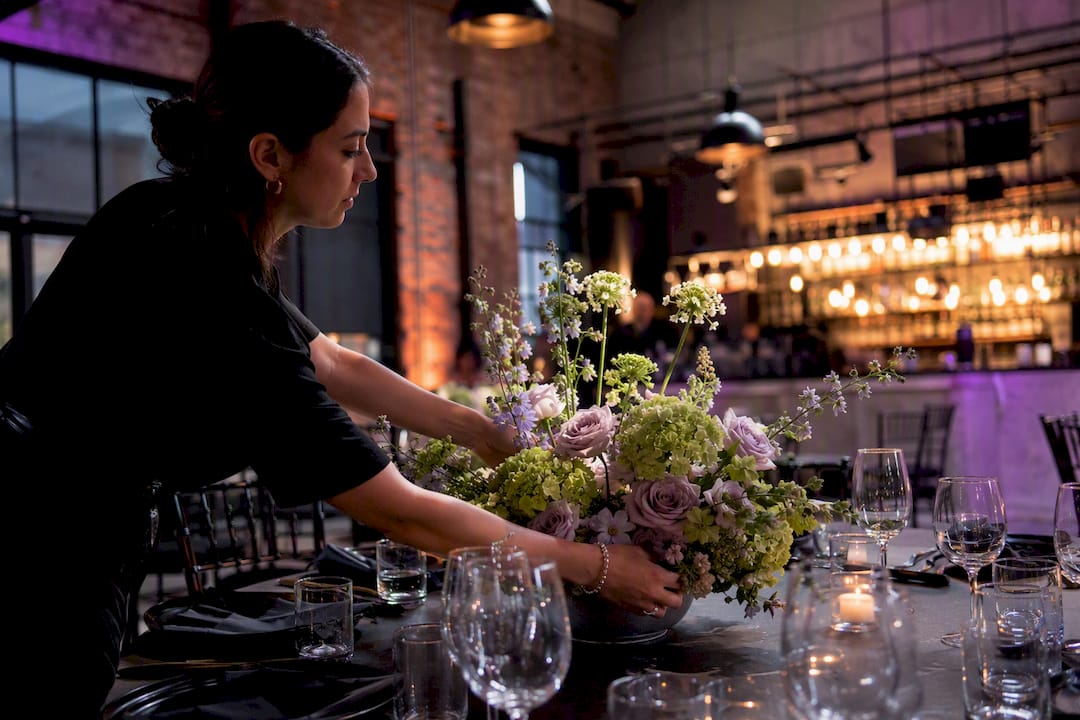
• Decor and environment: Coordination of physical elements that create atmosphere and reinforce the event theme
• Live execution: The real-time management of cues, transitions, and on-site problem-solving
Understanding these event equipment essentials before you begin planning saves you from expensive surprises and vendor misalignment. Production thinking should start early, not two weeks before the event.
Defining the who and what, let’s zoom in on when and how event production unfolds. Production doesn’t start when the trucks arrive. It starts months before the event, often before a venue is even booked.
| Phase | Timeframe | Key focus |
|---|---|---|
| Pre-production | 6 to 12 months out | Goals, budget, venue scouting |
| Concept development | 4 to 6 months out | Theme, design, creative direction |
| Production preparation | 2 to 3 months out | Technical planning, vendor contracts |
| Final preparation | 1 month out | Rehearsals, run-of-show documents |
| Execution | Event day | Live coordination and troubleshooting |
| Post-event | After the event | Breakdown, debrief, vendor payments |
The phased production timeline above is the industry standard, but in NYC and NJ, these phases compress quickly. Top venues in Manhattan and Brooklyn often book 12 to 18 months out. That means your pre-production window can shrink before you even realize it.
Here’s how these phases typically unfold for a local event:
1. Set your production goals before anything else, including what kind of atmosphere you want, your guest count, and technical requirements.
2. Scout venues with technical capacity in mind, not just aesthetics. Ceiling height, load-in access, power capacity, and Wi-Fi all matter.
3. Hire your technical vendors during the production preparation phase, not the week before the event.
4. Create a detailed run-of-show document that every vendor receives at least two weeks before the event day.
5. Conduct a full technical rehearsal at the venue to catch conflicts before they become crises.
6. Debrief after the event with your team to capture lessons for next time.
Pro Tip: In NYC, venue competition is fierce and booking windows are shorter than in most other cities. Start your venue scouting and technical planning at least 10 to 12 months in advance for any event over 100 guests. Use our NYC event planning checklist as a starting point to stay ahead of each phase.
Knowing the phases, it’s vital to prepare for location-specific hurdles. New York City and New Jersey events come with a set of production challenges you simply won’t encounter in most other markets. Understanding them upfront is the difference between a smooth event and a chaotic one.
| Standard production challenge | NYC/NJ-specific version |
|---|---|
| Vendor scheduling conflicts | Union labor requirements adding 20 to 40% to costs |
| Budget overruns | Last-minute venue changes due to permitting denials |
| Equipment failure | Inaccurate venue floorplans causing structural conflicts |
| Guest count changes | Last-minute cancellations running at 15 to 20% typical rates |
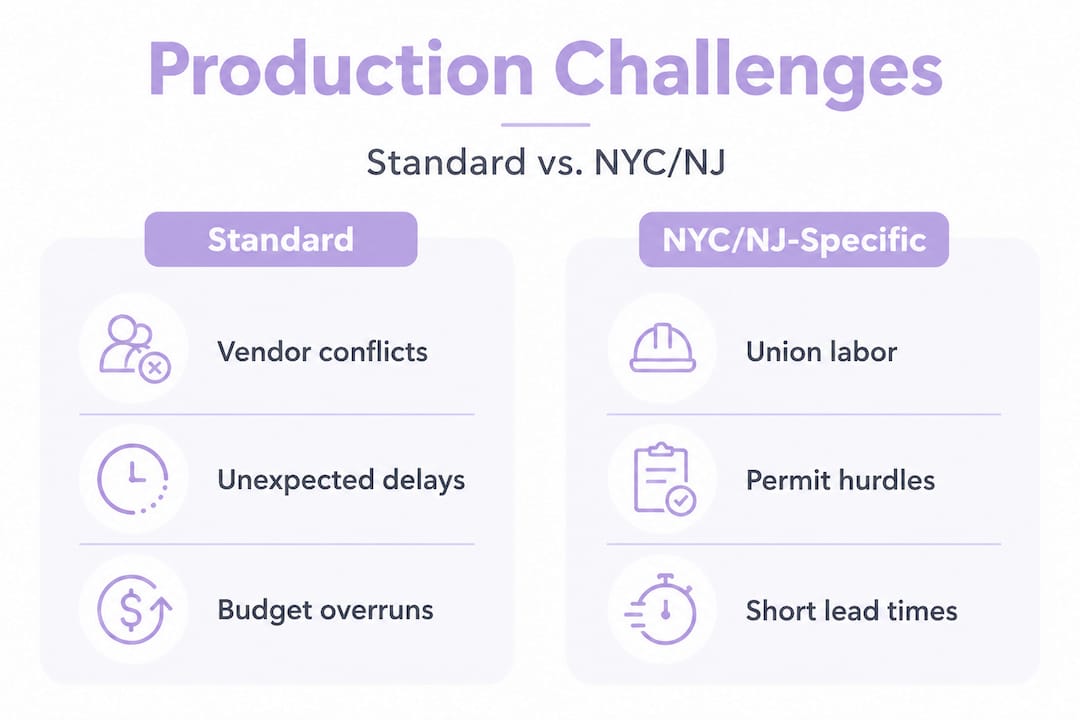
Union labor is one of the biggest surprises for first-time NYC event planners. Many premier venues in Manhattan require union stagehands for load-in, setup, and breakdown. This is non-negotiable at certain properties, and it significantly changes your labor budget. Similarly, NYC permits for outdoor events can be delayed or modified right up to the week of your event.
Quick solutions to common local production problems:
• Backup vendor relationships: Always have a secondary AV or lighting vendor on your contact list, especially for events booked at union-required venues.
• Verify floorplans in person: Request an in-person walkthrough at your venue to confirm ceiling heights, power drops, and load-in access before finalizing production plans.
• Build in buffer time: NYC load-in windows are often tighter than expected. Add at least two extra hours to your setup schedule.
• Review contracts carefully: Watch for NYC vendor red flags like vague cancellation clauses or missing insurance certificates.
• Separate your contingency budget: Allocate funds specifically for last-minute changes, not just cost overruns.
Pro Tip: When budgeting for AV rental in New York City, build a 20% contingency into your production budget from day one. Union surcharges, overtime fees, and last-minute equipment swaps are common enough that the contingency isn’t extra, it’s expected.
Once challenges are understood, here’s how to execute with full control and confidence. Great event production isn’t magic. It’s methodical preparation combined with experienced people who know how to adapt in real time.
Follow these steps to coordinate your production essentials:
1. Plan your technical requirements first. Know your guest count, room layout, and program flow before you select any equipment.
2. Set a realistic production budget that separates technical costs from catering, decor, and other vendor categories.
3. Select vendors based on local experience. A vendor who has worked at your specific venue is worth more than the cheapest option on the market.
4. Request and review all technical riders and contracts at least 60 days before the event.
5. Schedule a technical walk-through at your venue to test power capacity, speaker placement, lighting positions, and Wi-Fi connectivity.
6. Build a detailed run-of-show that accounts for every cue, transition, and potential delay.
7. Assign a dedicated production point-of-contact on the event day who handles only technical issues, not guest management.
The technical execution of lighting, sound, AV, and staging requires precise coordination between multiple vendors working simultaneously. If one element is off, it affects the guest experience across the board. For smaller NYC venues, understanding your options for NYC wireless mics and lighting helps you make smarter decisions without overspending on equipment you don’t need.
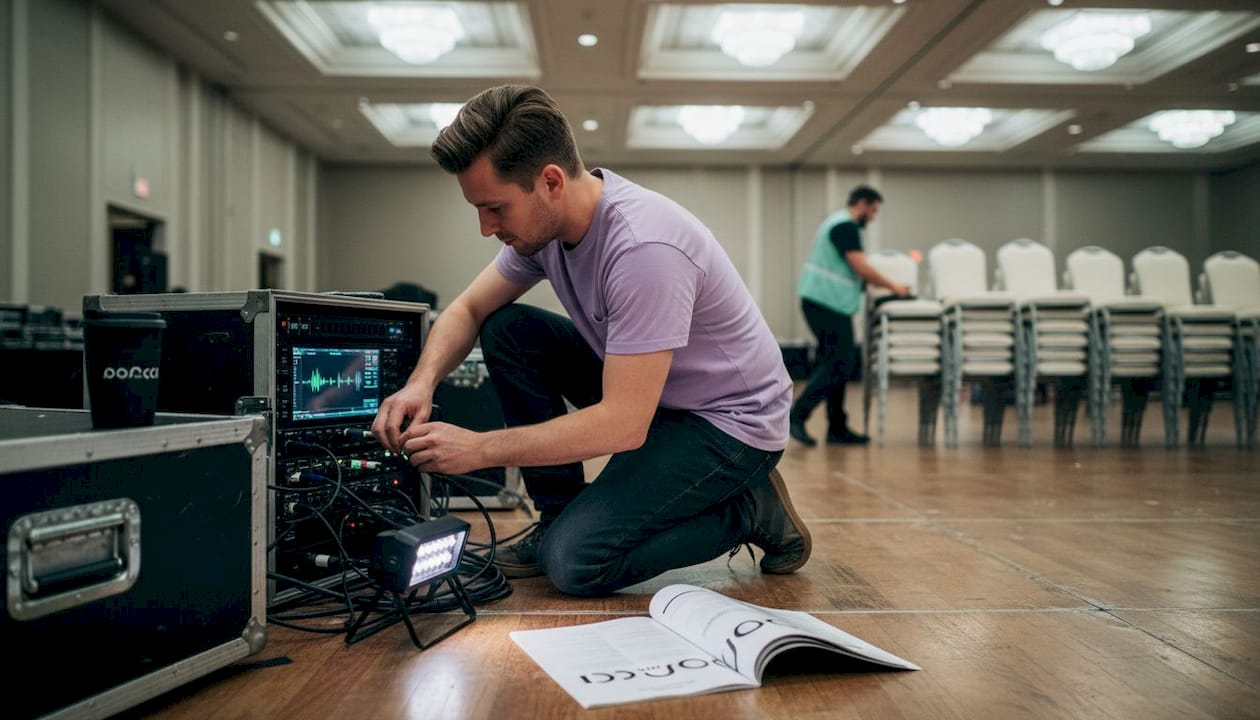
Stepping back, here’s what our years in the local industry have taught us: national event production advice is often useless in New York City and New Jersey. Generic blog posts tell you to “start planning early” and “communicate with your vendors.” That’s fine advice for a conference in a suburban hotel. It’s insufficient for an event in a Tribeca loft with restricted load-in hours and mandatory union labor.
The counterintuitive lesson we’ve learned repeatedly is this: trying to save money by skipping professional production support almost always costs more in the end. Not just in dollars, but in your own time, your stress level, and critically, your guests’ experience. A flickering microphone during a keynote speech or a sound system that cuts out during a first dance is remembered far longer than any cost savings you captured.
What separates successful NYC and NJ events from chaotic ones isn’t budget size. It’s local knowledge. Knowing which venues have problematic power grids, which permitting offices move slowly, and which load-in scenarios require union coordination is not something you learn from a checklist. It’s earned through repetition and relationship-building in this specific market.
We recommend reading our guide on planning NYC events before finalizing any production decisions. Having local partners who have seen these scenarios before isn’t just helpful, it’s the most reliable insurance policy your event has.
Ready for a truly seamless NYC/NJ event? Porcci NYC’s full-service production team works across New York City and New Jersey, handling everything from AV and lighting to DJ services, photo booths, karaoke systems, and complete event staffing. We manage setup, delivery, and breakdown so your focus stays entirely on your guests. Whether you’re organizing a corporate event in Midtown or a wedding in Hudson County, our team knows the venues, the vendors, and the logistics specific to this region. Explore our NYC event production services and start with our simple Porcci booking process to connect with our production team today.
Event production covers technical setups like sound, lighting, AV, staging, decor, logistics, and on-site coordination to make your event vision a reality. It’s the hands-on execution layer that turns your event plan into a live experience.
The pre-production phase recommends starting 6 to 12 months in advance, and in NYC, erring toward the longer end is strongly advisable. Top venues and experienced vendors fill their calendars quickly, especially for weekends.
Union labor in NYC adds 20 to 40% to production costs at many premier venues, and last-minute changes, permitting delays, and overtime fees compound those expenses further.
Event planning is the strategic coordination of vendors, budgets, and timelines, while event production is the technical hands-on execution that physically makes the event happen on the day itself.
Inaccurate venue floor plans and surprise last-minute changes are best addressed by scheduling an in-person venue walkthrough, maintaining backup vendor contacts, and building a clear run-of-show document at least two weeks before your event.
Discover what event production really is and how it shapes successful events in NYC & NJ. Transform your planning today!
TL;DR:
• Event production involves hands-on logistics such as lighting, sound, staging, and on-site coordination.
• Planning should start 6 to 12 months in advance, especially in NYC/NJ due to high demand and logistical complexity.
• Local factors like union labor and permit delays significantly impact budgets and timelines for NYC/NJ events.
Most people assume event production is simply about renting chairs, loading a truck, and setting up a few speakers. That assumption costs NYC and NJ event planners time, money, and a lot of stress. Event production is actually the hands-on logistics and technical execution phase that encompasses everything from lighting design and sound engineering to staging, AV coordination, and live event management, bringing your entire vision to life on the day it matters most. Whether you’re planning a corporate gala in Midtown Manhattan, a wedding in a Brooklyn loft, or a community festival in Jersey City, understanding what production really involves changes how you plan, budget, and execute.
• Defining event production: More than logistics
• Event production phases: What happens when
• Tackling challenges unique to NYC & NJ events
• Making your event vision a reality: Production essentials
• Our perspective: Why real expertise matters in NYC/NJ event production
• Take your NYC/NJ event to the next level with local pros
| Point | Details |
|---|---|
| Event production defined | It’s the hands-on, technical process that brings your event vision to life through logistics, staging, and coordination. |
| Phased process | Successful events follow proven production phases—from planning and vendor selection to on-site execution and wrap-up. |
| Local challenges matter | NYC/NJ presents unique hurdles like union labor and last-minute changes, so tailored preparation is essential. |
| Expertise pays off | Relying on local production experts can save you time, money, and stress—ensuring a flawless event. |
With the basics framed, let’s break down what event production really covers. Many clients come to us having already mapped out their guest list, catering, and invitations, and then ask, “What’s left to handle?” The answer is often the most complex part of the event.
“Event production is the hands-on logistics and technical execution phase of events, encompassing technical setups like lights, sound, staging, AV, and coordination of creative, logistical elements to bring an event vision to life.”
Production is distinct from event planning. Planning is the strategic vision: setting goals, choosing a theme, coordinating vendors at a high level. Production is where that vision becomes physical reality. It’s the team that rigs the trussing, programs the lighting console, runs the soundcheck at 7 a.m., and troubleshoots a feedback loop before guests arrive.
Core production elements include:
• Staging and rigging: Physical structures that give performers and speakers a platform, including risers, backdrops, and pipe-and-drape setups
• Lighting design: Ambient, accent, and dynamic lighting that transforms an empty ballroom into an experience
• Sound systems: Speaker arrays, subwoofers, monitors, and mixing consoles calibrated for each unique room
• Audiovisual (AV): Projectors, LED walls, confidence monitors, and video switching for presentations and live feeds
• Decor and environment: Coordination of physical elements that create atmosphere and reinforce the event theme
• Live execution: The real-time management of cues, transitions, and on-site problem-solving
Understanding these event equipment essentials before you begin planning saves you from expensive surprises and vendor misalignment. Production thinking should start early, not two weeks before the event.
Defining the who and what, let’s zoom in on when and how event production unfolds. Production doesn’t start when the trucks arrive. It starts months before the event, often before a venue is even booked.
| Phase | Timeframe | Key focus |
|---|---|---|
| Pre-production | 6 to 12 months out | Goals, budget, venue scouting |
| Concept development | 4 to 6 months out | Theme, design, creative direction |
| Production preparation | 2 to 3 months out | Technical planning, vendor contracts |
| Final preparation | 1 month out | Rehearsals, run-of-show documents |
| Execution | Event day | Live coordination and troubleshooting |
| Post-event | After the event | Breakdown, debrief, vendor payments |
The phased production timeline above is the industry standard, but in NYC and NJ, these phases compress quickly. Top venues in Manhattan and Brooklyn often book 12 to 18 months out. That means your pre-production window can shrink before you even realize it.
Here’s how these phases typically unfold for a local event:
1. Set your production goals before anything else, including what kind of atmosphere you want, your guest count, and technical requirements.
2. Scout venues with technical capacity in mind, not just aesthetics. Ceiling height, load-in access, power capacity, and Wi-Fi all matter.
3. Hire your technical vendors during the production preparation phase, not the week before the event.
4. Create a detailed run-of-show document that every vendor receives at least two weeks before the event day.
5. Conduct a full technical rehearsal at the venue to catch conflicts before they become crises.
6. Debrief after the event with your team to capture lessons for next time.
Pro Tip: In NYC, venue competition is fierce and booking windows are shorter than in most other cities. Start your venue scouting and technical planning at least 10 to 12 months in advance for any event over 100 guests. Use our NYC event planning checklist as a starting point to stay ahead of each phase.
Knowing the phases, it’s vital to prepare for location-specific hurdles. New York City and New Jersey events come with a set of production challenges you simply won’t encounter in most other markets. Understanding them upfront is the difference between a smooth event and a chaotic one.
| Standard production challenge | NYC/NJ-specific version |
|---|---|
| Vendor scheduling conflicts | Union labor requirements adding 20 to 40% to costs |
| Budget overruns | Last-minute venue changes due to permitting denials |
| Equipment failure | Inaccurate venue floorplans causing structural conflicts |
| Guest count changes | Last-minute cancellations running at 15 to 20% typical rates |
Union labor is one of the biggest surprises for first-time NYC event planners. Many premier venues in Manhattan require union stagehands for load-in, setup, and breakdown. This is non-negotiable at certain properties, and it significantly changes your labor budget. Similarly, NYC permits for outdoor events can be delayed or modified right up to the week of your event.
Quick solutions to common local production problems:
• Backup vendor relationships: Always have a secondary AV or lighting vendor on your contact list, especially for events booked at union-required venues.
• Verify floorplans in person: Request an in-person walkthrough at your venue to confirm ceiling heights, power drops, and load-in access before finalizing production plans.
• Build in buffer time: NYC load-in windows are often tighter than expected. Add at least two extra hours to your setup schedule.
• Review contracts carefully: Watch for NYC vendor red flags like vague cancellation clauses or missing insurance certificates.
• Separate your contingency budget: Allocate funds specifically for last-minute changes, not just cost overruns.
Pro Tip: When budgeting for AV rental in New York City, build a 20% contingency into your production budget from day one. Union surcharges, overtime fees, and last-minute equipment swaps are common enough that the contingency isn’t extra, it’s expected.
Once challenges are understood, here’s how to execute with full control and confidence. Great event production isn’t magic. It’s methodical preparation combined with experienced people who know how to adapt in real time.
Follow these steps to coordinate your production essentials:
1. Plan your technical requirements first. Know your guest count, room layout, and program flow before you select any equipment.
2. Set a realistic production budget that separates technical costs from catering, decor, and other vendor categories.
3. Select vendors based on local experience. A vendor who has worked at your specific venue is worth more than the cheapest option on the market.
4. Request and review all technical riders and contracts at least 60 days before the event.
5. Schedule a technical walk-through at your venue to test power capacity, speaker placement, lighting positions, and Wi-Fi connectivity.
6. Build a detailed run-of-show that accounts for every cue, transition, and potential delay.
7. Assign a dedicated production point-of-contact on the event day who handles only technical issues, not guest management.
The technical execution of lighting, sound, AV, and staging requires precise coordination between multiple vendors working simultaneously. If one element is off, it affects the guest experience across the board. For smaller NYC venues, understanding your options for NYC wireless mics and lighting helps you make smarter decisions without overspending on equipment you don’t need.
Stepping back, here’s what our years in the local industry have taught us: national event production advice is often useless in New York City and New Jersey. Generic blog posts tell you to “start planning early” and “communicate with your vendors.” That’s fine advice for a conference in a suburban hotel. It’s insufficient for an event in a Tribeca loft with restricted load-in hours and mandatory union labor.
The counterintuitive lesson we’ve learned repeatedly is this: trying to save money by skipping professional production support almost always costs more in the end. Not just in dollars, but in your own time, your stress level, and critically, your guests’ experience. A flickering microphone during a keynote speech or a sound system that cuts out during a first dance is remembered far longer than any cost savings you captured.
What separates successful NYC and NJ events from chaotic ones isn’t budget size. It’s local knowledge. Knowing which venues have problematic power grids, which permitting offices move slowly, and which load-in scenarios require union coordination is not something you learn from a checklist. It’s earned through repetition and relationship-building in this specific market.
We recommend reading our guide on planning NYC events before finalizing any production decisions. Having local partners who have seen these scenarios before isn’t just helpful, it’s the most reliable insurance policy your event has.
Ready for a truly seamless NYC/NJ event? Porcci NYC’s full-service production team works across New York City and New Jersey, handling everything from AV and lighting to DJ services, photo booths, karaoke systems, and complete event staffing. We manage setup, delivery, and breakdown so your focus stays entirely on your guests. Whether you’re organizing a corporate event in Midtown or a wedding in Hudson County, our team knows the venues, the vendors, and the logistics specific to this region. Explore our NYC event production services and start with our simple Porcci booking process to connect with our production team today.
Event production covers technical setups like sound, lighting, AV, staging, decor, logistics, and on-site coordination to make your event vision a reality. It’s the hands-on execution layer that turns your event plan into a live experience.
The pre-production phase recommends starting 6 to 12 months in advance, and in NYC, erring toward the longer end is strongly advisable. Top venues and experienced vendors fill their calendars quickly, especially for weekends.
Union labor in NYC adds 20 to 40% to production costs at many premier venues, and last-minute changes, permitting delays, and overtime fees compound those expenses further.
Event planning is the strategic coordination of vendors, budgets, and timelines, while event production is the technical hands-on execution that physically makes the event happen on the day itself.
Inaccurate venue floor plans and surprise last-minute changes are best addressed by scheduling an in-person venue walkthrough, maintaining backup vendor contacts, and building a clear run-of-show document at least two weeks before your event.