Discover why choose all-in-one event services for seamless coordination and communication. Simplify your event planning and enjoy peace of mind this year!
TL;DR:
• All-in-one event services bundle setup, entertainment, and teardown into a single provider, simplifying planning and communication. They offer clear accountability, reduce venue congestion, and provide budget predictability with consolidated billing. However, planners must verify inclusions carefully to avoid hidden costs and ensure all needs are met.
All-in-one event services are comprehensive packages that bundle setup, audio-visual support, entertainment, and teardown under a single provider. Planners who understand why choose all-in-one event services gain a clear advantage: fewer vendors, cleaner communication, and a budget that holds. Whether you are organizing a wedding in Manhattan, a corporate gathering in Jersey City, or a bar mitzvah in Brooklyn, consolidating your event needs into one partnership removes the coordination burden that derails most events before the first guest arrives.
The single biggest operational win from an integrated event solution is a single point of contact. When one team manages your DJ, lighting, sound, and photo booth, every timing adjustment, venue change, or last-minute request goes to one person. That eliminates the chain of emails between five separate vendors who each have partial information.
One-vendor models improve accountability by preventing the blame-shifting that happens when multiple independent suppliers share a venue. If the sound cuts out at 8:00 PM, there is no debate about whose cable caused the problem. The team that set up the system fixes it.
Venue congestion is a real problem that planners underestimate. When four separate vendors arrive at different times with different equipment, load-in becomes chaotic. Coordinating arrival and setup sequencing through one supplier reduces venue congestion and prevents scheduling conflicts that push your event start time back.
The coordination benefit also extends to role of venue coordinators who work alongside your provider. When your vendor already understands load-in windows, door widths, and power access, the venue coordinator’s job becomes far easier. That cooperation keeps the day on schedule.
• One contact handles all vendor communication from planning to teardown
• Setup sequencing is coordinated to prevent venue access conflicts
• Timing adjustments happen within one team, not across five separate contracts
• Accountability is clear when one provider owns every element of the event
Budget predictability is the most underrated benefit of full-service event planning. All-inclusive packages consolidate billing into one invoice, replacing the stack of separate bills from a lighting company, a DJ, a photo booth rental, and a sound technician. That single invoice makes it easier to track spending and present costs to stakeholders.

The emotional benefit matters too. Budget predictability and peace of mind are primary reasons planners choose all-inclusive models. Knowing your total cost upfront removes the anxiety of waiting for surprise invoices after the event.
Pro Tip: Always request a full line-item breakdown before signing any event service package. Packages that look all-inclusive sometimes exclude transportation, overtime labor, or last-minute equipment swaps. Verify every line before you commit.
Planners who want a structured approach to managing costs should review event budget planning before selecting a package. Understanding your cost categories in advance makes it easier to evaluate what a package actually covers versus what it leaves out.
Common items that packages may exclude:
• Transportation fees for equipment delivery beyond a set radius
• Overtime charges when events run past the contracted end time
• Rush setup fees for last-minute venue changes
• Additional staffing costs for larger-than-expected guest counts
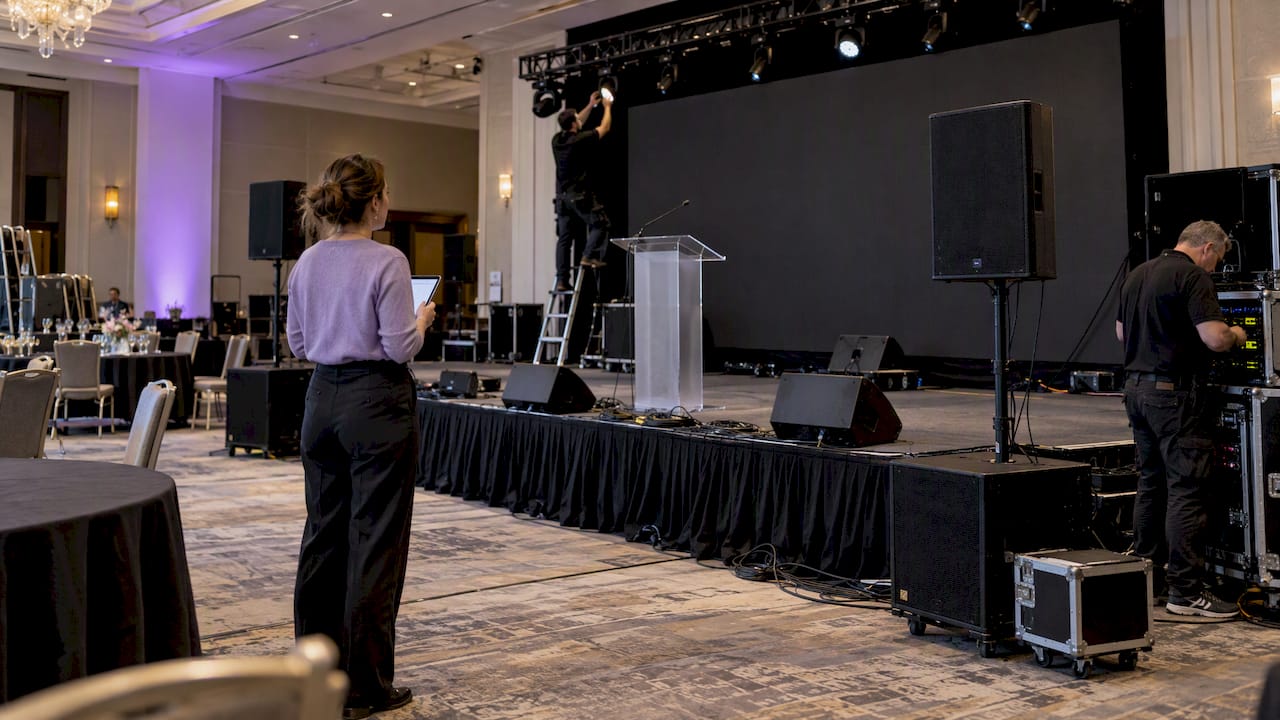
Event-day logistics are where integrated solutions prove their value most clearly. Consolidating services with one supplier reduces venue congestion by coordinating access times, load-in order, cable management, and power supply. A single team knows exactly which equipment needs which power circuit, and they plan for it in advance.

Full setup and teardown services shift the mental load entirely off the planner. Full-service setup and teardown lets hosts focus entirely on guests while the provider handles space transformation, logistics, and cleanup. You arrive to a ready venue and leave without lifting a cable.
Pro Tip: Confirm load-in timelines with your provider at least two weeks before the event. Ask specifically about door width requirements, elevator access, and power outlet locations. Catching these details early prevents delays on event day.
The table below shows how a single-vendor approach compares to a multi-vendor approach across key operational categories:
| Category | Single-vendor approach | Multi-vendor approach |
|---|---|---|
| Communication | One contact for all updates | Multiple contacts, fragmented updates |
| Setup timing | Coordinated by one team | Each vendor sets up independently |
| Accountability | Clear ownership of all elements | Shared responsibility, potential blame-shifting |
| Billing | One invoice | Multiple invoices and contracts |
| Teardown | Handled by same team | Requires separate coordination |
Load-in timelines and delivery windows must be carefully planned to avoid blocking and conflicts, especially in constrained venues like Manhattan ballrooms or New Jersey banquet halls. A provider who has done this before knows how to sequence equipment arrival to keep the venue clear and the schedule intact. For planners who want to understand the full scope of what setup involves, event setup and breakdown is a practical resource.
Not every package labeled “all-in-one” delivers complete coverage. Even all-inclusive bundles often exclude transportation, overtime labor, rush setups, and last-minute equipment changes. Verifying inclusions before signing protects you from surprises that inflate your final cost.
Follow these steps before committing to any event service package:
1. Request a full written breakdown. Ask for every service listed by name, not just a category label like “entertainment.”
2. Confirm delivery and pickup terms. Verify whether transportation is included and what the radius or fee structure looks like.
3. Check overtime policies. Ask what happens if your event runs 30 or 60 minutes over the contracted time.
4. Clarify staffing ratios. Confirm how many staff members are included and whether additional staff costs extra for larger events.
5. Review cancellation and change terms. Understand what happens if your venue changes or your guest count shifts significantly.
Centralized vendor paperwork and credential tracking reduce administrative overhead on event days. When one provider manages all credentials and clearances, you avoid the last-minute scramble of chasing certificates of insurance from three separate companies the morning of your event. Reviewing party rental package benefits gives planners a clear framework for evaluating what a package should include.
All-in-one event services reduce planning complexity, improve accountability, and deliver budget predictability by consolidating multiple vendors, contracts, and logistics into a single managed partnership.
| Point | Details |
|---|---|
| Single point of contact | One provider handles all communication, reducing errors and delays across every event element. |
| Budget predictability | One consolidated invoice replaces multiple bills, making total costs easier to track and present. |
| Event-day coordination | Coordinated load-in and setup sequencing prevents venue congestion and keeps events on schedule. |
| Package verification | Always request a full line-item breakdown to catch exclusions like transportation and overtime fees. |
| Accountability clarity | One vendor owns every element, eliminating blame-shifting when problems arise on event day. |
The biggest misconception planners bring to us is that “all-in-one” means “nothing left to think about.” That is not quite right. The model removes most of the coordination burden, but it does not remove the need for diligence on your end. The planners who get the best results are the ones who ask hard questions upfront: What exactly is included? Who handles overtime? What is the load-in sequence?
We have seen events derailed not by bad vendors but by assumptions. A planner assumes transportation is included. The vendor assumes the venue has a loading dock. Neither assumption gets confirmed in writing. On event day, the equipment arrives late, setup runs short, and the first hour of the event feels rushed. That scenario is entirely preventable.
The all-in-one model works best when you treat it as a partnership, not a handoff. Bring your venue’s access rules, power specs, and timeline to the first conversation. A provider who asks those questions before you do is the one worth hiring. The convenience is real. So is the responsibility to verify the details.
— PORCCI
Porcci NYC offers AV and sound system rentals alongside DJ services, photo booths, karaoke systems, and event staffing across New York City and New Jersey. Every package includes delivery, professional setup, and full teardown so your focus stays on your guests, not the gear. Whether you are planning a corporate event in Jersey City, a wedding in Brooklyn, or a private party in Manhattan, Porcci NYC builds packages around your specific venue, guest count, and entertainment goals. Request a quote and get a clear, line-item breakdown with no hidden fees.
A full-service event package typically covers setup, audio-visual equipment, entertainment such as DJ or karaoke, and teardown. Inclusions vary by provider, so always request a written breakdown before signing.
One vendor owns every element of the event, which eliminates blame-shifting between separate suppliers when problems arise. That clear ownership means faster fixes and fewer disruptions.
Consolidated packages replace multiple invoices with one predictable bill, which makes budgeting easier and reduces surprise charges. Hidden fees for transportation or overtime can still appear, so verify every line item in advance.
Common exclusions include transportation beyond a set radius, overtime labor, rush setup fees, and last-minute equipment changes. Planning guides recommend obtaining a full service breakdown to avoid unexpected expenses.
The single-vendor approach scales from intimate private parties to large corporate gatherings. The coordination and accountability benefits apply at every event size, though staffing ratios and equipment needs will vary.
Discover why choose all-in-one event services for seamless coordination and communication. Simplify your event planning and enjoy peace of mind this year!
TL;DR:
• All-in-one event services bundle setup, entertainment, and teardown into a single provider, simplifying planning and communication. They offer clear accountability, reduce venue congestion, and provide budget predictability with consolidated billing. However, planners must verify inclusions carefully to avoid hidden costs and ensure all needs are met.
All-in-one event services are comprehensive packages that bundle setup, audio-visual support, entertainment, and teardown under a single provider. Planners who understand why choose all-in-one event services gain a clear advantage: fewer vendors, cleaner communication, and a budget that holds. Whether you are organizing a wedding in Manhattan, a corporate gathering in Jersey City, or a bar mitzvah in Brooklyn, consolidating your event needs into one partnership removes the coordination burden that derails most events before the first guest arrives.
The single biggest operational win from an integrated event solution is a single point of contact. When one team manages your DJ, lighting, sound, and photo booth, every timing adjustment, venue change, or last-minute request goes to one person. That eliminates the chain of emails between five separate vendors who each have partial information.
One-vendor models improve accountability by preventing the blame-shifting that happens when multiple independent suppliers share a venue. If the sound cuts out at 8:00 PM, there is no debate about whose cable caused the problem. The team that set up the system fixes it.
Venue congestion is a real problem that planners underestimate. When four separate vendors arrive at different times with different equipment, load-in becomes chaotic. Coordinating arrival and setup sequencing through one supplier reduces venue congestion and prevents scheduling conflicts that push your event start time back.
The coordination benefit also extends to role of venue coordinators who work alongside your provider. When your vendor already understands load-in windows, door widths, and power access, the venue coordinator’s job becomes far easier. That cooperation keeps the day on schedule.
• One contact handles all vendor communication from planning to teardown
• Setup sequencing is coordinated to prevent venue access conflicts
• Timing adjustments happen within one team, not across five separate contracts
• Accountability is clear when one provider owns every element of the event
Budget predictability is the most underrated benefit of full-service event planning. All-inclusive packages consolidate billing into one invoice, replacing the stack of separate bills from a lighting company, a DJ, a photo booth rental, and a sound technician. That single invoice makes it easier to track spending and present costs to stakeholders.
The emotional benefit matters too. Budget predictability and peace of mind are primary reasons planners choose all-inclusive models. Knowing your total cost upfront removes the anxiety of waiting for surprise invoices after the event.
Pro Tip: Always request a full line-item breakdown before signing any event service package. Packages that look all-inclusive sometimes exclude transportation, overtime labor, or last-minute equipment swaps. Verify every line before you commit.
Planners who want a structured approach to managing costs should review event budget planning before selecting a package. Understanding your cost categories in advance makes it easier to evaluate what a package actually covers versus what it leaves out.
Common items that packages may exclude:
• Transportation fees for equipment delivery beyond a set radius
• Overtime charges when events run past the contracted end time
• Rush setup fees for last-minute venue changes
• Additional staffing costs for larger-than-expected guest counts
Event-day logistics are where integrated solutions prove their value most clearly. Consolidating services with one supplier reduces venue congestion by coordinating access times, load-in order, cable management, and power supply. A single team knows exactly which equipment needs which power circuit, and they plan for it in advance.
Full setup and teardown services shift the mental load entirely off the planner. Full-service setup and teardown lets hosts focus entirely on guests while the provider handles space transformation, logistics, and cleanup. You arrive to a ready venue and leave without lifting a cable.
Pro Tip: Confirm load-in timelines with your provider at least two weeks before the event. Ask specifically about door width requirements, elevator access, and power outlet locations. Catching these details early prevents delays on event day.
The table below shows how a single-vendor approach compares to a multi-vendor approach across key operational categories:
| Category | Single-vendor approach | Multi-vendor approach |
|---|---|---|
| Communication | One contact for all updates | Multiple contacts, fragmented updates |
| Setup timing | Coordinated by one team | Each vendor sets up independently |
| Accountability | Clear ownership of all elements | Shared responsibility, potential blame-shifting |
| Billing | One invoice | Multiple invoices and contracts |
| Teardown | Handled by same team | Requires separate coordination |
Load-in timelines and delivery windows must be carefully planned to avoid blocking and conflicts, especially in constrained venues like Manhattan ballrooms or New Jersey banquet halls. A provider who has done this before knows how to sequence equipment arrival to keep the venue clear and the schedule intact. For planners who want to understand the full scope of what setup involves, event setup and breakdown is a practical resource.
Not every package labeled “all-in-one” delivers complete coverage. Even all-inclusive bundles often exclude transportation, overtime labor, rush setups, and last-minute equipment changes. Verifying inclusions before signing protects you from surprises that inflate your final cost.
Follow these steps before committing to any event service package:
1. Request a full written breakdown. Ask for every service listed by name, not just a category label like “entertainment.”
2. Confirm delivery and pickup terms. Verify whether transportation is included and what the radius or fee structure looks like.
3. Check overtime policies. Ask what happens if your event runs 30 or 60 minutes over the contracted time.
4. Clarify staffing ratios. Confirm how many staff members are included and whether additional staff costs extra for larger events.
5. Review cancellation and change terms. Understand what happens if your venue changes or your guest count shifts significantly.
Centralized vendor paperwork and credential tracking reduce administrative overhead on event days. When one provider manages all credentials and clearances, you avoid the last-minute scramble of chasing certificates of insurance from three separate companies the morning of your event. Reviewing party rental package benefits gives planners a clear framework for evaluating what a package should include.
All-in-one event services reduce planning complexity, improve accountability, and deliver budget predictability by consolidating multiple vendors, contracts, and logistics into a single managed partnership.
| Point | Details |
|---|---|
| Single point of contact | One provider handles all communication, reducing errors and delays across every event element. |
| Budget predictability | One consolidated invoice replaces multiple bills, making total costs easier to track and present. |
| Event-day coordination | Coordinated load-in and setup sequencing prevents venue congestion and keeps events on schedule. |
| Package verification | Always request a full line-item breakdown to catch exclusions like transportation and overtime fees. |
| Accountability clarity | One vendor owns every element, eliminating blame-shifting when problems arise on event day. |
The biggest misconception planners bring to us is that “all-in-one” means “nothing left to think about.” That is not quite right. The model removes most of the coordination burden, but it does not remove the need for diligence on your end. The planners who get the best results are the ones who ask hard questions upfront: What exactly is included? Who handles overtime? What is the load-in sequence?
We have seen events derailed not by bad vendors but by assumptions. A planner assumes transportation is included. The vendor assumes the venue has a loading dock. Neither assumption gets confirmed in writing. On event day, the equipment arrives late, setup runs short, and the first hour of the event feels rushed. That scenario is entirely preventable.
The all-in-one model works best when you treat it as a partnership, not a handoff. Bring your venue’s access rules, power specs, and timeline to the first conversation. A provider who asks those questions before you do is the one worth hiring. The convenience is real. So is the responsibility to verify the details.
— PORCCI
Porcci NYC offers AV and sound system rentals alongside DJ services, photo booths, karaoke systems, and event staffing across New York City and New Jersey. Every package includes delivery, professional setup, and full teardown so your focus stays on your guests, not the gear. Whether you are planning a corporate event in Jersey City, a wedding in Brooklyn, or a private party in Manhattan, Porcci NYC builds packages around your specific venue, guest count, and entertainment goals. Request a quote and get a clear, line-item breakdown with no hidden fees.
A full-service event package typically covers setup, audio-visual equipment, entertainment such as DJ or karaoke, and teardown. Inclusions vary by provider, so always request a written breakdown before signing.
One vendor owns every element of the event, which eliminates blame-shifting between separate suppliers when problems arise. That clear ownership means faster fixes and fewer disruptions.
Consolidated packages replace multiple invoices with one predictable bill, which makes budgeting easier and reduces surprise charges. Hidden fees for transportation or overtime can still appear, so verify every line item in advance.
Common exclusions include transportation beyond a set radius, overtime labor, rush setup fees, and last-minute equipment changes. Planning guides recommend obtaining a full service breakdown to avoid unexpected expenses.
The single-vendor approach scales from intimate private parties to large corporate gatherings. The coordination and accountability benefits apply at every event size, though staffing ratios and equipment needs will vary.