Discover why inclusive event planning is essential for ensuring meaningful participation and preventing missed opportunities at every event.
TL;DR:
• Inclusive event planning ensures full participation by accounting for diverse needs from the start. It benefits organizers through broader reach, better reputation, increased engagement, and legal protection. Embedding accessibility early and assigning dedicated leaders improves event quality and attendee experience significantly.
Inclusive event planning is defined as designing events that accommodate diverse needs, backgrounds, and abilities from the very first planning stage, so every attendee can fully participate and belong. The industry term for this practice is accessible event design, and it applies to corporate conferences, weddings, community gatherings, and every format in between. Research shows that approximately 40% of the population requires some form of event accessibility due to disabilities or progressive impairments. That figure means nearly half your audience may face barriers you have not planned for. Why inclusive event planning deserves a place at the top of every planner’s checklist is straightforward: events that exclude people by accident are not just a missed opportunity. They are a reputational risk.
Inclusive events produce measurable returns for planners and attendees alike. Belonging improves attendee retention and community trust far more reliably than attendance numbers alone. An event that people feel welcomed at is one they return to, recommend, and talk about positively.
The benefits of inclusive planning extend well beyond goodwill:
• Broader audience reach. When you remove barriers, you reach attendees who would otherwise skip your event entirely.
• Stronger brand reputation. Planners and organizations known for accessible events attract sponsors, speakers, and partners who share those values.
• Higher engagement. Attendees who feel seen and accommodated participate more actively in sessions, networking, and activities.
• Reduced legal exposure. Events that meet accessibility standards lower the risk of complaints and legal action under the Americans with Disabilities Act.
“Inclusion is not a political stance. It is a professional design discipline that requires flexibility and multiple ways for participants to engage and belong.” — Events Council, 2026
Inclusive design works best when it is embedded as a foundational discipline rather than treated as a special accommodation added at the last minute. Planners who build inclusion into their standard event lifecycle report fewer last-minute fixes and more confident attendees.
Pro Tip: Measure inclusion beyond post-event satisfaction scores. Track participation rates across different attendee groups, session engagement, and repeat attendance to get a real picture of whether your event design is working.
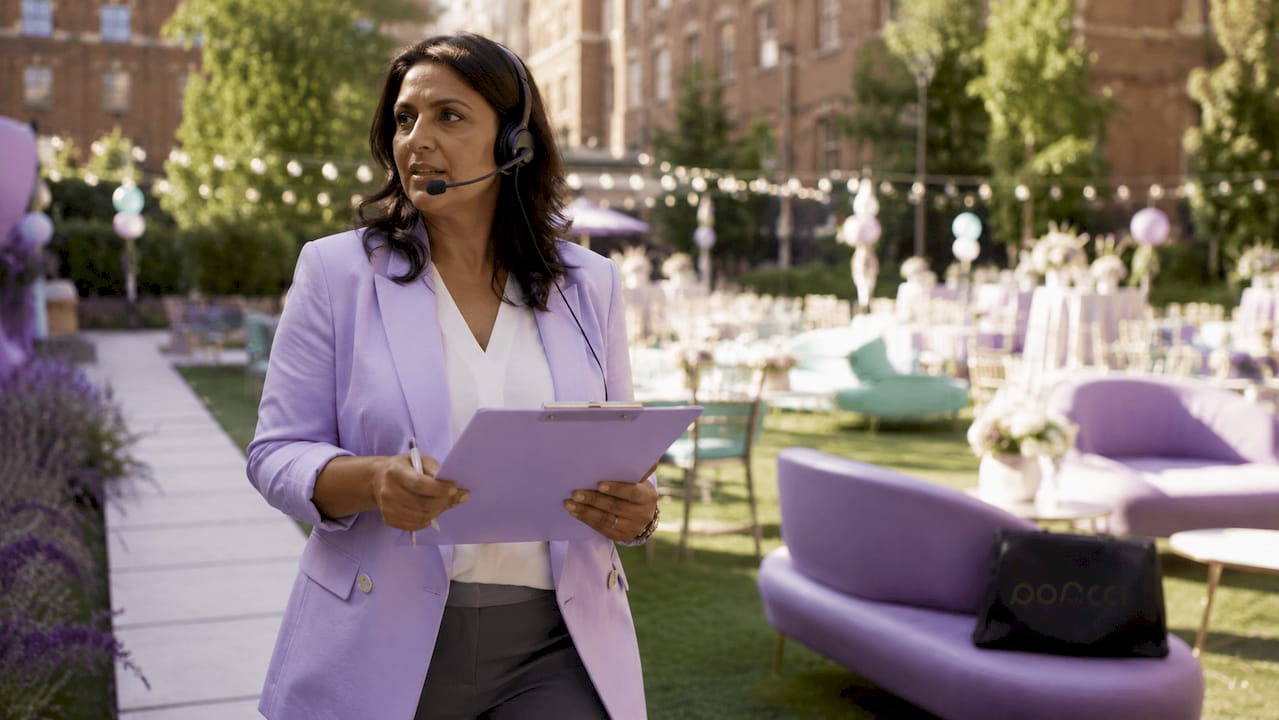
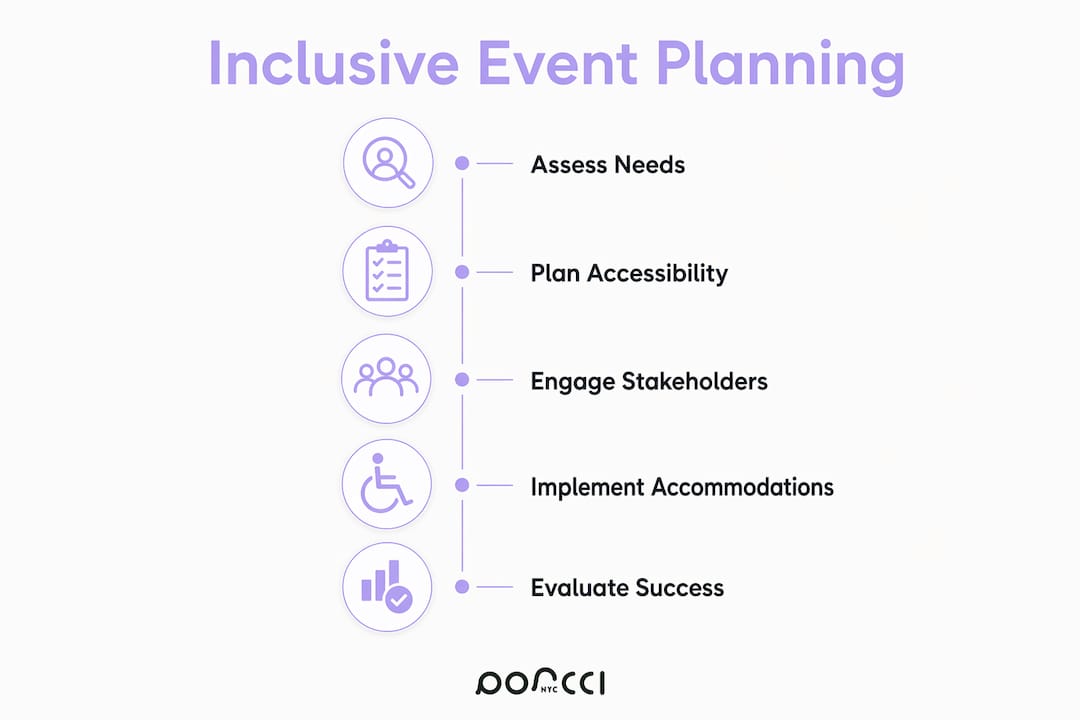
Accessible event design requires decisions made early, not retrofitted after the venue is booked and the agenda is locked. Retrofitting accessibility after those decisions are made costs more and delivers weaker results. The most effective approach assigns an accessibility lead at the start of planning, giving that person cross-team authority to coordinate every vendor, venue, and content decision.
Here is a practical framework for building inclusion into your event from day one:
1. Assign an accessibility lead. This person owns every accessibility decision and coordinates between your venue, AV team, catering, and speakers.
2. Select venues with physical and digital access. Check for ramps, accessible restrooms, hearing loops, and reliable Wi-Fi for remote participants.
3. Provide professional human interpreters. Automated captioning tools miss complex industry language. About 87,000 people rely on British Sign Language in the UK alone, and similar proportions exist in American Sign Language communities across the U.S.
4. Diversify your speaker lineup. Diverse planning committees and speakers strengthen event relevance and reflect your audience genuinely.
5. Plan for dietary, sensory, and cultural needs. Offer quiet rooms, varied food options, and content in multiple formats.
6. Design hybrid events with two distinct journeys. Virtual and in-person attendees need separate but equally meaningful participation paths.
The table below shows common accessibility needs and the corresponding planning actions:
| Accessibility need | Planning action |
|---|---|
| Mobility limitations | Wheelchair-accessible venue, reserved seating, clear pathways |
| Hearing impairments | ASL interpreters, live captioning, hearing loop systems |
| Visual impairments | Large-print materials, audio descriptions, screen-reader-friendly digital content |
| Sensory sensitivities | Quiet rooms, low-stimulation zones, advance sensory guides |
| Language barriers | Multilingual signage, translated materials, interpretation services |
| Dietary restrictions | Labeled menus, allergen-free options, advance dietary surveys |
Pro Tip: Build your accessibility checklist into your event planning checklist from the first planning meeting. Waiting until two weeks before the event to address access needs almost always costs more and delivers less.
The most common fear is cost. Planners assume that accessibility requests will break their budgets. Proactive budgeting for accessibility prevents that outcome. When access needs are built into the original budget, the costs are predictable and manageable. The expensive scenario is the one where you scramble to add ramps, interpreters, or captioning after contracts are signed.
A few other misconceptions are worth addressing directly:
• “Automated captioning is good enough.” It is not for technical or specialized content. Professional human interpreters capture nuance, industry terminology, and speaker intent that AI tools consistently miss.
• “Inclusion only matters for large events.” A 50-person corporate workshop or an intimate wedding can exclude just as effectively as a 5,000-person conference. Scale does not determine the need for inclusion.
• “Inclusive design makes events feel clinical.” The opposite is true. Inclusive design is often invisible to attendees because it removes barriers without drawing attention to them.
Good diversity, equity, and inclusion practice also introduces what researchers call productive friction. Diverse perspectives create productive discomfort that pushes events to be more creative and relevant. Planners who embrace that discomfort consistently produce more memorable events than those who default to familiar formats.
Pro Tip: When a speaker or attendee requests an accommodation you have not handled before, treat it as a design brief. Solving it well almost always improves the experience for everyone in the room.
Inclusion works best as a habit, not a checklist item you visit once per event. Psychological safety inside the event space matters as much as physical accessibility. Attendees who feel safe to participate, ask questions, and be themselves engage more deeply and return more reliably.
Practical integration steps for your workflow include:
• Develop an access services policy. Document your standard accommodations and the process for requesting additional support. Share it publicly on your event registration page.
• Train your staff and speakers. Inclusive language, respectful interaction with attendees who have disabilities, and awareness of sensory needs should be part of every pre-event briefing. Review staffing best practices to build this into your team preparation.
• Use feedback loops. Post-event surveys should ask specific questions about accessibility and belonging, not just overall satisfaction.
• Vet your suppliers and venues. Prioritize partners who have demonstrated accessibility commitments, not just those who claim them. Your event budget planning should include a line item for accessibility services from the first draft.
• Leverage the curb-cut effect. Accommodations built for attendees with the greatest barriers improve the experience for everyone. Captioning helps non-native speakers. Clear wayfinding helps first-time attendees. Good acoustics help everyone hear.
The goal is for inclusion to feel natural at your events, not highlighted. When it works well, attendees do not notice the accommodations. They simply feel welcome.
Inclusive event planning is most effective when accessibility is built into the event design from the start, not added after contracts are signed.
| Point | Details |
|---|---|
| Start with an accessibility lead | Assign one person with cross-team authority to own all accessibility decisions from day one. |
| Budget proactively | Accessibility costs are predictable when planned early and expensive when retrofitted. |
| Go beyond physical access | Psychological safety, diverse representation, and sensory accommodations matter as much as ramps and restrooms. |
| Measure belonging, not just attendance | Track participation rates and repeat attendance across attendee groups to gauge real inclusion. |
| Train your team | Staff and speakers need inclusive language training before every event, not just once a year. |
We have planned events across New York City and New Jersey for years, and the pattern is consistent. Planners who treat inclusion as a compliance requirement produce events that technically meet standards and feel cold. Planners who treat it as a design principle produce events that people genuinely want to attend again.
The shift is not complicated. It starts with asking “who might be excluded by this decision?” at every planning stage, from venue selection to the font size on your signage. That question, asked consistently, changes the quality of every answer that follows.
Inclusion also makes you a better planner overall. When you design for the attendee with the most barriers, you sharpen your thinking about flow, communication, and experience for everyone. The curb-cut effect is real, and we have seen it play out at events of every size.
The planners who will lead this industry in the next decade are not the ones with the biggest budgets. They are the ones who make every attendee feel like the event was built with them in mind.
— PORCCI
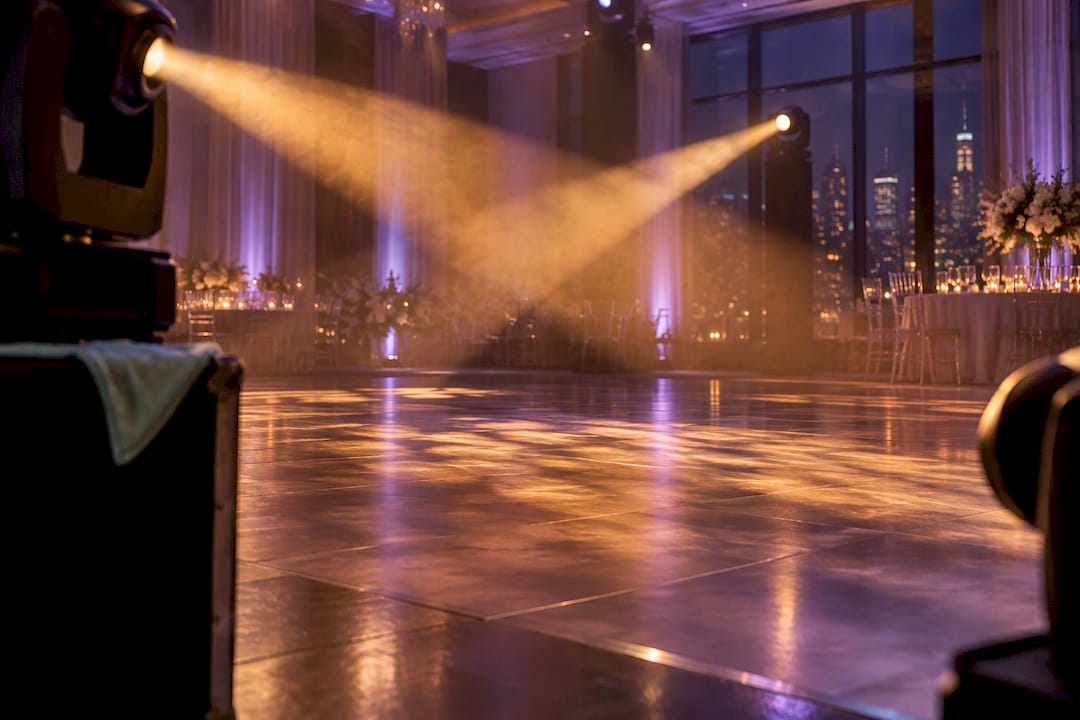
Quality audio and visual equipment is one of the most direct ways to make an event more accessible. Clear sound systems reduce listener fatigue for attendees with hearing difficulties. Large-format displays and reliable projection support captioning and visual content for diverse audiences. Porcci NYC provides AV and sound system rentals across New York City and New Jersey, with equipment suited to events of every size, from intimate corporate workshops to large community gatherings. Our team handles delivery, setup, and breakdown so your focus stays on the attendee experience. Planners in Manhattan can also access local AV rental services tailored to venue-specific needs. Request a quote from Porcci NYC to discuss the right setup for your next inclusive event.
Inclusive event planning is the practice of designing events that accommodate diverse needs, abilities, and backgrounds from the start. The goal is full participation and belonging for every attendee, not just compliance with minimum accessibility standards.
Diverse representation in speakers, planning committees, and suppliers strengthens event relevance and builds community trust. Associations that reflect attendee diversity consistently report stronger engagement and loyalty.
Accessibility costs are manageable when planned from the start. Proactive accessibility budgeting prevents the expensive last-minute fixes that result from retrofitting access after venue and agenda decisions are locked.
The curb-cut effect means that accommodations built for attendees with the greatest barriers improve the experience for everyone. Captioning, clear signage, and good acoustics benefit all attendees, not just those with specific needs.
Track participation rates across attendee groups, session engagement, and repeat attendance rather than relying on overall satisfaction scores alone. Specific post-event questions about accessibility and belonging give you more useful data than general feedback.
Discover why inclusive event planning is essential for ensuring meaningful participation and preventing missed opportunities at every event.
TL;DR:
• Inclusive event planning ensures full participation by accounting for diverse needs from the start. It benefits organizers through broader reach, better reputation, increased engagement, and legal protection. Embedding accessibility early and assigning dedicated leaders improves event quality and attendee experience significantly.
Inclusive event planning is defined as designing events that accommodate diverse needs, backgrounds, and abilities from the very first planning stage, so every attendee can fully participate and belong. The industry term for this practice is accessible event design, and it applies to corporate conferences, weddings, community gatherings, and every format in between. Research shows that approximately 40% of the population requires some form of event accessibility due to disabilities or progressive impairments. That figure means nearly half your audience may face barriers you have not planned for. Why inclusive event planning deserves a place at the top of every planner’s checklist is straightforward: events that exclude people by accident are not just a missed opportunity. They are a reputational risk.
Inclusive events produce measurable returns for planners and attendees alike. Belonging improves attendee retention and community trust far more reliably than attendance numbers alone. An event that people feel welcomed at is one they return to, recommend, and talk about positively.
The benefits of inclusive planning extend well beyond goodwill:
• Broader audience reach. When you remove barriers, you reach attendees who would otherwise skip your event entirely.
• Stronger brand reputation. Planners and organizations known for accessible events attract sponsors, speakers, and partners who share those values.
• Higher engagement. Attendees who feel seen and accommodated participate more actively in sessions, networking, and activities.
• Reduced legal exposure. Events that meet accessibility standards lower the risk of complaints and legal action under the Americans with Disabilities Act.
“Inclusion is not a political stance. It is a professional design discipline that requires flexibility and multiple ways for participants to engage and belong.” — Events Council, 2026
Inclusive design works best when it is embedded as a foundational discipline rather than treated as a special accommodation added at the last minute. Planners who build inclusion into their standard event lifecycle report fewer last-minute fixes and more confident attendees.
Pro Tip: Measure inclusion beyond post-event satisfaction scores. Track participation rates across different attendee groups, session engagement, and repeat attendance to get a real picture of whether your event design is working.
Accessible event design requires decisions made early, not retrofitted after the venue is booked and the agenda is locked. Retrofitting accessibility after those decisions are made costs more and delivers weaker results. The most effective approach assigns an accessibility lead at the start of planning, giving that person cross-team authority to coordinate every vendor, venue, and content decision.
Here is a practical framework for building inclusion into your event from day one:
1. Assign an accessibility lead. This person owns every accessibility decision and coordinates between your venue, AV team, catering, and speakers.
2. Select venues with physical and digital access. Check for ramps, accessible restrooms, hearing loops, and reliable Wi-Fi for remote participants.
3. Provide professional human interpreters. Automated captioning tools miss complex industry language. About 87,000 people rely on British Sign Language in the UK alone, and similar proportions exist in American Sign Language communities across the U.S.
4. Diversify your speaker lineup. Diverse planning committees and speakers strengthen event relevance and reflect your audience genuinely.
5. Plan for dietary, sensory, and cultural needs. Offer quiet rooms, varied food options, and content in multiple formats.
6. Design hybrid events with two distinct journeys. Virtual and in-person attendees need separate but equally meaningful participation paths.
The table below shows common accessibility needs and the corresponding planning actions:
| Accessibility need | Planning action |
|---|---|
| Mobility limitations | Wheelchair-accessible venue, reserved seating, clear pathways |
| Hearing impairments | ASL interpreters, live captioning, hearing loop systems |
| Visual impairments | Large-print materials, audio descriptions, screen-reader-friendly digital content |
| Sensory sensitivities | Quiet rooms, low-stimulation zones, advance sensory guides |
| Language barriers | Multilingual signage, translated materials, interpretation services |
| Dietary restrictions | Labeled menus, allergen-free options, advance dietary surveys |
Pro Tip: Build your accessibility checklist into your event planning checklist from the first planning meeting. Waiting until two weeks before the event to address access needs almost always costs more and delivers less.
The most common fear is cost. Planners assume that accessibility requests will break their budgets. Proactive budgeting for accessibility prevents that outcome. When access needs are built into the original budget, the costs are predictable and manageable. The expensive scenario is the one where you scramble to add ramps, interpreters, or captioning after contracts are signed.
A few other misconceptions are worth addressing directly:
• “Automated captioning is good enough.” It is not for technical or specialized content. Professional human interpreters capture nuance, industry terminology, and speaker intent that AI tools consistently miss.
• “Inclusion only matters for large events.” A 50-person corporate workshop or an intimate wedding can exclude just as effectively as a 5,000-person conference. Scale does not determine the need for inclusion.
• “Inclusive design makes events feel clinical.” The opposite is true. Inclusive design is often invisible to attendees because it removes barriers without drawing attention to them.
Good diversity, equity, and inclusion practice also introduces what researchers call productive friction. Diverse perspectives create productive discomfort that pushes events to be more creative and relevant. Planners who embrace that discomfort consistently produce more memorable events than those who default to familiar formats.
Pro Tip: When a speaker or attendee requests an accommodation you have not handled before, treat it as a design brief. Solving it well almost always improves the experience for everyone in the room.
Inclusion works best as a habit, not a checklist item you visit once per event. Psychological safety inside the event space matters as much as physical accessibility. Attendees who feel safe to participate, ask questions, and be themselves engage more deeply and return more reliably.
Practical integration steps for your workflow include:
• Develop an access services policy. Document your standard accommodations and the process for requesting additional support. Share it publicly on your event registration page.
• Train your staff and speakers. Inclusive language, respectful interaction with attendees who have disabilities, and awareness of sensory needs should be part of every pre-event briefing. Review staffing best practices to build this into your team preparation.
• Use feedback loops. Post-event surveys should ask specific questions about accessibility and belonging, not just overall satisfaction.
• Vet your suppliers and venues. Prioritize partners who have demonstrated accessibility commitments, not just those who claim them. Your event budget planning should include a line item for accessibility services from the first draft.
• Leverage the curb-cut effect. Accommodations built for attendees with the greatest barriers improve the experience for everyone. Captioning helps non-native speakers. Clear wayfinding helps first-time attendees. Good acoustics help everyone hear.
The goal is for inclusion to feel natural at your events, not highlighted. When it works well, attendees do not notice the accommodations. They simply feel welcome.
Inclusive event planning is most effective when accessibility is built into the event design from the start, not added after contracts are signed.
| Point | Details |
|---|---|
| Start with an accessibility lead | Assign one person with cross-team authority to own all accessibility decisions from day one. |
| Budget proactively | Accessibility costs are predictable when planned early and expensive when retrofitted. |
| Go beyond physical access | Psychological safety, diverse representation, and sensory accommodations matter as much as ramps and restrooms. |
| Measure belonging, not just attendance | Track participation rates and repeat attendance across attendee groups to gauge real inclusion. |
| Train your team | Staff and speakers need inclusive language training before every event, not just once a year. |
We have planned events across New York City and New Jersey for years, and the pattern is consistent. Planners who treat inclusion as a compliance requirement produce events that technically meet standards and feel cold. Planners who treat it as a design principle produce events that people genuinely want to attend again.
The shift is not complicated. It starts with asking “who might be excluded by this decision?” at every planning stage, from venue selection to the font size on your signage. That question, asked consistently, changes the quality of every answer that follows.
Inclusion also makes you a better planner overall. When you design for the attendee with the most barriers, you sharpen your thinking about flow, communication, and experience for everyone. The curb-cut effect is real, and we have seen it play out at events of every size.
The planners who will lead this industry in the next decade are not the ones with the biggest budgets. They are the ones who make every attendee feel like the event was built with them in mind.
— PORCCI
Quality audio and visual equipment is one of the most direct ways to make an event more accessible. Clear sound systems reduce listener fatigue for attendees with hearing difficulties. Large-format displays and reliable projection support captioning and visual content for diverse audiences. Porcci NYC provides AV and sound system rentals across New York City and New Jersey, with equipment suited to events of every size, from intimate corporate workshops to large community gatherings. Our team handles delivery, setup, and breakdown so your focus stays on the attendee experience. Planners in Manhattan can also access local AV rental services tailored to venue-specific needs. Request a quote from Porcci NYC to discuss the right setup for your next inclusive event.
Inclusive event planning is the practice of designing events that accommodate diverse needs, abilities, and backgrounds from the start. The goal is full participation and belonging for every attendee, not just compliance with minimum accessibility standards.
Diverse representation in speakers, planning committees, and suppliers strengthens event relevance and builds community trust. Associations that reflect attendee diversity consistently report stronger engagement and loyalty.
Accessibility costs are manageable when planned from the start. Proactive accessibility budgeting prevents the expensive last-minute fixes that result from retrofitting access after venue and agenda decisions are locked.
The curb-cut effect means that accommodations built for attendees with the greatest barriers improve the experience for everyone. Captioning, clear signage, and good acoustics benefit all attendees, not just those with specific needs.
Track participation rates across attendee groups, session engagement, and repeat attendance rather than relying on overall satisfaction scores alone. Specific post-event questions about accessibility and belonging give you more useful data than general feedback.