Match handheld, lavalier, headset, or instrument mics to your event and avoid feedback or dropouts. Includes FCC frequency basics, rental checklist, and...
Four types cover almost every event scenario: handheld mics for roving hosts and karaoke singers, lavalier (lapel) mics for discreet presenters, headset mics for speakers who move a lot, and instrument mics for bands. Each one solves a different problem, and picking the wrong one is the fastest way to end up with feedback squeal or a mic that cuts out every time your speaker turns their head. Frequency planning matters just as much as the mic itself, but form factor is where every decision starts.
TL;DR:
• Using the correct microphone type for the event setup is crucial, with handheld mics ideal for roving hosts and lavalier mics best for seated presenters.
• Channel planning, RF scans, and antenna distribution are essential for maintaining signal quality and avoiding dropouts during multi-channel events.
• Test wireless microphones with the actual outfits and environment to ensure optimal placement, sound level, and hygiene between speakers.
• Professional rental support offers pre-event RF checks, on-site setup, and technical coaching, reducing issues during live events.
• Always plan for at least one spare microphone per event to account for equipment failures, battery issues, or unanticipated needs.
• Handheld Wireless Microphones for Events
• Lavalier and Bodypack Systems: Uses and Placement
• Headset Microphones for Active Presenters
• Instrument and Transducer Wireless Systems
• Frequency Basics: UHF, VHF, 2.4 GHz, and FCC Rules
• How to Choose the Right Wireless Mic for Your Event
• Why Professional Rental Support Reduces Mic Headaches
• A Few Rules of Thumb Worth Following
• How Porcci NYC Handles Your Wireless Mic Setup
• Sources
• FAQ
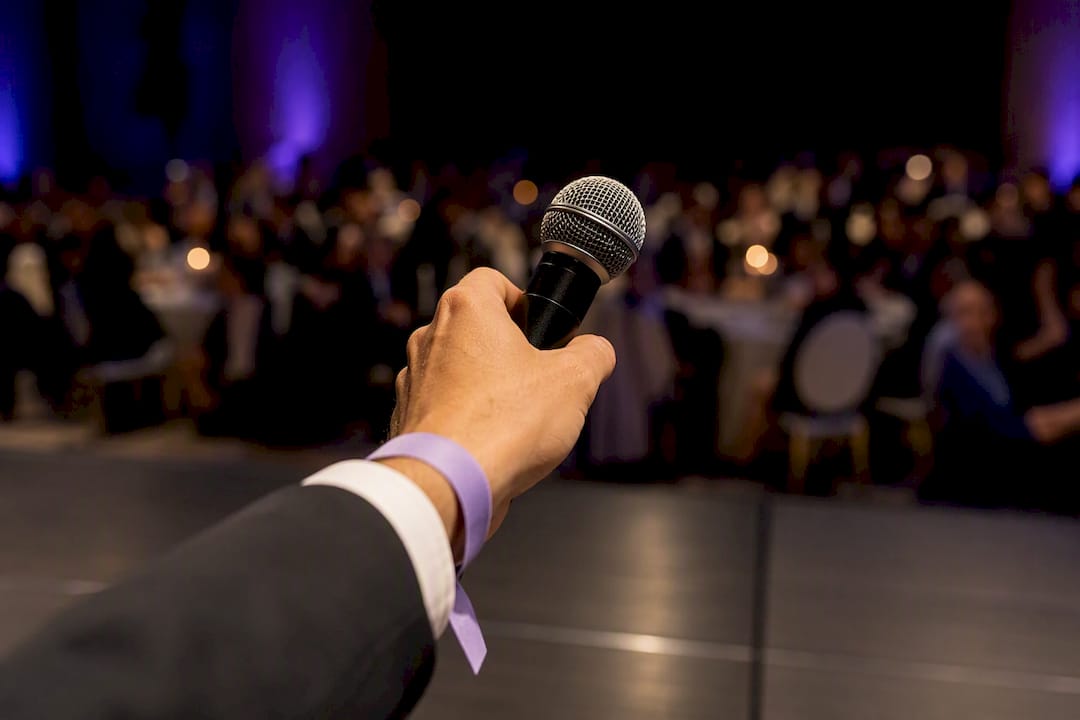
A handheld wireless mic is exactly what it sounds like: a mic body with the capsule, battery, and transmitter built into one unit you hold. It’s the workhorse of weddings, karaoke nights, corporate panels, and any event with an emcee who needs to pass the mic around. If you’ve ever run a wedding toast or hosted a karaoke party, you already know this shape.
The upside is real gain-before-feedback headroom, since the mic isn’t clipped to fabric or bouncing near a speaker’s mouth. The downside shows up when guests pass it hand to hand. Nerves make people grip it too close, breathe into it, or tap it to check if it’s on. AVIXA’s mic guidance recommends matching the form factor to the presenter, and handheld is the right call anytime you expect multiple untrained speakers.
Dynamic capsules handle loud rooms and rough handling well, which is why most karaoke and DJ setups default to them. Condenser handhelds capture more detail but pick up more room noise, so they suit quieter panel discussions better than a dance floor.
• Best for: karaoke, emcees, awards nights, Q&A sessions
• Watch for: handling noise, breath pops, hygiene between speakers
Pro Tip: Keep the receiver antennas at least a few feet from metal staging or LED walls. Both can eat into your range and cause dropouts right when someone starts their toast.
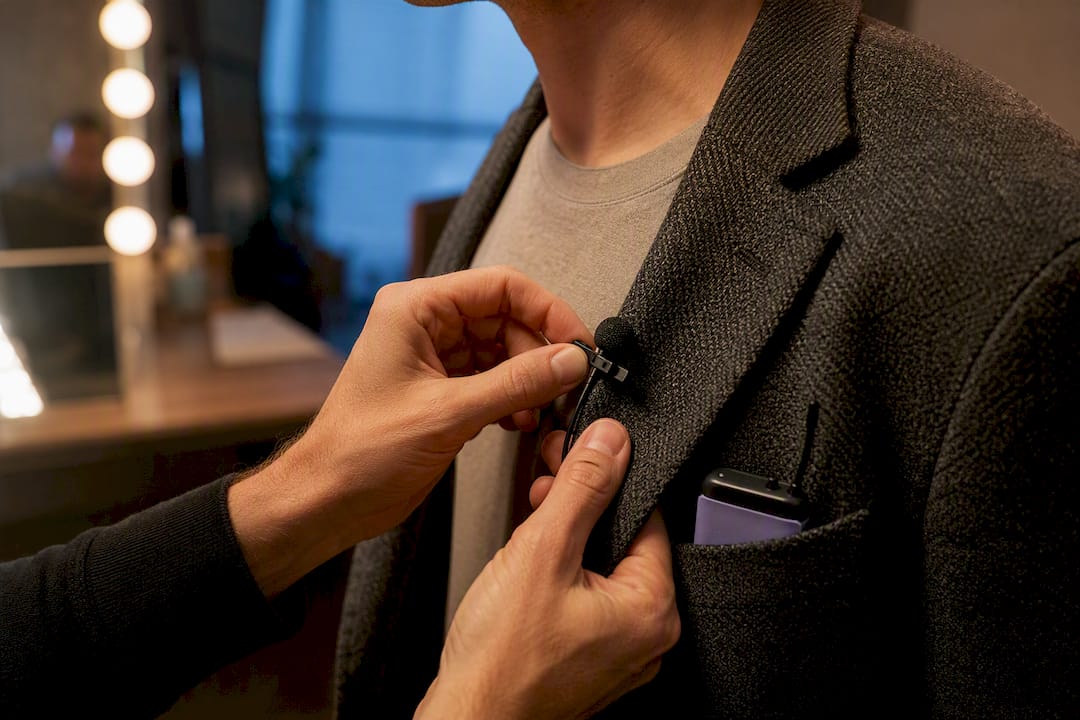
A lavalier system pairs a small clip-on mic with a bodypack transmitter worn on a belt or waistband, usually run under a jacket or dress. It’s the go-to choice for wedding officiants, seated interview subjects, and presenters who need both hands free.
The tradeoff is gain. A lav sits farther from the mouth than a handheld, so it needs more amplification, which means it’s more sensitive to clothing rustle and wind. Turn your head sharply away from the clip and the level can dip noticeably. Placement is everything here.
• Clip the mic four to six inches below the collarbone, centered on the chest
• Use a foam windscreen outdoors, even on a calm day
• Route the cable inside clothing, not over it, to cut down on rustle
• Avoid clipping to stiff fabric like sequins or heavy brocade, which transmits every movement
If your speaker moves constantly or turns their head while talking, a headset will outperform a lav every time.
Pro Tip: Test the lav with the exact outfit the speaker will wear on the day. A jacket that fit fine in rehearsal can muffle the mic completely once it’s buttoned.
A headset mic combines a bodypack transmitter with a boom arm that keeps the capsule a fixed distance from the mouth. That fixed distance is the whole point. It’s why fitness instructors, panel moderators who pace the stage, and performers who dance while singing all reach for headsets first.
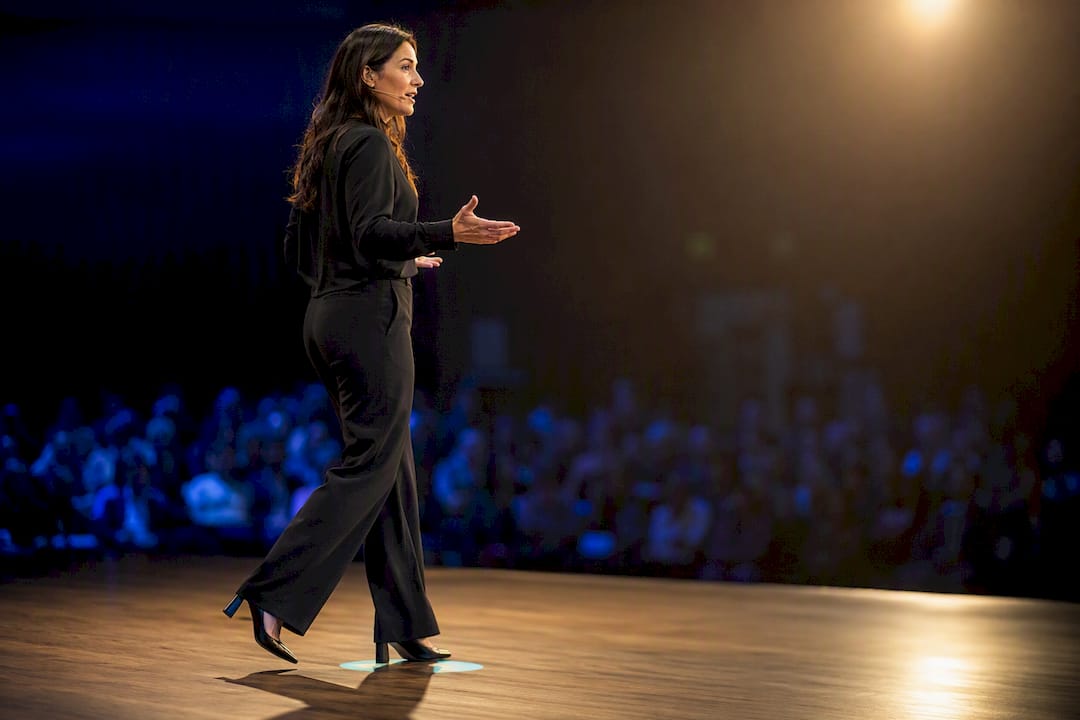
Because the mic never moves relative to the mouth, you get consistent level no matter how much the speaker turns, ducks, or gestures. That steadiness is hard to replicate with a lav or a handheld.
For shared use across multiple events, check fit before the event starts, not during it. Sizing varies by head shape, and a loose headset slides during motion, changing your gain on the fly.
• Best for: fitness classes, dance performances, moderators who walk the floor
• Check: sweat resistance, foam windscreen condition, secure boom tension
• Sanitize contact points between wearers at multi-user events
Instrument wireless systems clip a transmitter directly onto a guitar, saxophone, or drum rim, feeding the signal wirelessly instead of through a cable. They’re common for live bands and solo acoustic acts where a musician needs to move around the stage without tripping a cord.
These aren’t the same as clip-on instrument mics that capture acoustic sound. A transducer or pickup system reads vibration directly off the instrument, which changes the tone slightly compared to a traditional mic in front of an amp or soundhole.
• Works well for: electric guitar, bass, brass, and mobile percussion
• Less ideal for: kick drums and high-end instruments, where a wired DI still gives cleaner low frequency response and easier monitoring
• Digital wireless instrument systems add a hair of latency, usually imperceptible, but worth checking on in-ear monitor setups
Most professional wireless mics operate in UHF slices of the TV band, a setup that became more defined after the FCC’s 600 MHz reallocation. Licensed operation under Part 74 applies to high volume professional users, while most event mics run under Part 15 unlicensed rules, according to FCC guidance on wireless microphones. A license matters when you’re running a large number of channels at once, less so for a single mic at a small event.
Analog systems degrade gracefully and run at near zero latency, while digital systems pack more channels into the same spectrum but can drop out harder when interference hits, according to Shure’s system guidance. The 2.4 GHz band skips FCC licensing entirely but shares space with Wi-Fi and Bluetooth, which gets crowded fast in a hotel ballroom full of phones.
5G devices and audience electronics are adding more noise to unlicensed bands, which is exactly why RF Venue points to frequency management as a standing requirement, not an occasional fix. At three or more receivers, antenna distribution keeps signals clean instead of overlapping and causing intermodulation.
• Run a pre-event RF scan, always
• Use antenna distribution once you pass two or three channels
• Build in headroom: plan for more channels than you think you’ll need
1. Match the mic to mobility. Seated speaker or officiant, go lavalier. Pacing presenter or instructor, go headset. Rotating guests, go handheld.
2. Count your channels before you book anything. A wedding might need two lavs and a handheld for toasts. A corporate panel could need five headsets. Underestimating channel count is the most common planning mistake.
3. Ask your rental provider three questions: do they run an RF scan before setup, do they carry spare mics on site, and do they use antenna distribution for multi-channel jobs.
4. Watch for red flags: a provider with no backup mics, a single antenna feeding four receivers, or someone recommending 2.4 GHz for a packed convention floor without mentioning the risk.
5. Match the setup to the event. A ceremony usually needs one lav on the officiant plus a backup handheld. A fitness class needs one headset per instructor. A live band needs two to four instrument channels plus a handheld for vocals.
Pro Tip: Always request one more spare mic than you think you need. Batteries die, clips break, and the backup is what saves the toast.
Choosing the right mic type is half the job. The other half is execution on the day, which is where things usually go wrong for people renting gear on their own. Porcci NYC builds curated packages that include setup, delivery, and breakdown, plus tech staff who run RF checks before your guests arrive.
That on-site support means someone is watching antenna placement, testing mic hygiene between speakers, and coaching first-time hosts on handheld technique before they step up. It’s the difference between hoping the mic works and knowing it will, covered in more detail in this audio equipment rental guide.
Pick headset mics for anyone who moves a lot on stage. Pick handheld for guests who’ve never used a mic before. Always plan two spare channels beyond your headcount. Hiring a pro is worth it the moment you have more than two speakers or any live music involved.
— PORCCI
Here’s the thing about mic rentals: the equipment is only as good as the setup behind it. Porcci NYC handles both. Full AV and sound system packages cover multi-mic events with proper channel planning built in, and DJ service bundles with sound systems come with the mics your emcee or hosts actually need. Running a karaoke night or a hosted party? The Standard Package includes mic setup so you’re not troubleshooting cables mid event, and song operator and tech staff can run the whole system so you’re free to actually enjoy the party. For anyone shooting event video alongside the audio setup, 121 Group’s video production work pairs well with a clean wireless mic feed. A few prime dates are still open this season across NYC and New Jersey. Reach out for a quote and lock in your event before the calendar fills up.
• Wireless microphones and post-incentive auction (FCC)
• Types of wireless microphone systems (AVIXA)
• 5G cell phones vs wireless mics (RF Venue blog)
• How to choose the right wireless microphone system (Shure)
The four main types are handheld, lavalier (lapel), headset, and instrument mics, each matched to a different speaker or performer role according to AVIXA’s guidance. Handheld suits shared or roving use, lavalier suits seated or discreet presenters, headset suits active movement, and instrument mics serve bands.
Beyond the four wireless categories, engineers sometimes add a fifth: boundary or surface mics, used for tabletop panels and conference rooms. These aren’t typically wireless, but they show up alongside wireless setups at panel discussions and corporate events.
UHF is generally the better choice for events, since most professional systems now operate in UHF TV band slices following the FCC’s 600 MHz reallocation. VHF systems exist but offer less available spectrum and are less common in current professional gear.
Beyond the four wireless categories, audio gear also includes wired dynamic, condenser, ribbon, and shotgun mics, which cover studio recording and long-distance pickup rather than typical event use. Most event planning only needs to focus on the four wireless types covered above.
Pricing depends on the package. Porcci NYC’s Standard Package runs $640, and full AV and sound packages start at $210 depending on event size. Current pricing for every package is listed on the Porcci NYC site.
Match handheld, lavalier, headset, or instrument mics to your event and avoid feedback or dropouts. Includes FCC frequency basics, rental checklist, and...
Four types cover almost every event scenario: handheld mics for roving hosts and karaoke singers, lavalier (lapel) mics for discreet presenters, headset mics for speakers who move a lot, and instrument mics for bands. Each one solves a different problem, and picking the wrong one is the fastest way to end up with feedback squeal or a mic that cuts out every time your speaker turns their head. Frequency planning matters just as much as the mic itself, but form factor is where every decision starts.
TL;DR:
• Using the correct microphone type for the event setup is crucial, with handheld mics ideal for roving hosts and lavalier mics best for seated presenters.
• Channel planning, RF scans, and antenna distribution are essential for maintaining signal quality and avoiding dropouts during multi-channel events.
• Test wireless microphones with the actual outfits and environment to ensure optimal placement, sound level, and hygiene between speakers.
• Professional rental support offers pre-event RF checks, on-site setup, and technical coaching, reducing issues during live events.
• Always plan for at least one spare microphone per event to account for equipment failures, battery issues, or unanticipated needs.
• Handheld Wireless Microphones for Events
• Lavalier and Bodypack Systems: Uses and Placement
• Headset Microphones for Active Presenters
• Instrument and Transducer Wireless Systems
• Frequency Basics: UHF, VHF, 2.4 GHz, and FCC Rules
• How to Choose the Right Wireless Mic for Your Event
• Why Professional Rental Support Reduces Mic Headaches
• A Few Rules of Thumb Worth Following
• How Porcci NYC Handles Your Wireless Mic Setup
• Sources
• FAQ
A handheld wireless mic is exactly what it sounds like: a mic body with the capsule, battery, and transmitter built into one unit you hold. It’s the workhorse of weddings, karaoke nights, corporate panels, and any event with an emcee who needs to pass the mic around. If you’ve ever run a wedding toast or hosted a karaoke party, you already know this shape.
The upside is real gain-before-feedback headroom, since the mic isn’t clipped to fabric or bouncing near a speaker’s mouth. The downside shows up when guests pass it hand to hand. Nerves make people grip it too close, breathe into it, or tap it to check if it’s on. AVIXA’s mic guidance recommends matching the form factor to the presenter, and handheld is the right call anytime you expect multiple untrained speakers.
Dynamic capsules handle loud rooms and rough handling well, which is why most karaoke and DJ setups default to them. Condenser handhelds capture more detail but pick up more room noise, so they suit quieter panel discussions better than a dance floor.
• Best for: karaoke, emcees, awards nights, Q&A sessions
• Watch for: handling noise, breath pops, hygiene between speakers
Pro Tip: Keep the receiver antennas at least a few feet from metal staging or LED walls. Both can eat into your range and cause dropouts right when someone starts their toast.
A lavalier system pairs a small clip-on mic with a bodypack transmitter worn on a belt or waistband, usually run under a jacket or dress. It’s the go-to choice for wedding officiants, seated interview subjects, and presenters who need both hands free.
The tradeoff is gain. A lav sits farther from the mouth than a handheld, so it needs more amplification, which means it’s more sensitive to clothing rustle and wind. Turn your head sharply away from the clip and the level can dip noticeably. Placement is everything here.
• Clip the mic four to six inches below the collarbone, centered on the chest
• Use a foam windscreen outdoors, even on a calm day
• Route the cable inside clothing, not over it, to cut down on rustle
• Avoid clipping to stiff fabric like sequins or heavy brocade, which transmits every movement
If your speaker moves constantly or turns their head while talking, a headset will outperform a lav every time.
Pro Tip: Test the lav with the exact outfit the speaker will wear on the day. A jacket that fit fine in rehearsal can muffle the mic completely once it’s buttoned.
A headset mic combines a bodypack transmitter with a boom arm that keeps the capsule a fixed distance from the mouth. That fixed distance is the whole point. It’s why fitness instructors, panel moderators who pace the stage, and performers who dance while singing all reach for headsets first.
Because the mic never moves relative to the mouth, you get consistent level no matter how much the speaker turns, ducks, or gestures. That steadiness is hard to replicate with a lav or a handheld.
For shared use across multiple events, check fit before the event starts, not during it. Sizing varies by head shape, and a loose headset slides during motion, changing your gain on the fly.
• Best for: fitness classes, dance performances, moderators who walk the floor
• Check: sweat resistance, foam windscreen condition, secure boom tension
• Sanitize contact points between wearers at multi-user events
Instrument wireless systems clip a transmitter directly onto a guitar, saxophone, or drum rim, feeding the signal wirelessly instead of through a cable. They’re common for live bands and solo acoustic acts where a musician needs to move around the stage without tripping a cord.
These aren’t the same as clip-on instrument mics that capture acoustic sound. A transducer or pickup system reads vibration directly off the instrument, which changes the tone slightly compared to a traditional mic in front of an amp or soundhole.
• Works well for: electric guitar, bass, brass, and mobile percussion
• Less ideal for: kick drums and high-end instruments, where a wired DI still gives cleaner low frequency response and easier monitoring
• Digital wireless instrument systems add a hair of latency, usually imperceptible, but worth checking on in-ear monitor setups
Most professional wireless mics operate in UHF slices of the TV band, a setup that became more defined after the FCC’s 600 MHz reallocation. Licensed operation under Part 74 applies to high volume professional users, while most event mics run under Part 15 unlicensed rules, according to FCC guidance on wireless microphones. A license matters when you’re running a large number of channels at once, less so for a single mic at a small event.
Analog systems degrade gracefully and run at near zero latency, while digital systems pack more channels into the same spectrum but can drop out harder when interference hits, according to Shure’s system guidance. The 2.4 GHz band skips FCC licensing entirely but shares space with Wi-Fi and Bluetooth, which gets crowded fast in a hotel ballroom full of phones.
5G devices and audience electronics are adding more noise to unlicensed bands, which is exactly why RF Venue points to frequency management as a standing requirement, not an occasional fix. At three or more receivers, antenna distribution keeps signals clean instead of overlapping and causing intermodulation.
• Run a pre-event RF scan, always
• Use antenna distribution once you pass two or three channels
• Build in headroom: plan for more channels than you think you’ll need
1. Match the mic to mobility. Seated speaker or officiant, go lavalier. Pacing presenter or instructor, go headset. Rotating guests, go handheld.
2. Count your channels before you book anything. A wedding might need two lavs and a handheld for toasts. A corporate panel could need five headsets. Underestimating channel count is the most common planning mistake.
3. Ask your rental provider three questions: do they run an RF scan before setup, do they carry spare mics on site, and do they use antenna distribution for multi-channel jobs.
4. Watch for red flags: a provider with no backup mics, a single antenna feeding four receivers, or someone recommending 2.4 GHz for a packed convention floor without mentioning the risk.
5. Match the setup to the event. A ceremony usually needs one lav on the officiant plus a backup handheld. A fitness class needs one headset per instructor. A live band needs two to four instrument channels plus a handheld for vocals.
Pro Tip: Always request one more spare mic than you think you need. Batteries die, clips break, and the backup is what saves the toast.
Choosing the right mic type is half the job. The other half is execution on the day, which is where things usually go wrong for people renting gear on their own. Porcci NYC builds curated packages that include setup, delivery, and breakdown, plus tech staff who run RF checks before your guests arrive.
That on-site support means someone is watching antenna placement, testing mic hygiene between speakers, and coaching first-time hosts on handheld technique before they step up. It’s the difference between hoping the mic works and knowing it will, covered in more detail in this audio equipment rental guide.
Pick headset mics for anyone who moves a lot on stage. Pick handheld for guests who’ve never used a mic before. Always plan two spare channels beyond your headcount. Hiring a pro is worth it the moment you have more than two speakers or any live music involved.
— PORCCI
Here’s the thing about mic rentals: the equipment is only as good as the setup behind it. Porcci NYC handles both. Full AV and sound system packages cover multi-mic events with proper channel planning built in, and DJ service bundles with sound systems come with the mics your emcee or hosts actually need. Running a karaoke night or a hosted party? The Standard Package includes mic setup so you’re not troubleshooting cables mid event, and song operator and tech staff can run the whole system so you’re free to actually enjoy the party. For anyone shooting event video alongside the audio setup, 121 Group’s video production work pairs well with a clean wireless mic feed. A few prime dates are still open this season across NYC and New Jersey. Reach out for a quote and lock in your event before the calendar fills up.
• Wireless microphones and post-incentive auction (FCC)
• Types of wireless microphone systems (AVIXA)
• 5G cell phones vs wireless mics (RF Venue blog)
• How to choose the right wireless microphone system (Shure)
The four main types are handheld, lavalier (lapel), headset, and instrument mics, each matched to a different speaker or performer role according to AVIXA’s guidance. Handheld suits shared or roving use, lavalier suits seated or discreet presenters, headset suits active movement, and instrument mics serve bands.
Beyond the four wireless categories, engineers sometimes add a fifth: boundary or surface mics, used for tabletop panels and conference rooms. These aren’t typically wireless, but they show up alongside wireless setups at panel discussions and corporate events.
UHF is generally the better choice for events, since most professional systems now operate in UHF TV band slices following the FCC’s 600 MHz reallocation. VHF systems exist but offer less available spectrum and are less common in current professional gear.
Beyond the four wireless categories, audio gear also includes wired dynamic, condenser, ribbon, and shotgun mics, which cover studio recording and long-distance pickup rather than typical event use. Most event planning only needs to focus on the four wireless types covered above.
Pricing depends on the package. Porcci NYC’s Standard Package runs $640, and full AV and sound packages start at $210 depending on event size. Current pricing for every package is listed on the Porcci NYC site.