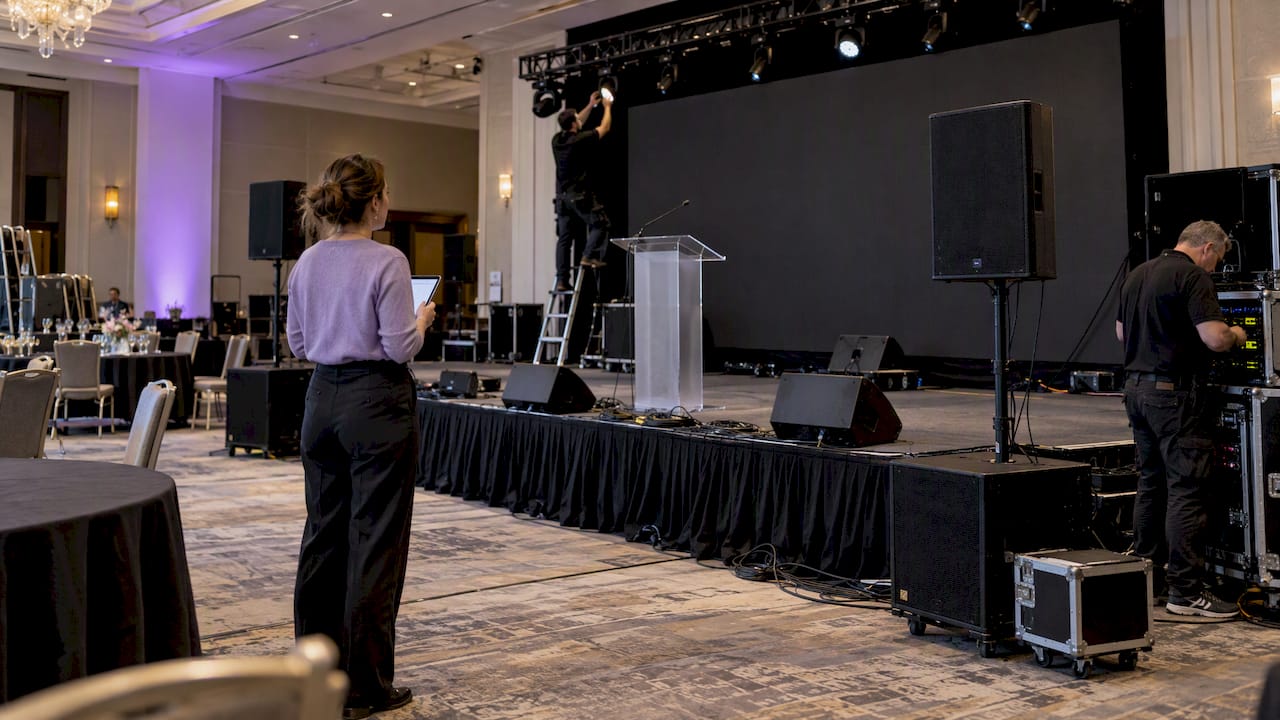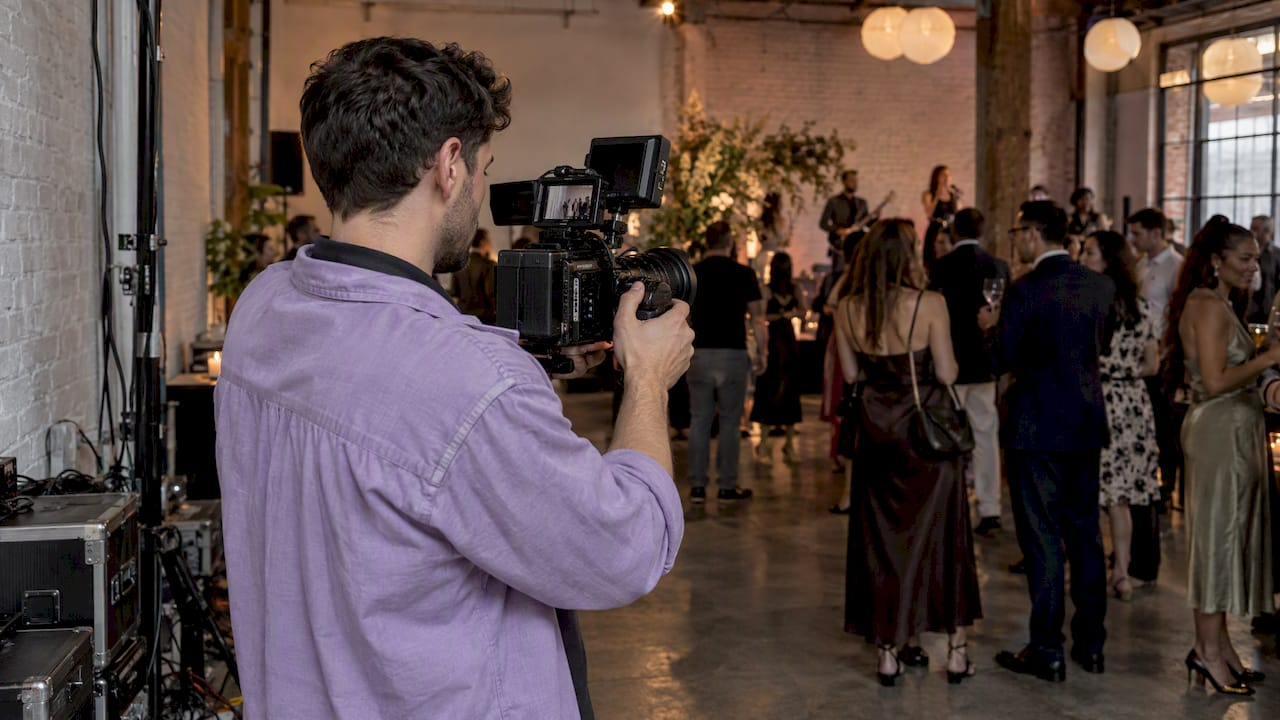
Discover the art of defining themed event decor. Learn how intentional design creates a memorable experience that captivates your guests.
TL;DR:
• Themed event decor involves designing colors, lighting, and focal elements to create a cohesive atmosphere. It emphasizes a clear concept, intentional focal points, and integration of decor with entertainment and venue architecture. Successful events rely on restraint, full planning, and choosing a theme that aligns with goals and resources.
Themed event decor is the intentional design and arrangement of colors, materials, lighting, and focal elements that craft a unified atmosphere for any event. In the industry, this practice is often called experiential event design, a term that captures the full scope of defining themed event decor beyond surface styling. A strong theme gives every visual choice a reason to exist. It guides guests through a deliberate experience rather than a collection of pretty objects. Theme clarity supports purposeful decoration instead of guessing, which means your budget works harder and your guests feel the difference.
Defining themed event decor means choosing a clear concept and then applying it consistently across every visual and sensory layer of your event. The concept is not just a color or a prop. It is a story your guests walk into and experience from arrival to departure.
Industry professionals categorize themes into two types: plug-and-play themes and full-production themes. Plug-and-play themes use pre-packaged rentals and standard setups that require minimal custom work. Full-production themes involve custom fabrication, specialized lighting rigs, and coordinated entertainment. Knowing which category your event falls into before you start planning prevents last-minute stress and budget overruns.
The difference between a decorated room and a designed experience is the guest journey. Integrating entertainment, atmosphere, and venue architecture with your decor creates immersion. Without that integration, even expensive decor reads as staged rather than intentional.
The right theme matches your event’s purpose, your guests’ expectations, and your actual bandwidth. Choosing a theme you cannot execute fully is worse than choosing a simpler one and executing it well.
Start by answering these questions before you pick a single color or prop:
• What is the event’s purpose? A corporate awards night calls for a different visual language than a birthday party or a bar mitzvah.
• Who are your guests? Age range, dress code expectations, and cultural context all shape how a theme lands.
• What does your venue support naturally? A loft with exposed brick already tells a story. A ballroom with chandeliers supports a different one.
• What is your production capacity? Mismatching thematic ambition with organizational bandwidth is the primary cause of event planning stress. Be honest about your team’s time and skills.
• What is your memorable hook? A theme needs one clear, simple concept that guests can describe in five words or fewer.
Pro Tip: Pick a theme you can name in three words. “Old Hollywood Glamour,” “Tropical Garden Party,” or “Midnight in Manhattan” are all clear enough to guide every vendor decision without a lengthy brief.
Once you have a concept, assign it a category. Plug-and-play themes like a photo booth setup or a karaoke night require far less coordination than a fully custom immersive environment. Matching scope to resources is the single most practical step in theme planning.
Color, texture, and focal points are the three structural pillars of any well-executed event decoration theme. Get these right and the rest of the decor falls into place.
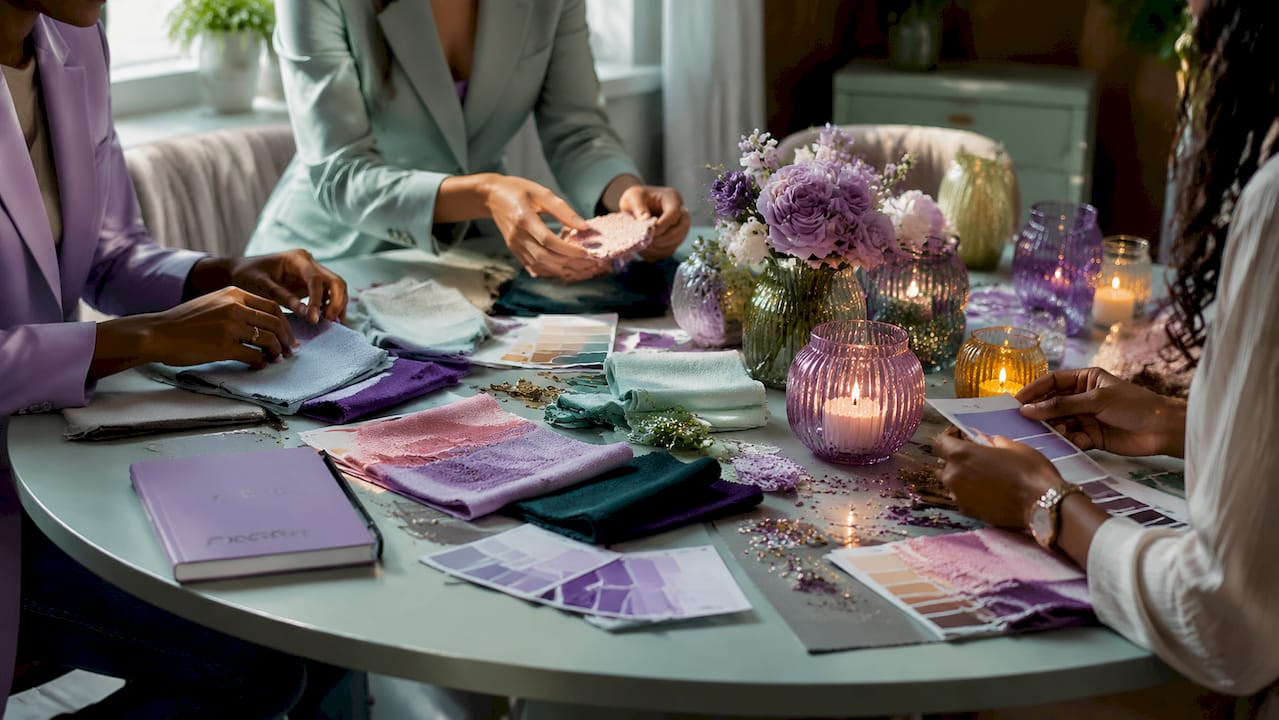
A strict color palette of 2–3 tones repeated across all elements maintains cohesion without appearing artificial. Choose one primary color and one or two complementary tones. Apply them to linens, florals, signage, lighting gels, and even staff attire. Repetition is what makes a palette feel intentional rather than accidental.
Flat, uniform surfaces make a room feel cheap regardless of the budget. Pair matte finishes with gloss, fabric with metal, and soft elements with hard ones. A velvet table runner next to a glass vase creates visual interest that a matching set of plastic props never will. Selecting a limited color palette that is strategically repeated and textured makes even modest budgets look polished.
| Focal Area | Why It Works | Example |
|---|---|---|
| Entrance | First impression sets the tone | Balloon arch, floral gate, branded step-and-repeat |
| Stage or head table | Natural guest attention anchor | Draped backdrop, uplighting, large floral installation |
| Photo moment wall | Encourages guest interaction | Branded backdrop, mirror frame, neon sign |
Focusing on 2–3 large-scale anchor installations instead of many small props avoids visual clutter and enhances the perception of sophistication. Negative space is not empty space. It is the breathing room that makes your hero elements stand out.
Pro Tip: Replace quantity with scale. One large linen banner reads more powerfully than ten small posters. Replacing quantity with scale elevates design impact at the same or lower cost.
Lighting is the most critical tool for upgrades in event decor, outperforming most other elements when done correctly. A room with great props but harsh overhead fluorescents will always feel flat. A room with modest decor and thoughtful lighting feels curated and intentional.
Follow these steps to use lighting effectively:
1. Turn off overhead lighting first. Overhead lights flatten shadows and expose every venue flaw. Switching them off is the single fastest upgrade you can make.
2. Use bottom lighting. Candles, table lamps, and focused spotlights create depth, warmth, and shadow that overhead fixtures cannot replicate.
3. Add colored uplighting. Uplights placed at the base of walls wash the room in your palette’s primary color. This technique ties the entire space together without adding a single prop.
4. Spotlight your focal points. A pin spot aimed at a centerpiece or a wash light behind a backdrop draws the eye exactly where you want it.
5. Use materials that interact with light. Glass, acrylic, and mirrors reflect and refract light, creating architectural interest without additional decor. A mirrored table runner doubles the candlelight on every table.
For deeper guidance on venue-specific lighting setups, the event lighting tips for NYC and NJ resource from Porcci NYC covers practical configurations for a range of venue types.
Pro Tip: For corporate events on a tight budget, brand-colored balloons and a balloon arch serve as both a visual anchor and a cost-effective lighting backdrop. Brand-colored balloons and branded backdrops are among the most budget-efficient decor anchors available.
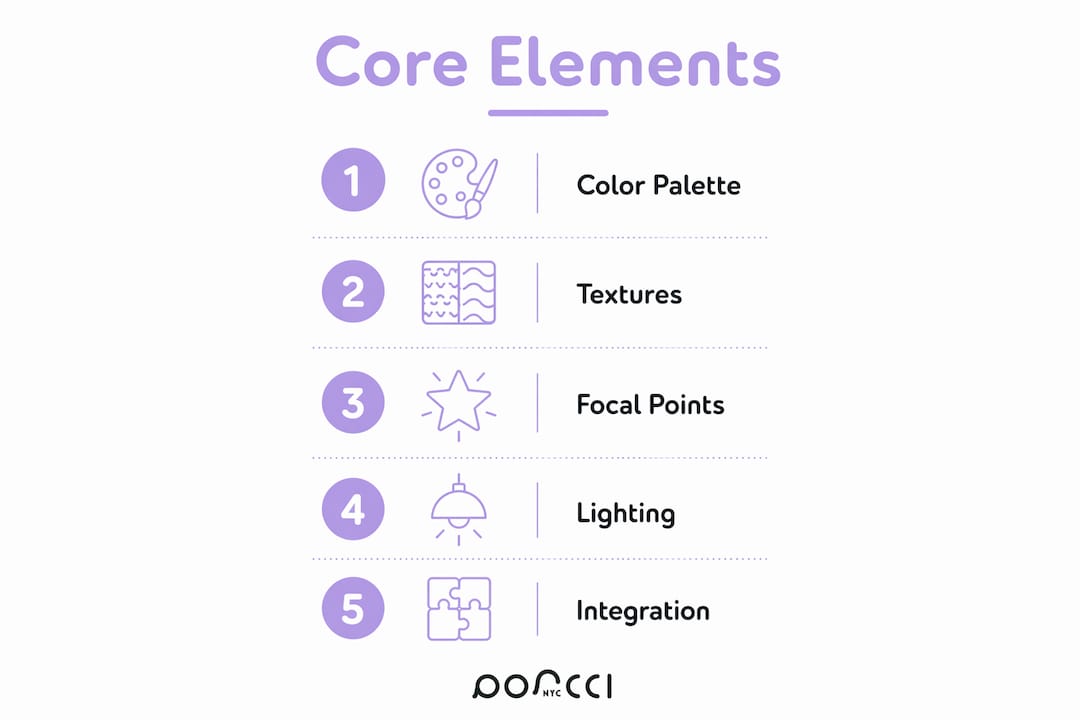
The most common mistake in event decoration is choosing visuals before defining the guest experience. Designing the guest experience before selecting visuals ensures a cohesive, immersive result rather than a staged look. Start with behavior and movement, then layer visuals on top.
Ask yourself how guests will move through the space, where they will gather, and what moments you want them to remember. The answers tell you where to concentrate your decor investment.
Align every vendor and element with the theme:
• Catering: Menu names, presentation style, and even napkin folds can reinforce a theme. A “Midnight in Manhattan” event with generic buffet trays breaks immersion immediately.
• Entertainment: DJ sets, karaoke song lists, and live music selections should match the theme’s era, energy, and mood. Misalignment between catering, production, and entertainment with the theme diminishes professionalism and immersion.
• Venue architecture: Venue architecture should support and be integrated into the theme’s story, not overridden or hidden. Exposed brick, vaulted ceilings, and industrial beams are assets, not problems.
• Signage and wayfinding: Directional signs, table numbers, and menus are decor elements too. Keeping them on-theme closes the gaps that break immersion.
The 9 proven ways to enhance event atmosphere resource from Porcci NYC expands on how entertainment and decor work together to shape the full guest experience.
Defining themed event decor requires a clear concept, a strict color palette, intentional focal points, and full alignment between decor, lighting, entertainment, and venue architecture.
| Point | Details |
|---|---|
| Theme categorization matters | Classify your theme as plug-and-play or full-production before committing to any vendor. |
| Color palette discipline | Limit your palette to 2–3 tones and repeat them across every visual element for cohesion. |
| Focal points over quantity | Invest in 2–3 large-scale anchor installations rather than filling every corner with small props. |
| Lighting first | Turn off overhead lights and use bottom lighting to transform atmosphere at minimal cost. |
| Experience before visuals | Define guest movement and key moments before selecting any decor element. |
After working with planners across New York City and New Jersey on events ranging from intimate private parties to large corporate gatherings, one pattern stands out clearly. The events that land well are almost never the ones with the biggest budgets. They are the ones where someone made a decision early on to commit to a concept and say no to everything that did not serve it.
The hardest thing to convince a first-time planner of is that restraint is a design choice. Adding more props, more colors, and more centerpieces feels productive. It rarely is. The events that guests remember are the ones where the lighting was right, the entrance made an impression, and the entertainment matched the room’s energy. Everything else was secondary.
The other mistake I see repeatedly is treating decor and entertainment as separate departments. They are not. A DJ playing the wrong genre for a themed event undoes hours of careful decoration. A photo booth placed in a dark corner goes unused. When decor, lighting, and entertainment are planned together from the start, the result feels polished in a way that no amount of last-minute additions can replicate.
My honest recommendation: pick a theme you can describe in one sentence, build your lighting plan before you buy a single prop, and make sure every vendor in the room knows the concept before the event day.
— PORCCI
A well-defined theme needs the right technical support to come to life. Porcci NYC provides AV and sound system rentals in NYC that cover everything from uplighting and spotlights to full sound systems for any event size. Whether you are planning a corporate gala in Manhattan or a private party in New Jersey, the right AV setup ties your lighting design, entertainment, and atmosphere into a single cohesive experience. Porcci NYC also offers photo booth rentals that serve as both a guest activity and a branded focal point, reinforcing your theme from arrival to the last photo of the night.
Themed event decor is the intentional selection and arrangement of colors, materials, lighting, and focal elements to create a unified atmosphere that reflects a specific concept or story throughout an event.
A palette of 2–3 tones repeated across all elements maintains cohesion. One primary color paired with one or two complementary tones is the standard recommendation for professional event design.
Plug-and-play themes use pre-packaged rentals and standard setups with minimal custom work. Full-production themes require custom fabrication, specialized lighting, and coordinated entertainment, making them more resource-intensive.
Lighting shapes the entire atmosphere of a room and conceals venue flaws that props cannot fix. Bottom lighting techniques like candles, table lamps, and spotlights create depth and warmth that overhead lighting eliminates.
Focus your investment on 2–3 large-scale anchor installations and use negative space intentionally. Replacing many small props with one or two statement pieces creates a more sophisticated result at the same or lower cost.
Discover the art of defining themed event decor. Learn how intentional design creates a memorable experience that captivates your guests.
TL;DR:
• Themed event decor involves designing colors, lighting, and focal elements to create a cohesive atmosphere. It emphasizes a clear concept, intentional focal points, and integration of decor with entertainment and venue architecture. Successful events rely on restraint, full planning, and choosing a theme that aligns with goals and resources.
Themed event decor is the intentional design and arrangement of colors, materials, lighting, and focal elements that craft a unified atmosphere for any event. In the industry, this practice is often called experiential event design, a term that captures the full scope of defining themed event decor beyond surface styling. A strong theme gives every visual choice a reason to exist. It guides guests through a deliberate experience rather than a collection of pretty objects. Theme clarity supports purposeful decoration instead of guessing, which means your budget works harder and your guests feel the difference.
Defining themed event decor means choosing a clear concept and then applying it consistently across every visual and sensory layer of your event. The concept is not just a color or a prop. It is a story your guests walk into and experience from arrival to departure.
Industry professionals categorize themes into two types: plug-and-play themes and full-production themes. Plug-and-play themes use pre-packaged rentals and standard setups that require minimal custom work. Full-production themes involve custom fabrication, specialized lighting rigs, and coordinated entertainment. Knowing which category your event falls into before you start planning prevents last-minute stress and budget overruns.
The difference between a decorated room and a designed experience is the guest journey. Integrating entertainment, atmosphere, and venue architecture with your decor creates immersion. Without that integration, even expensive decor reads as staged rather than intentional.
The right theme matches your event’s purpose, your guests’ expectations, and your actual bandwidth. Choosing a theme you cannot execute fully is worse than choosing a simpler one and executing it well.
Start by answering these questions before you pick a single color or prop:
• What is the event’s purpose? A corporate awards night calls for a different visual language than a birthday party or a bar mitzvah.
• Who are your guests? Age range, dress code expectations, and cultural context all shape how a theme lands.
• What does your venue support naturally? A loft with exposed brick already tells a story. A ballroom with chandeliers supports a different one.
• What is your production capacity? Mismatching thematic ambition with organizational bandwidth is the primary cause of event planning stress. Be honest about your team’s time and skills.
• What is your memorable hook? A theme needs one clear, simple concept that guests can describe in five words or fewer.
Pro Tip: Pick a theme you can name in three words. “Old Hollywood Glamour,” “Tropical Garden Party,” or “Midnight in Manhattan” are all clear enough to guide every vendor decision without a lengthy brief.
Once you have a concept, assign it a category. Plug-and-play themes like a photo booth setup or a karaoke night require far less coordination than a fully custom immersive environment. Matching scope to resources is the single most practical step in theme planning.
Color, texture, and focal points are the three structural pillars of any well-executed event decoration theme. Get these right and the rest of the decor falls into place.
A strict color palette of 2–3 tones repeated across all elements maintains cohesion without appearing artificial. Choose one primary color and one or two complementary tones. Apply them to linens, florals, signage, lighting gels, and even staff attire. Repetition is what makes a palette feel intentional rather than accidental.
Flat, uniform surfaces make a room feel cheap regardless of the budget. Pair matte finishes with gloss, fabric with metal, and soft elements with hard ones. A velvet table runner next to a glass vase creates visual interest that a matching set of plastic props never will. Selecting a limited color palette that is strategically repeated and textured makes even modest budgets look polished.
| Focal Area | Why It Works | Example |
|---|---|---|
| Entrance | First impression sets the tone | Balloon arch, floral gate, branded step-and-repeat |
| Stage or head table | Natural guest attention anchor | Draped backdrop, uplighting, large floral installation |
| Photo moment wall | Encourages guest interaction | Branded backdrop, mirror frame, neon sign |
Focusing on 2–3 large-scale anchor installations instead of many small props avoids visual clutter and enhances the perception of sophistication. Negative space is not empty space. It is the breathing room that makes your hero elements stand out.
Pro Tip: Replace quantity with scale. One large linen banner reads more powerfully than ten small posters. Replacing quantity with scale elevates design impact at the same or lower cost.
Lighting is the most critical tool for upgrades in event decor, outperforming most other elements when done correctly. A room with great props but harsh overhead fluorescents will always feel flat. A room with modest decor and thoughtful lighting feels curated and intentional.
Follow these steps to use lighting effectively:
1. Turn off overhead lighting first. Overhead lights flatten shadows and expose every venue flaw. Switching them off is the single fastest upgrade you can make.
2. Use bottom lighting. Candles, table lamps, and focused spotlights create depth, warmth, and shadow that overhead fixtures cannot replicate.
3. Add colored uplighting. Uplights placed at the base of walls wash the room in your palette’s primary color. This technique ties the entire space together without adding a single prop.
4. Spotlight your focal points. A pin spot aimed at a centerpiece or a wash light behind a backdrop draws the eye exactly where you want it.
5. Use materials that interact with light. Glass, acrylic, and mirrors reflect and refract light, creating architectural interest without additional decor. A mirrored table runner doubles the candlelight on every table.
For deeper guidance on venue-specific lighting setups, the event lighting tips for NYC and NJ resource from Porcci NYC covers practical configurations for a range of venue types.
Pro Tip: For corporate events on a tight budget, brand-colored balloons and a balloon arch serve as both a visual anchor and a cost-effective lighting backdrop. Brand-colored balloons and branded backdrops are among the most budget-efficient decor anchors available.
The most common mistake in event decoration is choosing visuals before defining the guest experience. Designing the guest experience before selecting visuals ensures a cohesive, immersive result rather than a staged look. Start with behavior and movement, then layer visuals on top.
Ask yourself how guests will move through the space, where they will gather, and what moments you want them to remember. The answers tell you where to concentrate your decor investment.
Align every vendor and element with the theme:
• Catering: Menu names, presentation style, and even napkin folds can reinforce a theme. A “Midnight in Manhattan” event with generic buffet trays breaks immersion immediately.
• Entertainment: DJ sets, karaoke song lists, and live music selections should match the theme’s era, energy, and mood. Misalignment between catering, production, and entertainment with the theme diminishes professionalism and immersion.
• Venue architecture: Venue architecture should support and be integrated into the theme’s story, not overridden or hidden. Exposed brick, vaulted ceilings, and industrial beams are assets, not problems.
• Signage and wayfinding: Directional signs, table numbers, and menus are decor elements too. Keeping them on-theme closes the gaps that break immersion.
The 9 proven ways to enhance event atmosphere resource from Porcci NYC expands on how entertainment and decor work together to shape the full guest experience.
Defining themed event decor requires a clear concept, a strict color palette, intentional focal points, and full alignment between decor, lighting, entertainment, and venue architecture.
| Point | Details |
|---|---|
| Theme categorization matters | Classify your theme as plug-and-play or full-production before committing to any vendor. |
| Color palette discipline | Limit your palette to 2–3 tones and repeat them across every visual element for cohesion. |
| Focal points over quantity | Invest in 2–3 large-scale anchor installations rather than filling every corner with small props. |
| Lighting first | Turn off overhead lights and use bottom lighting to transform atmosphere at minimal cost. |
| Experience before visuals | Define guest movement and key moments before selecting any decor element. |
After working with planners across New York City and New Jersey on events ranging from intimate private parties to large corporate gatherings, one pattern stands out clearly. The events that land well are almost never the ones with the biggest budgets. They are the ones where someone made a decision early on to commit to a concept and say no to everything that did not serve it.
The hardest thing to convince a first-time planner of is that restraint is a design choice. Adding more props, more colors, and more centerpieces feels productive. It rarely is. The events that guests remember are the ones where the lighting was right, the entrance made an impression, and the entertainment matched the room’s energy. Everything else was secondary.
The other mistake I see repeatedly is treating decor and entertainment as separate departments. They are not. A DJ playing the wrong genre for a themed event undoes hours of careful decoration. A photo booth placed in a dark corner goes unused. When decor, lighting, and entertainment are planned together from the start, the result feels polished in a way that no amount of last-minute additions can replicate.
My honest recommendation: pick a theme you can describe in one sentence, build your lighting plan before you buy a single prop, and make sure every vendor in the room knows the concept before the event day.
— PORCCI
A well-defined theme needs the right technical support to come to life. Porcci NYC provides AV and sound system rentals in NYC that cover everything from uplighting and spotlights to full sound systems for any event size. Whether you are planning a corporate gala in Manhattan or a private party in New Jersey, the right AV setup ties your lighting design, entertainment, and atmosphere into a single cohesive experience. Porcci NYC also offers photo booth rentals that serve as both a guest activity and a branded focal point, reinforcing your theme from arrival to the last photo of the night.
Themed event decor is the intentional selection and arrangement of colors, materials, lighting, and focal elements to create a unified atmosphere that reflects a specific concept or story throughout an event.
A palette of 2–3 tones repeated across all elements maintains cohesion. One primary color paired with one or two complementary tones is the standard recommendation for professional event design.
Plug-and-play themes use pre-packaged rentals and standard setups with minimal custom work. Full-production themes require custom fabrication, specialized lighting, and coordinated entertainment, making them more resource-intensive.
Lighting shapes the entire atmosphere of a room and conceals venue flaws that props cannot fix. Bottom lighting techniques like candles, table lamps, and spotlights create depth and warmth that overhead lighting eliminates.
Focus your investment on 2–3 large-scale anchor installations and use negative space intentionally. Replacing many small props with one or two statement pieces creates a more sophisticated result at the same or lower cost.