Planner-tested rain plan for outdoor weddings that uses CDC and NWS safety triggers, vendor-ready run sheets, and a printable 72, 48, 24, 6, 0 hour...
Make a written, trigger-based rain plan and lock in shelter, monitoring, and communications before anything else. Name a weather watcher, pick one shelter option, choose your monitoring tools, and set the channel you will use to reach guests and vendors. Secure those three pieces now: a tent or indoor backup, someone watching the sky, and a second way to reach guests if texts fail.
TL;DR:
• Reliable weather thresholds, such as hearing thunder or approaching wind limits, should be set and communicated in advance to trigger sheltering decisions automatically.
• The shelter selection must include documented wind ratings, drainage systems, and flooring solutions to ensure safety and protect site conditions during rain.
• The rain plan should designate specific roles for decision-makers, safety officers, and vendors, with clear communication channels and backup messaging templates.
• Indoor or fully enclosed venues are safest for lightning, and moving to higher ground or delaying is critical during flooding or rapidly rising water.
• Early vendor coordination, detailed equipment staging, and purchasing flexible rentals help maintain event continuity regardless of weather changes.
• What Is a Rain Contingency Plan, and Who Should Own It?
• Shelter and Site Setup That Actually Hold Up in Rain
• Weather Triggers That Take the Guesswork Out of the Call
• Who Tells Guests and Vendors, and How
• Your 72-48-24-6-0 Hour Decision Schedule
• What to Budget, and What Your Vendor Contracts Should Say
• Keeping Photos, Sound, and Performers On Track Under Cover
• Non-Negotiable Safety Rules for Rain, Wind, and Flooding
• A Vendor-Ready Checklist Modeled on Real Event Coordination
• The Trade-Off Nobody Talks About Enough
• How Porcci NYC Helps You Rain-Proof the Celebration
• Where to Find the Official Guidance Behind This Plan
• Sources
• FAQ
A rain contingency plan is a written document, not a vague backup idea. It spells out exactly what happens if weather turns: who decides, what shelter gets used, how guests and vendors find out, and when each step happens. An informal plan (“we’ll figure it out if it rains”) leaves too much room for panic when the sky actually opens up.
A real plan guarantees four things: guest and vendor safety, a decision made on time instead of at the last minute, smooth vendor coordination, and a celebration that still feels intentional under cover. That means naming roles before the big day, not during it.
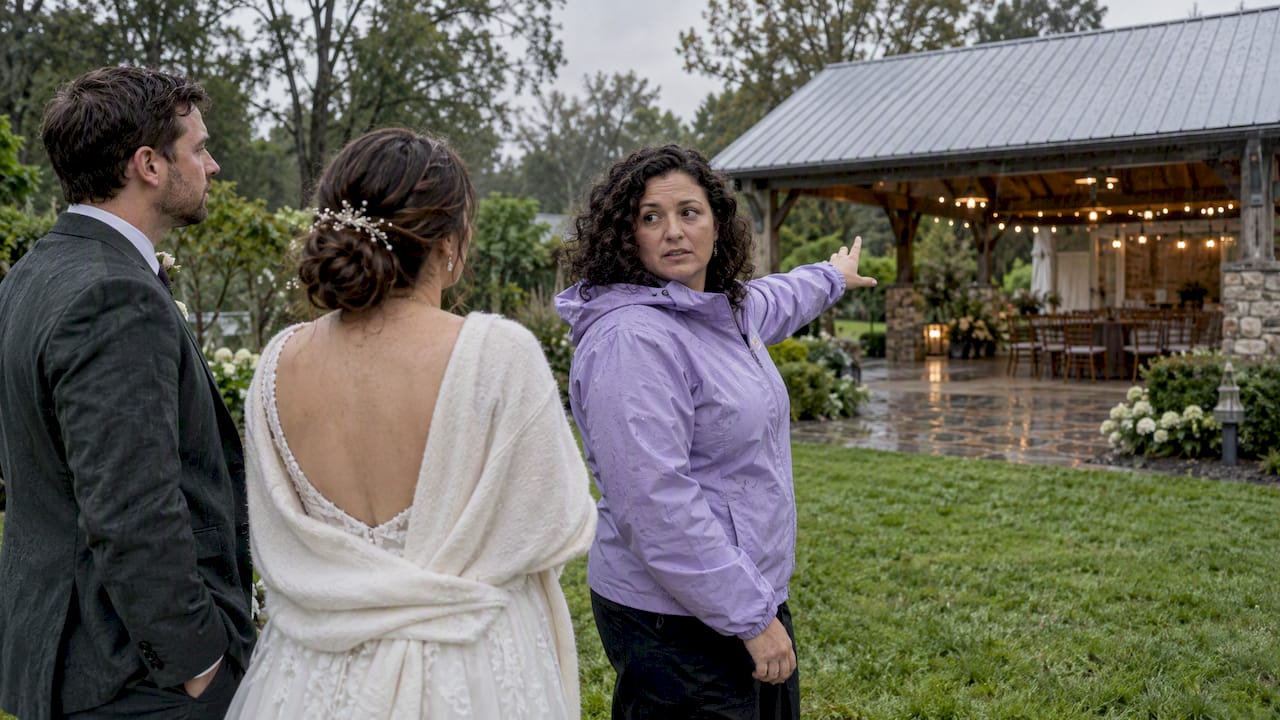
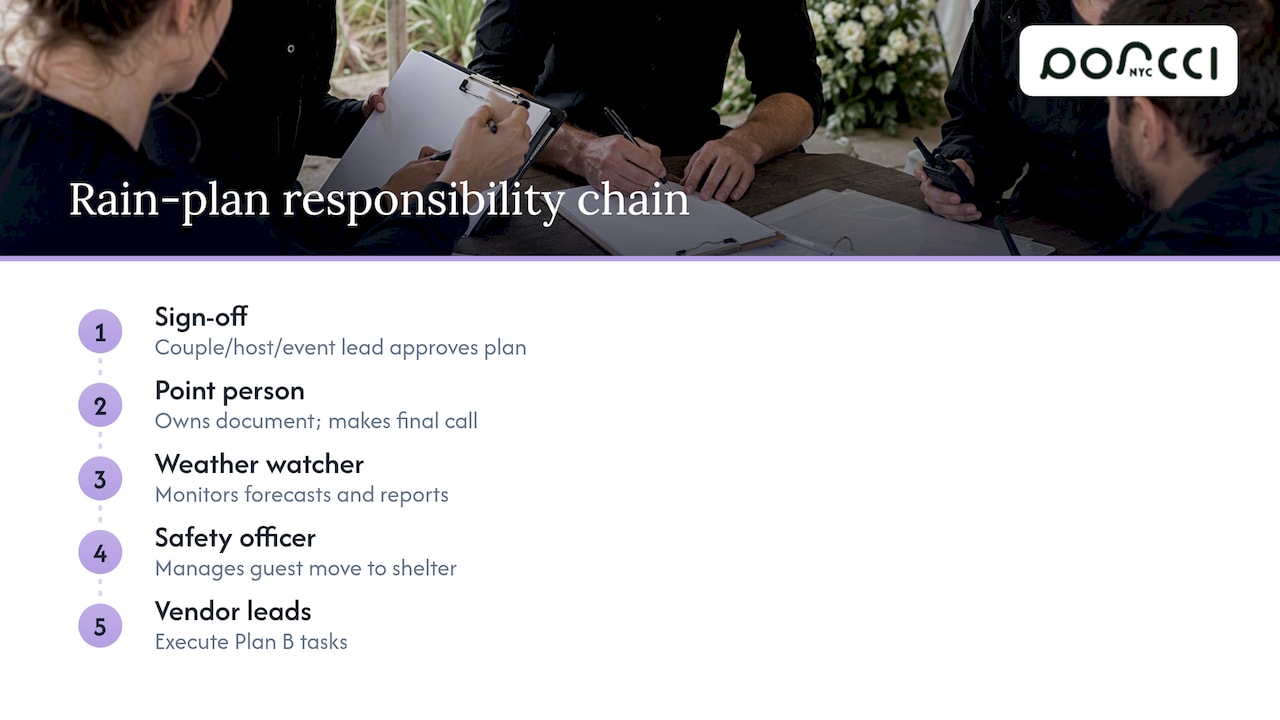
You need a planner or point person who owns the document and makes the final call, a weather watcher who tracks conditions and reports in, a safety officer who manages the physical move to shelter, and vendor leads who execute their part of Plan B without needing instructions repeated three times. The couple, host, or event lead signs off on the plan in advance. On the day itself, the point person executes it, and everyone else follows their lane.
Your shelter choice depends on your venue and your tolerance for risk. A venue with a true indoor backup, like a ballroom or covered pavilion, beats tenting every time because it removes wind and lightning exposure entirely. When tenting is your only option, treat it as infrastructure, not decoration.
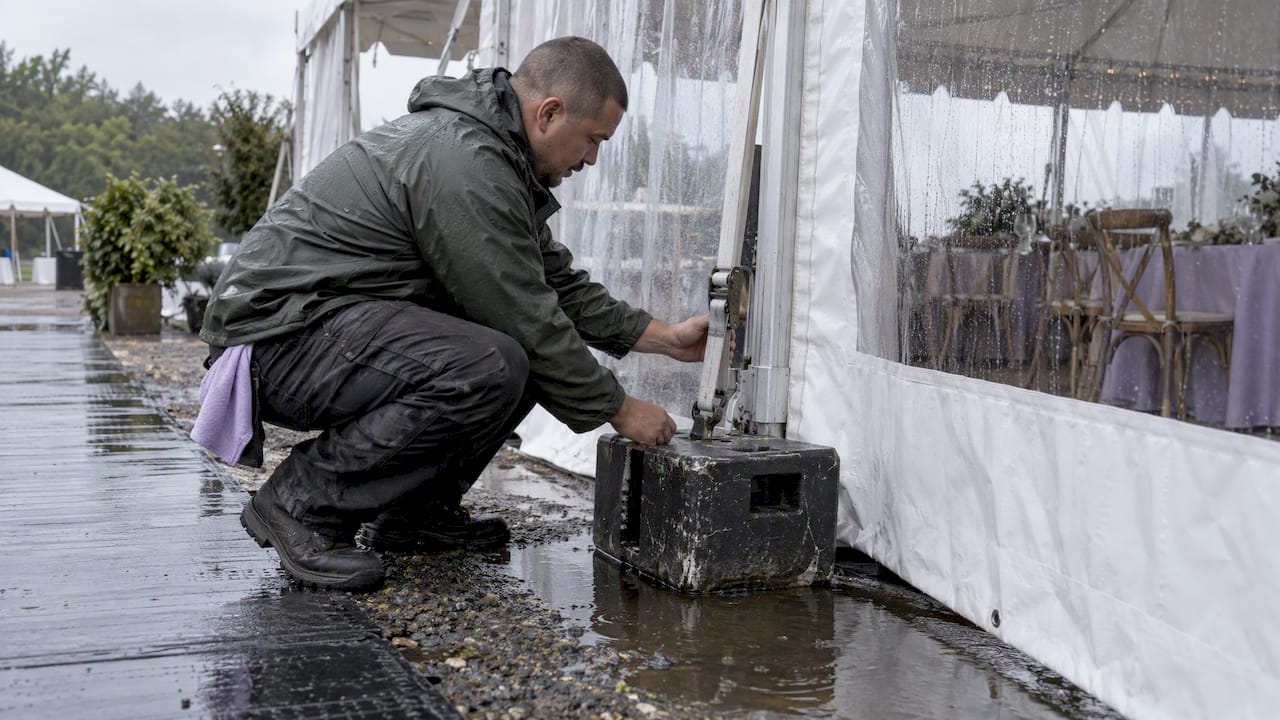
Sidewalls keep wind-driven rain out, but they need to come with a plan for airflow so the tent does not turn stuffy. Gutters between connected tent sections route water away from walkways and equipment. Flooring matters more than most people expect: turf gets slick and muddy fast, so subfloor or interlocking panels protect both guests and gear, and ramps handle wheelchair and stroller access without turning into a hazard.
Before you sign anything, ask your tent vendor for the tent’s wind rating in writing and what wind speed triggers an evacuation order. That number should come from the manufacturer, not a guess.
• Confirm anchoring method (stakes vs. water barrels vs. concrete) matches your site’s ground conditions.
• Ask whether the tent has a documented wind rating and evacuation trigger.
• Request drainage or gutter systems for any multi-tent layout.
• Choose flooring that protects turf and supports ADA-compliant ramps.
• Add heaters or fans depending on season, since a covered space still needs climate control.
Pro Tip: Walk the tented layout with your caterer and florist before the event, not the morning of, so nobody discovers a low ceiling clearance the hard way.
The hardest part of any rain plan is deciding when to pull the trigger. Pre-agreed thresholds remove emotion from that moment, so nobody is arguing about it while guests get wet.
Start with lightning. If you can hear thunder, you are already within striking range, and that is the CDC’s clear guidance for organized outdoor events: move everyone to a fully enclosed building immediately, and do not resume outdoor activity until 30 minutes after the last thunder. Tents and open-sided structures do not count as shelter for lightning.
Wind is the next trigger, and it should be tied directly to your tent’s manufacturer rating with a safety buffer built in, confirmed with your vendor ahead of time. Ground saturation and flash flood indicators, standing water, rapidly rising creek levels, soil that can no longer absorb runoff, should trigger relocation or postponement rather than a wait-and-see approach.
• Lightning heard means immediate shelter, full stop.
• Wind approaching the tent’s rated limit means evacuation begins before the limit is reached.
• Visible flooding or saturated ground near the ceremony site means relocating before guests arrive.
• The weather watcher logs each decision time so the point person has a record.
Official event planning guidance recommends documenting thresholds tied to specific hazards, including lightning radius, wind speed, and flooding, so that sheltering starts automatically rather than being debated in the moment. This kind of severe weather planning guide also recommends a practice walkthrough with vendors so the move to shelter is rehearsed, not improvised.
A trigger is only useful if the right people hear about it fast. Build redundancy into your communication plan so one dead phone battery does not derail the whole thing.
1. Set a primary channel, usually a mass text service, and a backup, like onsite signage or staff runners posted at entry points.
2. Brief your DJ or MC to make a calm PA announcement the moment Plan B activates, since a live voice reaches people faster than a phone notification.
3. Separate pre-event communication (a line on the invitation or website noting a rain plan exists) from real-time day-of alerts (the actual trigger notification).
4. Confirm ahead of time who has authority to greenlight Plan B: typically the point person, informed by the weather watcher.
5. Plan transport for guests who need help moving to shelter, especially anyone using a wheelchair or walker, and assign a staff member to that job specifically.
Weather-alert text templates make this easier to execute without scrambling to write messages under pressure, and services like TextMyGuests publish reusable examples for exactly this situation.
A timeline turns a vague sense of dread into a series of manageable checkpoints. Work backward from the event and confirm something at each stage.
1. 72 hours out: Start monitoring extended forecasts and confirm your tent and flooring vendor still has your order staged.
2. 48 hours out: Call every vendor to confirm Plan B readiness and reconfirm delivery windows.
3. 24 hours out: Check hourly forecasts, brief your weather watcher and safety officer, and send guests a heads-up if conditions look shaky.
4. 6 hours out: Make a near-final call on Plan A versus Plan B based on radar and local forecast.
5. 0 hour (day-of): The weather watcher checks conditions every 30 minutes once skies look uncertain, and the point person is ready to trigger the communication plan the moment a threshold is crossed.
A short, printable version of this schedule, taped inside a binder or saved on a phone, keeps the point person from having to remember every step from memory during a stressful hour.
Rain backups cost money, and pretending otherwise leads to bad surprises. Tent rentals, flooring, extra staffing, and guest transport all add line items to a budget that a fair-weather plan would not need. Renting a tent early matters too: wedding planning guidance notes that availability can disappear during peak season, so booking your backup alongside your main rentals avoids a scramble later.
Your contracts should spell out a few things clearly before you sign:
• The deadline for deciding to activate Plan B, and who is allowed to make that call.
• Cancellation, postponement, and transfer terms specific to weather, not just general cancellation policy.
• Proof of insurance and a clear damage policy for tents, flooring, and AV gear.
• Whether setup crews can pivot to the indoor layout on short notice, and how much lead time they need.
Pro Tip: Ask every vendor directly, “What’s your weather cutoff, and what happens to my deposit if we trigger Plan B?” A vendor who answers without hesitation has done this before.
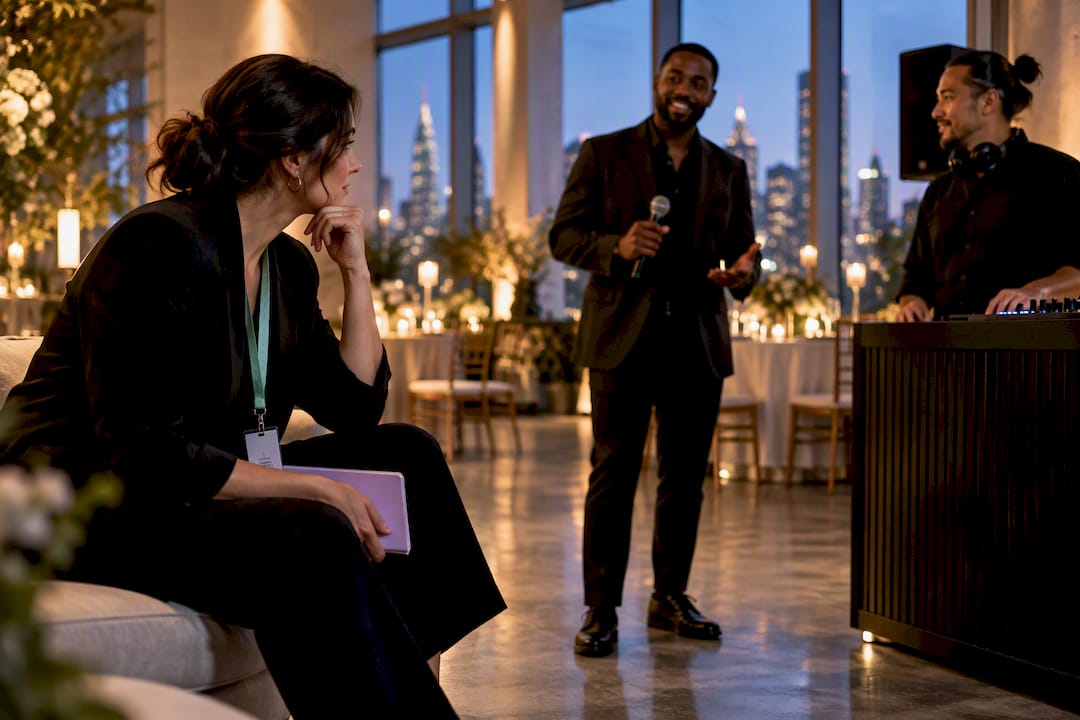
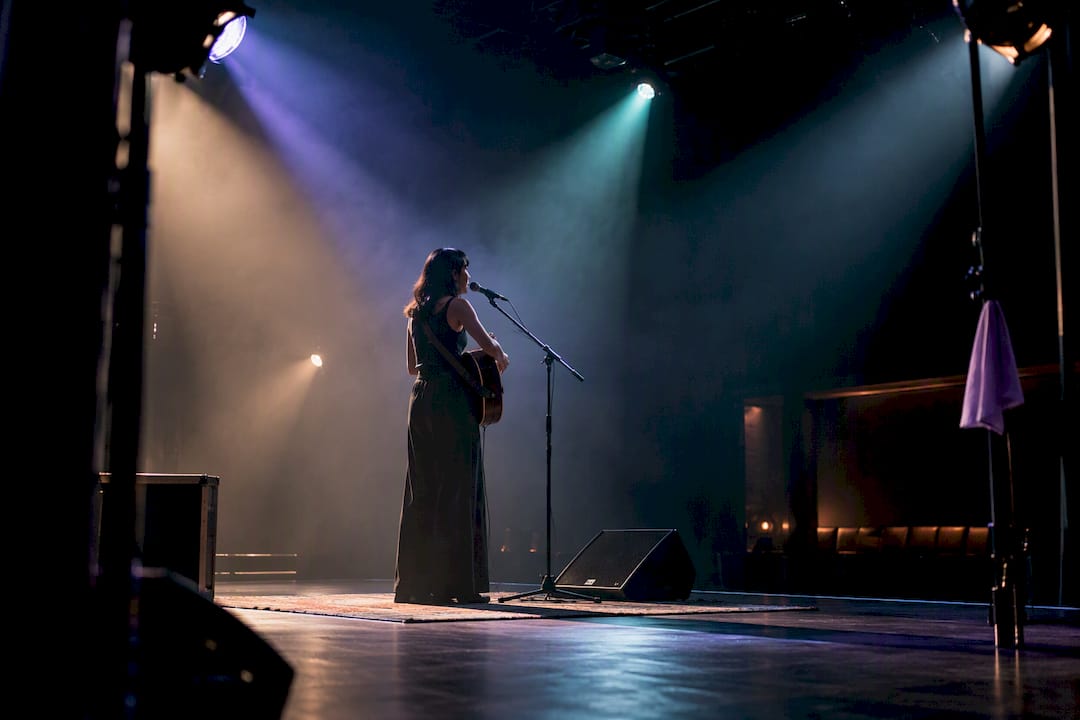
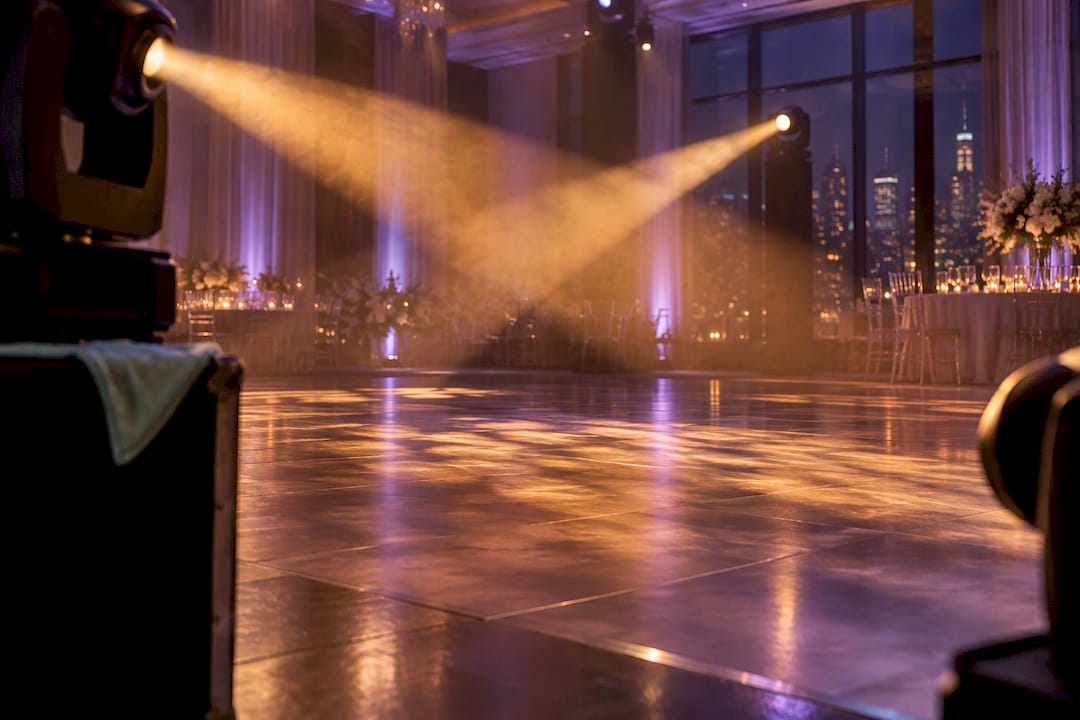
A tented or indoor Plan B changes your lighting, your acoustics, and your sightlines, so your photographer and entertainers need the new layout in advance, not as a surprise. Share the Plan B floor plan and a few reference photos of the covered space so your photographer can plan for lower ceilings or dimmer light.
AV setups under tents need power runs and cable ramps mapped out ahead of time, since tent poles and sidewalls change where speakers and mics can go. Performers need a defined staging area with sightlines to the crowd that work in the smaller footprint.
• Share Plan B lighting and layout details with your photographer before the event, not during the pivot.
• Confirm cable ramps and power distribution for any AV gear moving under a tent.
• Give performers a set staging area and adjusted set times if the transition eats into the schedule.
• Pack guest comfort items, umbrellas, ponchos, or shoe booties, so the walk to shelter does not wreck anyone’s outfit.
Some parts of a rain plan are not up for debate. Lightning safety tops that list: move everyone into a fully enclosed building, since tents offer no protection, and wait the full 30 minutes after the last thunder before anyone steps back outside, per CDC guidance.
Flash flooding calls for the same seriousness. If standing water or rising runoff appears near the site, move to higher ground or delay the event rather than waiting to see if it gets worse.
A documented safety officer and a rehearsed sheltering procedure reduce confusion and speed up evacuation when every minute counts. That role should be assigned to a specific person, briefed in advance, and given a direct line to whoever is authorizing the move.
• Lightning heard means immediate shelter in a fully enclosed building, no exceptions.
• Wait 30 minutes after the last thunderclap before resuming outdoor activity.
• Flooding or fast-rising water means relocating to higher ground or postponing.
• Guests with mobility needs or young children should have a named staff member assigned to help them move quickly.
Porcci NYC coordinates a lot of moving parts when an outdoor event shifts to a tented or indoor setup, and the pattern that works is simple: confirm vendor call times early, stage equipment before the weather turns, and keep one person accountable for the final call.
A practical version looks like this: tech staff arrive early enough to test AV under both layouts, delivery crews are on call rather than locked into one drop-off window, and photo booth or entertainment setups get a clear Plan B footprint marked out in advance.
• Confirm vendor call times against both Plan A and Plan B setup windows.
• Keep a tech staff member or song operator on call to handle AV adjustments under a tent.
• Hand every vendor a one-page checklist with the shelter location, trigger thresholds, and the point person’s number.
Pro Tip: Give vendors the same one-page checklist you give your wedding party. When everyone is reading from the same document, the pivot happens in minutes, not arguments.
Most couples chase the prettiest Plan B instead of the most reliable one, and that is backward. A slightly less photogenic tent with a solid wind rating beats a gorgeous open-air setup that turns dangerous at 25 miles per hour. Keep guests comfortable during the shift, hand your team real decisions to make, and let one named person make the final call so nobody else has to.
— PORCCI
A rain plan works better when the people running your entertainment and AV are already used to setting up both ways. Porcci NYC handles the rentals and staffing that make a Plan B switch feel like part of the design, not a scramble, whether that means moving a DJ service and sound system under a tent or repositioning a photo booth closer to cover.
When you request a quote, have your guest count, venue type, and a rough idea of your backup layout ready, that’s what lets us match staffing and gear to both scenarios instead of just one. Porcci NYC’s planning services can help build that Plan B from scratch if you would rather not do it alone, and a few prime dates are still open for the coming season.
• AV and sound rentals sized for tented or indoor layouts.
• On-call tech staff who can pivot equipment setups without added confusion.
• Photo booth and entertainment options that travel well between Plan A and Plan B.
Ready to lock in your date and backup plan together? Start the booking process and get a quote built around both scenarios.
For the safety thresholds and planning steps covered above, the CDC’s lightning guidance, the NWS severe weather planning guide, and NWS outdoor event weather considerations are worth bookmarking. Local NWS offices also list contact info and NOAA Weather Radio frequencies for real-time monitoring on event day.
• Lightning and Organized Sporting Event Recommendations | Lightning | CDC
• Severe Weather Planning Guide
• Outdoor wedding backup plan guidance | The Knot
Move guests to your designated shelter, whether that is a tent, indoor room, or nearby building, following the trigger thresholds you set in advance. If lightning is present, guests must go to a fully enclosed structure, since tents provide no protection during a storm.
Start by naming a weather watcher and a point person, then document specific thresholds for lightning, wind, and flooding using severe weather planning guidance. Book your tent or indoor backup early, since availability can run out as noted in wedding backup planning advice, and build a communication plan for guests and vendors.
A well-prepared wedding shifts to its pre-arranged Plan B, whether that is a tented reception area or an indoor venue space, with vendors already briefed on the alternate layout. The key is having that backup designed and booked ahead of time rather than improvised on the day.
For a private gathering forced fully indoors, board games, a karaoke setup, or a casual dance floor with a portable sound system can keep the mood going without missing a beat. A compact AV or karaoke rental scaled for a living room or small venue can turn a rained-out outdoor plan into its own kind of party.
Planner-tested rain plan for outdoor weddings that uses CDC and NWS safety triggers, vendor-ready run sheets, and a printable 72, 48, 24, 6, 0 hour...
Make a written, trigger-based rain plan and lock in shelter, monitoring, and communications before anything else. Name a weather watcher, pick one shelter option, choose your monitoring tools, and set the channel you will use to reach guests and vendors. Secure those three pieces now: a tent or indoor backup, someone watching the sky, and a second way to reach guests if texts fail.
TL;DR:
• Reliable weather thresholds, such as hearing thunder or approaching wind limits, should be set and communicated in advance to trigger sheltering decisions automatically.
• The shelter selection must include documented wind ratings, drainage systems, and flooring solutions to ensure safety and protect site conditions during rain.
• The rain plan should designate specific roles for decision-makers, safety officers, and vendors, with clear communication channels and backup messaging templates.
• Indoor or fully enclosed venues are safest for lightning, and moving to higher ground or delaying is critical during flooding or rapidly rising water.
• Early vendor coordination, detailed equipment staging, and purchasing flexible rentals help maintain event continuity regardless of weather changes.
• What Is a Rain Contingency Plan, and Who Should Own It?
• Shelter and Site Setup That Actually Hold Up in Rain
• Weather Triggers That Take the Guesswork Out of the Call
• Who Tells Guests and Vendors, and How
• Your 72-48-24-6-0 Hour Decision Schedule
• What to Budget, and What Your Vendor Contracts Should Say
• Keeping Photos, Sound, and Performers On Track Under Cover
• Non-Negotiable Safety Rules for Rain, Wind, and Flooding
• A Vendor-Ready Checklist Modeled on Real Event Coordination
• The Trade-Off Nobody Talks About Enough
• How Porcci NYC Helps You Rain-Proof the Celebration
• Where to Find the Official Guidance Behind This Plan
• Sources
• FAQ
A rain contingency plan is a written document, not a vague backup idea. It spells out exactly what happens if weather turns: who decides, what shelter gets used, how guests and vendors find out, and when each step happens. An informal plan (“we’ll figure it out if it rains”) leaves too much room for panic when the sky actually opens up.
A real plan guarantees four things: guest and vendor safety, a decision made on time instead of at the last minute, smooth vendor coordination, and a celebration that still feels intentional under cover. That means naming roles before the big day, not during it.
You need a planner or point person who owns the document and makes the final call, a weather watcher who tracks conditions and reports in, a safety officer who manages the physical move to shelter, and vendor leads who execute their part of Plan B without needing instructions repeated three times. The couple, host, or event lead signs off on the plan in advance. On the day itself, the point person executes it, and everyone else follows their lane.
Your shelter choice depends on your venue and your tolerance for risk. A venue with a true indoor backup, like a ballroom or covered pavilion, beats tenting every time because it removes wind and lightning exposure entirely. When tenting is your only option, treat it as infrastructure, not decoration.
Sidewalls keep wind-driven rain out, but they need to come with a plan for airflow so the tent does not turn stuffy. Gutters between connected tent sections route water away from walkways and equipment. Flooring matters more than most people expect: turf gets slick and muddy fast, so subfloor or interlocking panels protect both guests and gear, and ramps handle wheelchair and stroller access without turning into a hazard.
Before you sign anything, ask your tent vendor for the tent’s wind rating in writing and what wind speed triggers an evacuation order. That number should come from the manufacturer, not a guess.
• Confirm anchoring method (stakes vs. water barrels vs. concrete) matches your site’s ground conditions.
• Ask whether the tent has a documented wind rating and evacuation trigger.
• Request drainage or gutter systems for any multi-tent layout.
• Choose flooring that protects turf and supports ADA-compliant ramps.
• Add heaters or fans depending on season, since a covered space still needs climate control.
Pro Tip: Walk the tented layout with your caterer and florist before the event, not the morning of, so nobody discovers a low ceiling clearance the hard way.
The hardest part of any rain plan is deciding when to pull the trigger. Pre-agreed thresholds remove emotion from that moment, so nobody is arguing about it while guests get wet.
Start with lightning. If you can hear thunder, you are already within striking range, and that is the CDC’s clear guidance for organized outdoor events: move everyone to a fully enclosed building immediately, and do not resume outdoor activity until 30 minutes after the last thunder. Tents and open-sided structures do not count as shelter for lightning.
Wind is the next trigger, and it should be tied directly to your tent’s manufacturer rating with a safety buffer built in, confirmed with your vendor ahead of time. Ground saturation and flash flood indicators, standing water, rapidly rising creek levels, soil that can no longer absorb runoff, should trigger relocation or postponement rather than a wait-and-see approach.
• Lightning heard means immediate shelter, full stop.
• Wind approaching the tent’s rated limit means evacuation begins before the limit is reached.
• Visible flooding or saturated ground near the ceremony site means relocating before guests arrive.
• The weather watcher logs each decision time so the point person has a record.
Official event planning guidance recommends documenting thresholds tied to specific hazards, including lightning radius, wind speed, and flooding, so that sheltering starts automatically rather than being debated in the moment. This kind of severe weather planning guide also recommends a practice walkthrough with vendors so the move to shelter is rehearsed, not improvised.
A trigger is only useful if the right people hear about it fast. Build redundancy into your communication plan so one dead phone battery does not derail the whole thing.
1. Set a primary channel, usually a mass text service, and a backup, like onsite signage or staff runners posted at entry points.
2. Brief your DJ or MC to make a calm PA announcement the moment Plan B activates, since a live voice reaches people faster than a phone notification.
3. Separate pre-event communication (a line on the invitation or website noting a rain plan exists) from real-time day-of alerts (the actual trigger notification).
4. Confirm ahead of time who has authority to greenlight Plan B: typically the point person, informed by the weather watcher.
5. Plan transport for guests who need help moving to shelter, especially anyone using a wheelchair or walker, and assign a staff member to that job specifically.
Weather-alert text templates make this easier to execute without scrambling to write messages under pressure, and services like TextMyGuests publish reusable examples for exactly this situation.
A timeline turns a vague sense of dread into a series of manageable checkpoints. Work backward from the event and confirm something at each stage.
1. 72 hours out: Start monitoring extended forecasts and confirm your tent and flooring vendor still has your order staged.
2. 48 hours out: Call every vendor to confirm Plan B readiness and reconfirm delivery windows.
3. 24 hours out: Check hourly forecasts, brief your weather watcher and safety officer, and send guests a heads-up if conditions look shaky.
4. 6 hours out: Make a near-final call on Plan A versus Plan B based on radar and local forecast.
5. 0 hour (day-of): The weather watcher checks conditions every 30 minutes once skies look uncertain, and the point person is ready to trigger the communication plan the moment a threshold is crossed.
A short, printable version of this schedule, taped inside a binder or saved on a phone, keeps the point person from having to remember every step from memory during a stressful hour.
Rain backups cost money, and pretending otherwise leads to bad surprises. Tent rentals, flooring, extra staffing, and guest transport all add line items to a budget that a fair-weather plan would not need. Renting a tent early matters too: wedding planning guidance notes that availability can disappear during peak season, so booking your backup alongside your main rentals avoids a scramble later.
Your contracts should spell out a few things clearly before you sign:
• The deadline for deciding to activate Plan B, and who is allowed to make that call.
• Cancellation, postponement, and transfer terms specific to weather, not just general cancellation policy.
• Proof of insurance and a clear damage policy for tents, flooring, and AV gear.
• Whether setup crews can pivot to the indoor layout on short notice, and how much lead time they need.
Pro Tip: Ask every vendor directly, “What’s your weather cutoff, and what happens to my deposit if we trigger Plan B?” A vendor who answers without hesitation has done this before.
A tented or indoor Plan B changes your lighting, your acoustics, and your sightlines, so your photographer and entertainers need the new layout in advance, not as a surprise. Share the Plan B floor plan and a few reference photos of the covered space so your photographer can plan for lower ceilings or dimmer light.
AV setups under tents need power runs and cable ramps mapped out ahead of time, since tent poles and sidewalls change where speakers and mics can go. Performers need a defined staging area with sightlines to the crowd that work in the smaller footprint.
• Share Plan B lighting and layout details with your photographer before the event, not during the pivot.
• Confirm cable ramps and power distribution for any AV gear moving under a tent.
• Give performers a set staging area and adjusted set times if the transition eats into the schedule.
• Pack guest comfort items, umbrellas, ponchos, or shoe booties, so the walk to shelter does not wreck anyone’s outfit.
Some parts of a rain plan are not up for debate. Lightning safety tops that list: move everyone into a fully enclosed building, since tents offer no protection, and wait the full 30 minutes after the last thunder before anyone steps back outside, per CDC guidance.
Flash flooding calls for the same seriousness. If standing water or rising runoff appears near the site, move to higher ground or delay the event rather than waiting to see if it gets worse.
A documented safety officer and a rehearsed sheltering procedure reduce confusion and speed up evacuation when every minute counts. That role should be assigned to a specific person, briefed in advance, and given a direct line to whoever is authorizing the move.
• Lightning heard means immediate shelter in a fully enclosed building, no exceptions.
• Wait 30 minutes after the last thunderclap before resuming outdoor activity.
• Flooding or fast-rising water means relocating to higher ground or postponing.
• Guests with mobility needs or young children should have a named staff member assigned to help them move quickly.
Porcci NYC coordinates a lot of moving parts when an outdoor event shifts to a tented or indoor setup, and the pattern that works is simple: confirm vendor call times early, stage equipment before the weather turns, and keep one person accountable for the final call.
A practical version looks like this: tech staff arrive early enough to test AV under both layouts, delivery crews are on call rather than locked into one drop-off window, and photo booth or entertainment setups get a clear Plan B footprint marked out in advance.
• Confirm vendor call times against both Plan A and Plan B setup windows.
• Keep a tech staff member or song operator on call to handle AV adjustments under a tent.
• Hand every vendor a one-page checklist with the shelter location, trigger thresholds, and the point person’s number.
Pro Tip: Give vendors the same one-page checklist you give your wedding party. When everyone is reading from the same document, the pivot happens in minutes, not arguments.
Most couples chase the prettiest Plan B instead of the most reliable one, and that is backward. A slightly less photogenic tent with a solid wind rating beats a gorgeous open-air setup that turns dangerous at 25 miles per hour. Keep guests comfortable during the shift, hand your team real decisions to make, and let one named person make the final call so nobody else has to.
— PORCCI
A rain plan works better when the people running your entertainment and AV are already used to setting up both ways. Porcci NYC handles the rentals and staffing that make a Plan B switch feel like part of the design, not a scramble, whether that means moving a DJ service and sound system under a tent or repositioning a photo booth closer to cover.
When you request a quote, have your guest count, venue type, and a rough idea of your backup layout ready, that’s what lets us match staffing and gear to both scenarios instead of just one. Porcci NYC’s planning services can help build that Plan B from scratch if you would rather not do it alone, and a few prime dates are still open for the coming season.
• AV and sound rentals sized for tented or indoor layouts.
• On-call tech staff who can pivot equipment setups without added confusion.
• Photo booth and entertainment options that travel well between Plan A and Plan B.
Ready to lock in your date and backup plan together? Start the booking process and get a quote built around both scenarios.
For the safety thresholds and planning steps covered above, the CDC’s lightning guidance, the NWS severe weather planning guide, and NWS outdoor event weather considerations are worth bookmarking. Local NWS offices also list contact info and NOAA Weather Radio frequencies for real-time monitoring on event day.
• Lightning and Organized Sporting Event Recommendations | Lightning | CDC
• Severe Weather Planning Guide
• Outdoor wedding backup plan guidance | The Knot
Move guests to your designated shelter, whether that is a tent, indoor room, or nearby building, following the trigger thresholds you set in advance. If lightning is present, guests must go to a fully enclosed structure, since tents provide no protection during a storm.
Start by naming a weather watcher and a point person, then document specific thresholds for lightning, wind, and flooding using severe weather planning guidance. Book your tent or indoor backup early, since availability can run out as noted in wedding backup planning advice, and build a communication plan for guests and vendors.
A well-prepared wedding shifts to its pre-arranged Plan B, whether that is a tented reception area or an indoor venue space, with vendors already briefed on the alternate layout. The key is having that backup designed and booked ahead of time rather than improvised on the day.
For a private gathering forced fully indoors, board games, a karaoke setup, or a casual dance floor with a portable sound system can keep the mood going without missing a beat. A compact AV or karaoke rental scaled for a living room or small venue can turn a rained-out outdoor plan into its own kind of party.