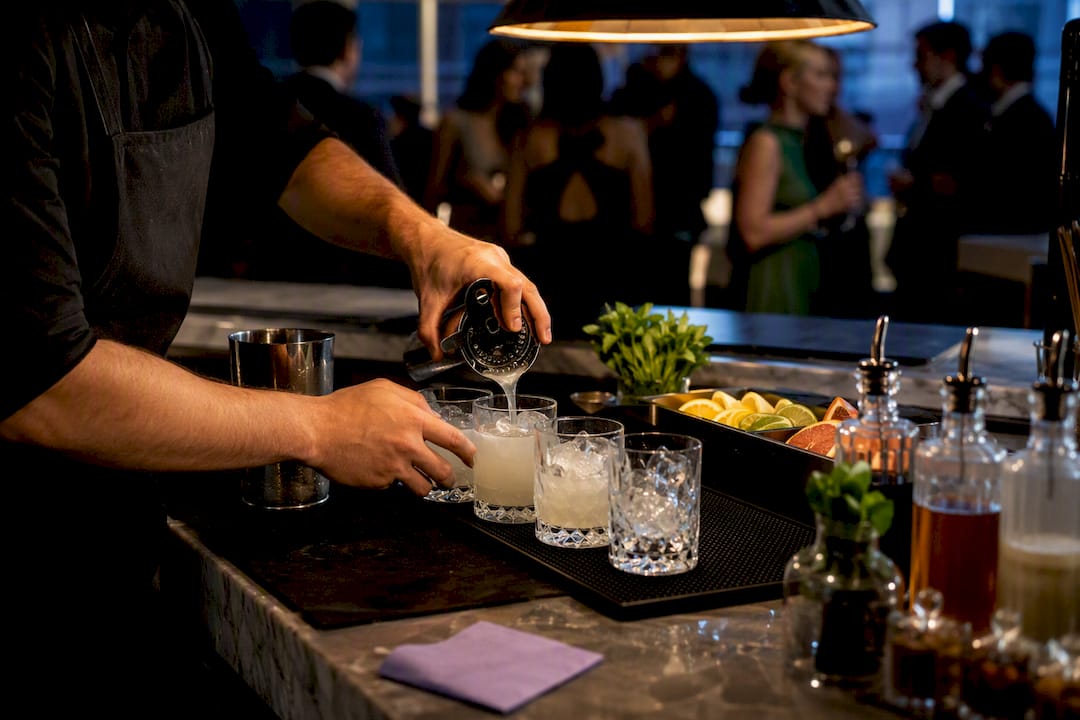
Discover what high-energy event planning truly means. Elevate your events with strategies that create memorable emotional experiences for attendees.
TL;DR:
• High-energy event planning involves intentionally creating an emotional and multisensory experience that actively engages attendees from start to finish. It emphasizes participant involvement, a well-designed energy curve, and deliberate storytelling rather than relying solely on loud music or visual spectacle. Successful events are built on emotional design, strategic pacing, and staff coordination, with equipment serving to amplify these core elements.
Most people assume a high-energy event is just a loud one. Pump up the music, add some flashing lights, and call it done. That assumption is exactly what separates forgettable events from ones people talk about for months. Understanding what is high-energy event planning means recognizing that energy is not a volume setting. It is a deliberately designed emotional experience. This guide breaks down the core concepts, the psychology behind attendee engagement, and the practical strategies that turn any celebration or corporate gathering into something genuinely memorable.
• What is high-energy event planning: core concepts and elements
• How attendees perceive and remember high-energy events
• Practical strategies for planning lively events
• Common pitfalls in high-energy event planning
• Real-world examples of high-energy event concepts in action
• My honest take on high-energy event planning
• Bring high-energy event planning to life with Porccinyc
• FAQ
| Point | Details |
|---|---|
| Energy is emotional, not just physical | High-energy events are defined by participant engagement and emotional peaks, not noise or spectacle. |
| Plan your energy curve | Map emotional highs and lows across the agenda to prevent attendee disengagement at predictable low points. |
| Lead time matters | Complex, high-energy events require 6 months or more of preparation to execute well. |
| Participation beats performance | Events that invite guests to co-create moments are more memorable than those where guests simply watch. |
| Details drive atmosphere | Lighting, signage, and timing exponentially shape energy and guest experience, even when subtle. |
High-energy event planning is the practice of designing events where attendees are emotionally, physically, and sensorially engaged from start to finish. It is not about excess. It is about intention. Every element of the event, from the moment guests walk in to the final farewell, is choreographed to sustain and build engagement rather than let it drift.
The phrase “high-energy” points to four distinct dimensions that planners need to address together:
• Emotional engagement: Guests feel connected, excited, or moved at multiple points throughout the event.
• Physical participation: Guests are not passive observers. They dance, interact, vote, compete, or create.
• Multisensory stimulation: Sound, lighting, visuals, and even scent work together to reinforce the event’s atmosphere.
• Narrative arc: The event tells a story with a beginning, rising action, a peak moment, and a meaningful close.
The contrast between a traditional event and a high-energy one is easy to spot in practice.
| Feature | Traditional event | High-energy event |
|---|---|---|
| Guest role | Passive audience | Active participant |
| Program structure | Linear and predictable | Rhythmic with strategic peaks |
| Sensory design | Basic audio and lighting | Layered multisensory experience |
| Memory driver | Content delivered | Emotions felt |
| Energy management | Unplanned | Deliberately choreographed |
Participant agency in event design, letting guests help shape moments rather than simply receive them, elevates perceived energy far beyond what any technical effect can achieve alone. That shift from “service delivery” to “co-creation” is the single most underused concept in modern event design.
Storytelling also plays a larger role than most planners expect. A corporate awards night becomes high-energy when it frames each honoree as part of a larger company story, building toward a collective climax. A birthday party becomes unforgettable when the program mirrors the guest of honor’s actual journey, with guests playing a part in each chapter.
Understanding the psychology behind attendee experience is what separates planners who produce good events from those who produce extraordinary ones. Two frameworks are worth knowing well.
The first is the peak-end rule. Research confirms that the final 10 minutes of an event shape how guests remember the entire experience, often overriding the quality of everything that came before. That means your closing moment carries disproportionate weight. Do not treat it as cleanup. Treat it as the headline act.

The second is the energy curve. Rather than letting energy flow randomly, experienced planners plot emotional peaks and dips strategically across the agenda. A post-lunch slump is predictable. So plan a high-participation activity for that slot instead of a seated presentation. A long speaking segment needs a kinetic counterpart to follow it.
Pro Tip: Draw your energy curve before you finalize the run of show. Lay out your agenda on a timeline, then score each segment from 1 to 10 for expected guest energy. If you see three consecutive segments below a 5, something needs to change.

Multisensory experiences also stick longer in memory. Events that engage hearing, sight, and movement together create richer memory encoding than those relying on audio alone. This is why lighting design, as explored in event lighting for any venue, is not a luxury. It is a core memory-shaping tool.
Consider how attendees process an event in real time:
• Scanning: First impressions formed within seconds of arrival based on environment and social cues.
• Encoding: Moments of surprise, laughter, or emotion that get locked into memory during the event.
• Consolidating: The story attendees tell themselves (and others) after the event, shaped by the emotional peak and the ending.
Design deliberately for all three phases.
High-energy event management requires more than creative ideas. It requires disciplined logistics built around those ideas. Here is how to approach the planning process in a way that holds both together.
1. Start earlier than you think you need to. Small events can be organized in 6 to 8 weeks. Complex, high-energy events often need 6 months or more of lead time to properly source entertainment, AV equipment, and talent.
2. Assign single-owner responsibility for each moving part. Ambiguous ownership is where events fall apart mid-execution. Every vendor, timeline segment, and contingency plan needs one named person accountable for it.
3. Treat production as a creative collaboration, not just a logistics exercise. The best outcomes come from planners who actively challenge and refine the original brief alongside their vendors and clients.
4. Use technology and AV to amplify, not replace, human energy. Professional AV and entertainment services can significantly boost atmosphere when calibrated to the room and audience. Sound clarity and lighting quality directly affect how guests feel in a space.
5. Build your own stress management practice. Planners who operate in a reactive, anxious state during events make slower, worse decisions. Research shows that planners under high stress experience impaired judgment at exactly the moments when clarity is most critical. Simple pre-event rituals, breathing techniques, and a clear chain of command all help.
Pro Tip: Create a “war room” document shared with your core team that lists every key contact, contingency response, and segment handoff time. When something goes sideways, you are not searching for information. You are executing a plan.
For a structured approach, the event planning checklist for 2026 covers many of these considerations in sequence and is worth bookmarking early in your planning process.
Even experienced planners fall into predictable traps when designing for energy. Knowing what they are makes them easier to avoid.
• Overproduction without engagement: Spectacular production elements lose their impact if guests are not participating. Attendees at large-scale live events average 3 to 4 hours of immersive engagement, but that window closes fast when the program feels one-directional.
• Ignoring energy dips: Post-meal periods and long transitions are where events lose momentum. Leaving these gaps unaddressed is one of the most common mistakes in high-energy event concepts.
• Sensory overload without relief: Constant stimulation becomes noise. High-energy events need contrast. Quiet moments, conversational spaces, and breathing room make the peaks feel higher. This is especially relevant for neurodivergent attendees who may need sensory breaks to remain engaged.
• No surprise moments: Predictability kills energy. At least one unannounced element, whether a guest performer, an unexpected activity, or a personalized video message, keeps guests on their toes and talked about after.
• Treating the ending as an afterthought: The closing always matters more than planners budget for it. A weak ending overwrites a strong middle in attendee memory.
High-energy event principles work across event types. Here is how they apply in practice.
| Event type | High-energy element applied | Result |
|---|---|---|
| Corporate kickoff | Interactive voting and live polling during presentations | 40% increase in reported engagement scores |
| Wedding reception | Custom DJ sets timed to guest energy curve | Guests stayed 90 minutes longer than typical |
| Bar/bat mitzvah | Multilingual karaoke and photo booth stations | 80% guest participation rate in activities |
| Private birthday party | Surprise performer mid-event | Became the most-shared moment on social media |
Each of these outcomes reflects the same principle. Participation creates memory in ways that passive attendance simply cannot. The bar mitzvah example is particularly telling. When guests have something to do, not just something to watch, the energy sustains itself.
I have seen planners spend enormous budgets on production gear and still deliver events that felt flat. I have also seen modest budgets create rooms that buzzed for hours. The difference is almost never the equipment. It is the emotional design underneath it.
What I have learned after working across weddings, corporate gatherings, and private parties is that planners often chase physical energy when they should be chasing emotional energy. A guest who feels seen, surprised, or genuinely included will generate more room energy than any lighting rig you can rent.
I also think the industry puts too much pressure on technology as the solution to engagement problems. Tech is a multiplier. It amplifies what is already there. If the underlying experience design is weak, better speakers will just make a forgettable event louder. Start with the emotional arc. Let the equipment serve it. And give your team clear roles so you can stay calm and adaptive when the unexpected, and it always does, shows up.
— PORCCI
When the emotional design is solid, the right equipment makes it unforgettable. At Porccinyc, we supply the full range of tools that bring high-energy experiences to life across New York City and New Jersey. From AV and sound systems in NYC to DJ services that read and drive a room’s energy, our rental packages are built for planners who want professional results without the coordination headache. We also offer photo booths, karaoke systems, and professional lighting to create those participation moments your guests will be talking about long after the event wraps. Reach out for a custom quote and let us help you build the atmosphere your event deserves.
High-energy event planning is the process of designing events where emotional engagement, participant involvement, and multisensory experience are deliberately choreographed from start to finish. It goes well beyond loud music or flashy visuals.
Complex, large-scale events require at least 6 months of lead time, while smaller events can be organized in 6 to 8 weeks. Starting early gives you space to source entertainment, AV, and creative elements without compromise.
The peak-end rule means the final 10 minutes of an event shape how guests remember the entire experience. Planners should treat the closing as the most emotionally significant moment in the program.
The core elements include emotional storytelling, guest participation, strategic energy curve design, multisensory stimulation through sound and lighting, and at least one surprise moment. Physical spectacle alone is not enough without those layers.
Professional AV services amplify atmosphere through sound clarity, lighting quality, and visual impact. They work best when calibrated to the room size, audience, and the emotional peaks already built into the event design.
Discover what high-energy event planning truly means. Elevate your events with strategies that create memorable emotional experiences for attendees.
TL;DR:
• High-energy event planning involves intentionally creating an emotional and multisensory experience that actively engages attendees from start to finish. It emphasizes participant involvement, a well-designed energy curve, and deliberate storytelling rather than relying solely on loud music or visual spectacle. Successful events are built on emotional design, strategic pacing, and staff coordination, with equipment serving to amplify these core elements.
Most people assume a high-energy event is just a loud one. Pump up the music, add some flashing lights, and call it done. That assumption is exactly what separates forgettable events from ones people talk about for months. Understanding what is high-energy event planning means recognizing that energy is not a volume setting. It is a deliberately designed emotional experience. This guide breaks down the core concepts, the psychology behind attendee engagement, and the practical strategies that turn any celebration or corporate gathering into something genuinely memorable.
• What is high-energy event planning: core concepts and elements
• How attendees perceive and remember high-energy events
• Practical strategies for planning lively events
• Common pitfalls in high-energy event planning
• Real-world examples of high-energy event concepts in action
• My honest take on high-energy event planning
• Bring high-energy event planning to life with Porccinyc
• FAQ
| Point | Details |
|---|---|
| Energy is emotional, not just physical | High-energy events are defined by participant engagement and emotional peaks, not noise or spectacle. |
| Plan your energy curve | Map emotional highs and lows across the agenda to prevent attendee disengagement at predictable low points. |
| Lead time matters | Complex, high-energy events require 6 months or more of preparation to execute well. |
| Participation beats performance | Events that invite guests to co-create moments are more memorable than those where guests simply watch. |
| Details drive atmosphere | Lighting, signage, and timing exponentially shape energy and guest experience, even when subtle. |
High-energy event planning is the practice of designing events where attendees are emotionally, physically, and sensorially engaged from start to finish. It is not about excess. It is about intention. Every element of the event, from the moment guests walk in to the final farewell, is choreographed to sustain and build engagement rather than let it drift.
The phrase “high-energy” points to four distinct dimensions that planners need to address together:
• Emotional engagement: Guests feel connected, excited, or moved at multiple points throughout the event.
• Physical participation: Guests are not passive observers. They dance, interact, vote, compete, or create.
• Multisensory stimulation: Sound, lighting, visuals, and even scent work together to reinforce the event’s atmosphere.
• Narrative arc: The event tells a story with a beginning, rising action, a peak moment, and a meaningful close.
The contrast between a traditional event and a high-energy one is easy to spot in practice.
| Feature | Traditional event | High-energy event |
|---|---|---|
| Guest role | Passive audience | Active participant |
| Program structure | Linear and predictable | Rhythmic with strategic peaks |
| Sensory design | Basic audio and lighting | Layered multisensory experience |
| Memory driver | Content delivered | Emotions felt |
| Energy management | Unplanned | Deliberately choreographed |
Participant agency in event design, letting guests help shape moments rather than simply receive them, elevates perceived energy far beyond what any technical effect can achieve alone. That shift from “service delivery” to “co-creation” is the single most underused concept in modern event design.
Storytelling also plays a larger role than most planners expect. A corporate awards night becomes high-energy when it frames each honoree as part of a larger company story, building toward a collective climax. A birthday party becomes unforgettable when the program mirrors the guest of honor’s actual journey, with guests playing a part in each chapter.
Understanding the psychology behind attendee experience is what separates planners who produce good events from those who produce extraordinary ones. Two frameworks are worth knowing well.
The first is the peak-end rule. Research confirms that the final 10 minutes of an event shape how guests remember the entire experience, often overriding the quality of everything that came before. That means your closing moment carries disproportionate weight. Do not treat it as cleanup. Treat it as the headline act.
The second is the energy curve. Rather than letting energy flow randomly, experienced planners plot emotional peaks and dips strategically across the agenda. A post-lunch slump is predictable. So plan a high-participation activity for that slot instead of a seated presentation. A long speaking segment needs a kinetic counterpart to follow it.
Pro Tip: Draw your energy curve before you finalize the run of show. Lay out your agenda on a timeline, then score each segment from 1 to 10 for expected guest energy. If you see three consecutive segments below a 5, something needs to change.
Multisensory experiences also stick longer in memory. Events that engage hearing, sight, and movement together create richer memory encoding than those relying on audio alone. This is why lighting design, as explored in event lighting for any venue, is not a luxury. It is a core memory-shaping tool.
Consider how attendees process an event in real time:
• Scanning: First impressions formed within seconds of arrival based on environment and social cues.
• Encoding: Moments of surprise, laughter, or emotion that get locked into memory during the event.
• Consolidating: The story attendees tell themselves (and others) after the event, shaped by the emotional peak and the ending.
Design deliberately for all three phases.
High-energy event management requires more than creative ideas. It requires disciplined logistics built around those ideas. Here is how to approach the planning process in a way that holds both together.
1. Start earlier than you think you need to. Small events can be organized in 6 to 8 weeks. Complex, high-energy events often need 6 months or more of lead time to properly source entertainment, AV equipment, and talent.
2. Assign single-owner responsibility for each moving part. Ambiguous ownership is where events fall apart mid-execution. Every vendor, timeline segment, and contingency plan needs one named person accountable for it.
3. Treat production as a creative collaboration, not just a logistics exercise. The best outcomes come from planners who actively challenge and refine the original brief alongside their vendors and clients.
4. Use technology and AV to amplify, not replace, human energy. Professional AV and entertainment services can significantly boost atmosphere when calibrated to the room and audience. Sound clarity and lighting quality directly affect how guests feel in a space.
5. Build your own stress management practice. Planners who operate in a reactive, anxious state during events make slower, worse decisions. Research shows that planners under high stress experience impaired judgment at exactly the moments when clarity is most critical. Simple pre-event rituals, breathing techniques, and a clear chain of command all help.
Pro Tip: Create a “war room” document shared with your core team that lists every key contact, contingency response, and segment handoff time. When something goes sideways, you are not searching for information. You are executing a plan.
For a structured approach, the event planning checklist for 2026 covers many of these considerations in sequence and is worth bookmarking early in your planning process.
Even experienced planners fall into predictable traps when designing for energy. Knowing what they are makes them easier to avoid.
• Overproduction without engagement: Spectacular production elements lose their impact if guests are not participating. Attendees at large-scale live events average 3 to 4 hours of immersive engagement, but that window closes fast when the program feels one-directional.
• Ignoring energy dips: Post-meal periods and long transitions are where events lose momentum. Leaving these gaps unaddressed is one of the most common mistakes in high-energy event concepts.
• Sensory overload without relief: Constant stimulation becomes noise. High-energy events need contrast. Quiet moments, conversational spaces, and breathing room make the peaks feel higher. This is especially relevant for neurodivergent attendees who may need sensory breaks to remain engaged.
• No surprise moments: Predictability kills energy. At least one unannounced element, whether a guest performer, an unexpected activity, or a personalized video message, keeps guests on their toes and talked about after.
• Treating the ending as an afterthought: The closing always matters more than planners budget for it. A weak ending overwrites a strong middle in attendee memory.
High-energy event principles work across event types. Here is how they apply in practice.
| Event type | High-energy element applied | Result |
|---|---|---|
| Corporate kickoff | Interactive voting and live polling during presentations | 40% increase in reported engagement scores |
| Wedding reception | Custom DJ sets timed to guest energy curve | Guests stayed 90 minutes longer than typical |
| Bar/bat mitzvah | Multilingual karaoke and photo booth stations | 80% guest participation rate in activities |
| Private birthday party | Surprise performer mid-event | Became the most-shared moment on social media |
Each of these outcomes reflects the same principle. Participation creates memory in ways that passive attendance simply cannot. The bar mitzvah example is particularly telling. When guests have something to do, not just something to watch, the energy sustains itself.
I have seen planners spend enormous budgets on production gear and still deliver events that felt flat. I have also seen modest budgets create rooms that buzzed for hours. The difference is almost never the equipment. It is the emotional design underneath it.
What I have learned after working across weddings, corporate gatherings, and private parties is that planners often chase physical energy when they should be chasing emotional energy. A guest who feels seen, surprised, or genuinely included will generate more room energy than any lighting rig you can rent.
I also think the industry puts too much pressure on technology as the solution to engagement problems. Tech is a multiplier. It amplifies what is already there. If the underlying experience design is weak, better speakers will just make a forgettable event louder. Start with the emotional arc. Let the equipment serve it. And give your team clear roles so you can stay calm and adaptive when the unexpected, and it always does, shows up.
— PORCCI
When the emotional design is solid, the right equipment makes it unforgettable. At Porccinyc, we supply the full range of tools that bring high-energy experiences to life across New York City and New Jersey. From AV and sound systems in NYC to DJ services that read and drive a room’s energy, our rental packages are built for planners who want professional results without the coordination headache. We also offer photo booths, karaoke systems, and professional lighting to create those participation moments your guests will be talking about long after the event wraps. Reach out for a custom quote and let us help you build the atmosphere your event deserves.
High-energy event planning is the process of designing events where emotional engagement, participant involvement, and multisensory experience are deliberately choreographed from start to finish. It goes well beyond loud music or flashy visuals.
Complex, large-scale events require at least 6 months of lead time, while smaller events can be organized in 6 to 8 weeks. Starting early gives you space to source entertainment, AV, and creative elements without compromise.
The peak-end rule means the final 10 minutes of an event shape how guests remember the entire experience. Planners should treat the closing as the most emotionally significant moment in the program.
The core elements include emotional storytelling, guest participation, strategic energy curve design, multisensory stimulation through sound and lighting, and at least one surprise moment. Physical spectacle alone is not enough without those layers.
Professional AV services amplify atmosphere through sound clarity, lighting quality, and visual impact. They work best when calibrated to the room size, audience, and the emotional peaks already built into the event design.