Discover what smart event lighting is and how this innovative technology transforms events. Learn to elevate your gatherings effortlessly!
TL;DR:
• Smart event lighting uses software, IoT sensors, and network protocols to automate and synchronize lighting effects in real time. It delivers energy savings, longer fixture lifespan, and improved color quality for events. Proper planning and dedicated networks are essential for effective implementation and guest comfort.
Smart event lighting is a software-driven, IoT-integrated system that controls illumination through centralized software, network protocols, and real-time sensor data. The industry term for this technology is “intelligent lighting,” and it covers everything from automated color changes to crowd-responsive dimming. For event planners, it means one operator can manage hundreds of fixtures, sync lights to music, and adapt the entire room’s mood in seconds. If you’ve ever wondered what is smart event lighting and why it matters for your next wedding, corporate event, or private party, this guide covers the full picture.
Smart event lighting, also called intelligent lighting, runs on three core layers: control hardware, network protocols, and connected fixtures. A lighting console or software program sends commands through protocols like DMX, Art-Net, and sACN. Those signals travel across a dedicated network to every fixture in the room, telling each one exactly what color, brightness, and movement to execute.
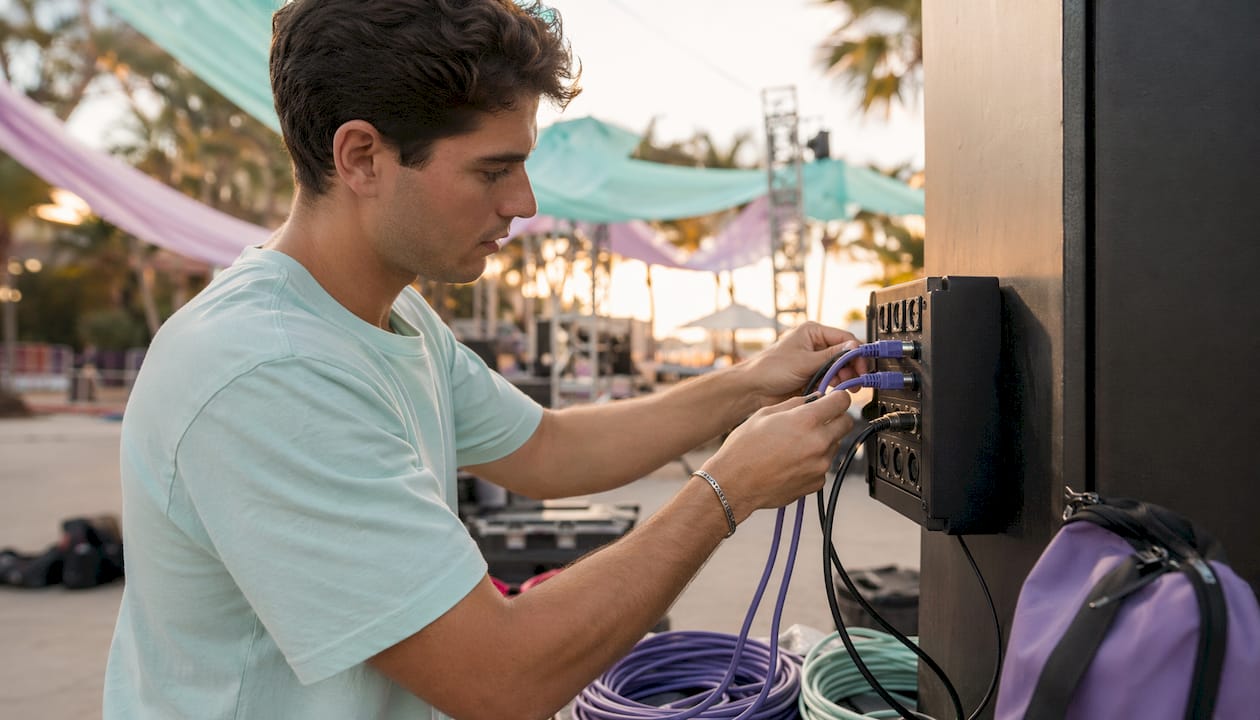
The control layer is where the real power lives. Modern lighting consoles support multi-touch programming and 3D visualization, managing thousands of fixtures from a single interface. Operators can program complex visual effects using pixel mapping and integrate with media servers, pyro controllers, and audio systems. That level of coordination was impossible with traditional manual setups.
IoT sensors add another dimension. Occupancy sensors track where guests are moving and feed that data back to the control system. The system then raises light levels in crowded areas and dims empty ones automatically. Connectivity standards like Z-Wave, BLE, and Wi-Fi HaLow handle this communication between sensors and the central controller.
Synchronization with audio and video is where intelligent lighting creates truly memorable moments. The system ties lighting cues to music beats, video playback, or stage actions. For large productions, SMPTE timecode delivers millisecond-precise coordination across lighting, video, and audio, eliminating human timing errors entirely.
• DMX: The foundational protocol for fixture control, sending up to 512 channels of data per universe
• Art-Net and sACN: Network-based protocols that carry DMX data over standard Ethernet, scaling to thousands of fixtures
• IoT sensors: Occupancy and environmental sensors that feed real-time data to the control system
• SMPTE timecode: A synchronization standard that locks lighting, audio, and video to a shared clock
Pro Tip: Always run your lighting network on a dedicated VLAN or physical network separate from your venue’s general Wi-Fi. Shared networks introduce latency that causes visible stuttering in complex lighting sequences.
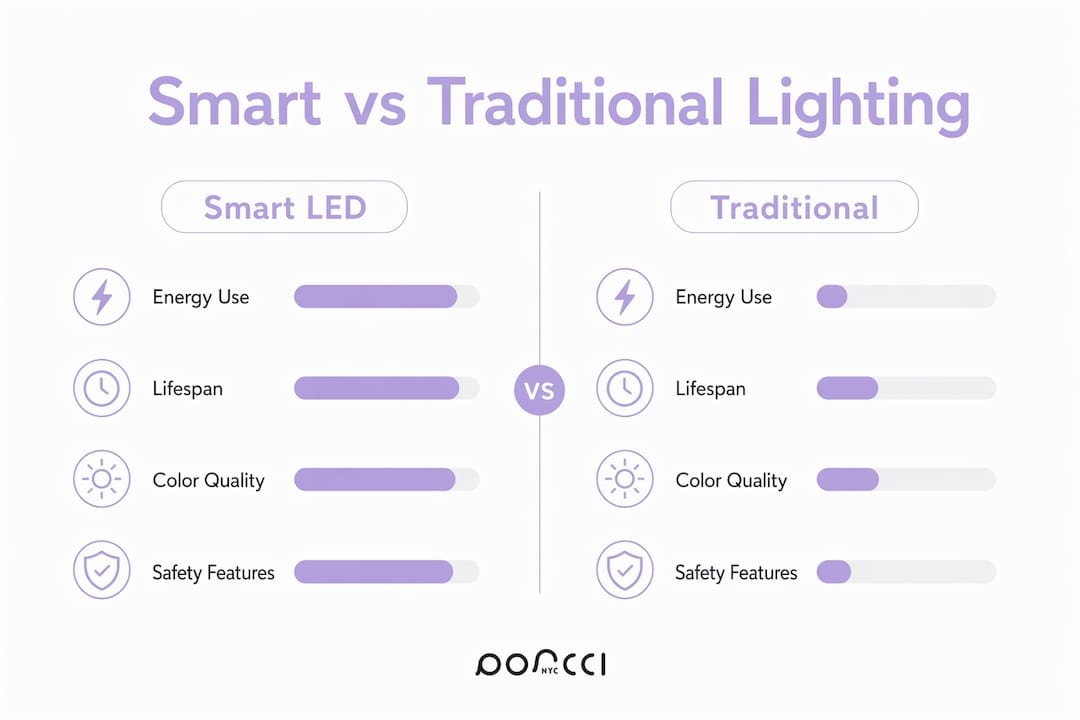
The most measurable benefit is energy savings. Upgrading from traditional halogen or discharge fixtures to LED-based intelligent lighting reduces energy consumption by 75–80%. A rig that once drew 50kW can drop to 12kW. That reduction cuts generator costs, lowers venue power fees, and supports sustainability goals.
Fixture lifespan is another major factor. LED fixtures last 25,000–50,000 hours, compared to 750–2,000 hours for traditional tungsten lamps. That is 15 to 50 times longer, which means far fewer replacements and lower maintenance costs across multiple events.
Color quality matters for professional events, especially those that are live-streamed or photographed. High-end LED fixtures deliver CRI 90+, producing camera-ready skin tones and consistent colors. RGBW and RGBA color mixing technologies generate millions of colors without physical gels, saving setup time and eliminating the cost of gel replacements.
| Feature | Smart LED lighting | Traditional lighting |
|---|---|---|
| Energy use | 75–80% less than traditional | High draw, often 50kW+ per rig |
| Fixture lifespan | 25,000–50,000 hours | 750–2,000 hours |
| Color control | Millions of colors via RGBW/RGBA | Limited to physical gels |
| CRI quality | CRI 90+ for camera-ready output | Variable, often lower CRI |
| Control method | Centralized software, one operator | Manual, requires multiple crew |
| Safety and accessibility | Occupancy sensors, auto-adjustment | Static, no real-time adaptation |
Safety and accessibility improvements are often overlooked. Occupancy sensors automatically adjust illumination in high-traffic zones and dim underutilized areas, meeting evolving accessibility standards. This is especially valuable for large venues where manual monitoring is impractical. You can also check out essential event lighting types to understand how intelligent systems build on foundational lighting categories.
Getting the technology right starts before the event day. Follow these steps to avoid the most common pitfalls.
1. Audit your network infrastructure first. A dedicated network for DMX, Art-Net, or sACN is non-negotiable. Shared venue Wi-Fi introduces latency that causes visible glitches during live transitions.
2. Map your IoT sensors to the actual venue floor plan. A common mistake is improperly mapping occupancy sensors to venue layouts, which causes the system to dim populated areas or over-light empty ones. Walk the space with your sensor map before guests arrive.
3. Program and simulate before going live. Most professional consoles include 3D visualization tools. Use them to run a full rehearsal of every cue sequence, including transitions and timecode-triggered moments.
4. Integrate with your full AV stack early. Connect your lighting console to audio, video, and stage automation systems during the setup phase, not the day of the event. Late integration causes conflicts between systems.
5. Assign a dedicated lighting operator. Automation handles the routine, but a live operator catches unexpected issues like a fixture dropping offline or a cue firing early.
Pro Tip: Never rely entirely on automation for a live event. Program your cues, then keep a human at the console. Automation reduces errors, but a trained operator is your safety net when something unexpected happens.
Smart lighting systems dynamically adapt to crowd flow, raising brightness in busy areas and dimming empty zones in real time. This keeps guests comfortable and reduces energy waste simultaneously. The effect is subtle but powerful: guests feel the space responding to them without knowing why.
Mood setting through lighting transitions is one of the most effective tools in event design. A corporate dinner can shift from a bright, neutral white during cocktail hour to a warm amber during the meal, then to a deep blue and purple for an awards presentation, all without anyone touching a dimmer manually. Each scene change signals a new phase of the event to guests.
Human-centric lighting adds another layer. Circadian-tuned color temperatures reduce attendee fatigue during long events by mimicking natural daylight shifts. A conference running from morning to evening can gradually shift from cool, energizing whites to warmer tones as the day progresses. Guests stay more alert and engaged without realizing the lighting is doing the work. For more ideas on building atmosphere, the team at Porcci NYC has compiled proven ways to enhance event atmosphere that pair well with intelligent lighting setups.
Smart event lighting is the most operationally efficient and creatively flexible lighting system available for live events in 2026, combining IoT sensors, network protocols, and LED fixtures to deliver real-time control, energy savings, and enhanced guest experience.
| Point | Details |
|---|---|
| Core technology | Smart lighting uses DMX, Art-Net, sACN, and IoT sensors for centralized, real-time control. |
| Energy savings | LED-based intelligent systems use 75–80% less energy than traditional halogen or discharge fixtures. |
| Color and camera quality | CRI 90+ LEDs deliver camera-ready colors without physical gels, critical for streamed events. |
| Implementation priority | Map IoT sensors to your venue floor plan before the event to avoid disruptive lighting behavior. |
| Human oversight | Always keep a trained operator at the console, even with full automation programmed. |
We’ve worked on enough events to say this clearly: the biggest mistake planners make is treating lighting as an afterthought. They book the venue, the catering, and the entertainment, then ask about lighting two weeks out. By that point, the network infrastructure hasn’t been planned, the sensor calibration hasn’t been scheduled, and the operator hasn’t had time to program the cues properly.
The 2026 shift in intelligent lighting is real. The technology has moved from static decoration to a responsive operational ecosystem where one operator manages the entire visual environment from a single console. That’s a genuine change in how events run, and it reduces human error significantly. But it only works when the planning starts early.
What we find most exciting is the accessibility angle. Circadian tuning and occupancy-responsive dimming aren’t just technical features. They make events more comfortable for guests with sensory sensitivities, older attendees, and anyone sitting through a long program. That’s a real improvement in guest experience, not just a spec sheet upgrade.
The challenge is integration. Connecting lighting to audio, video, and stage automation requires careful coordination between vendors. When it works, the result feels effortless. When it doesn’t, the seams show in front of every guest. Our advice: treat your lighting system as part of your AV stack from day one, not as a separate line item.
— PORCCI
Porcci NYC provides AV and lighting equipment rentals across New York City and New Jersey, with full setup, delivery, and breakdown included. Whether you’re planning a wedding in Manhattan, a corporate event in Brooklyn, or a private party in Jersey City, we bring the equipment and the expertise to make intelligent lighting work for your specific venue. Our team handles network setup, fixture programming, and on-site operation so you can focus on your guests. We also offer event lighting tips for NYC and NJ venues to help you plan before we arrive. Contact Porcci NYC for a free quote and let us build the right lighting setup for your event.
Smart event lighting is a system that uses software, network protocols, and IoT sensors to control all lighting from one central point. It automates color changes, brightness, and synchronization with music or video in real time.
Intelligent lighting relies on DMX, Art-Net, and sACN to send control signals to fixtures over a network. These protocols allow one console to manage thousands of fixtures simultaneously.
LED-based smart lighting uses 75–80% less electricity than traditional halogen or discharge fixtures. A rig that previously drew 50kW can operate at around 12kW with modern LED intelligent fixtures.
Yes. Running lighting protocols like Art-Net or sACN on a shared venue network causes latency and visible stuttering during live events. A dedicated network or VLAN is the standard for professional setups.
SMPTE timecode is a synchronization standard that locks lighting, audio, and video cues to a shared clock with millisecond precision. It eliminates human timing errors in complex live productions like festivals and award shows.
Discover what smart event lighting is and how this innovative technology transforms events. Learn to elevate your gatherings effortlessly!
TL;DR:
• Smart event lighting uses software, IoT sensors, and network protocols to automate and synchronize lighting effects in real time. It delivers energy savings, longer fixture lifespan, and improved color quality for events. Proper planning and dedicated networks are essential for effective implementation and guest comfort.
Smart event lighting is a software-driven, IoT-integrated system that controls illumination through centralized software, network protocols, and real-time sensor data. The industry term for this technology is “intelligent lighting,” and it covers everything from automated color changes to crowd-responsive dimming. For event planners, it means one operator can manage hundreds of fixtures, sync lights to music, and adapt the entire room’s mood in seconds. If you’ve ever wondered what is smart event lighting and why it matters for your next wedding, corporate event, or private party, this guide covers the full picture.
Smart event lighting, also called intelligent lighting, runs on three core layers: control hardware, network protocols, and connected fixtures. A lighting console or software program sends commands through protocols like DMX, Art-Net, and sACN. Those signals travel across a dedicated network to every fixture in the room, telling each one exactly what color, brightness, and movement to execute.
The control layer is where the real power lives. Modern lighting consoles support multi-touch programming and 3D visualization, managing thousands of fixtures from a single interface. Operators can program complex visual effects using pixel mapping and integrate with media servers, pyro controllers, and audio systems. That level of coordination was impossible with traditional manual setups.
IoT sensors add another dimension. Occupancy sensors track where guests are moving and feed that data back to the control system. The system then raises light levels in crowded areas and dims empty ones automatically. Connectivity standards like Z-Wave, BLE, and Wi-Fi HaLow handle this communication between sensors and the central controller.
Synchronization with audio and video is where intelligent lighting creates truly memorable moments. The system ties lighting cues to music beats, video playback, or stage actions. For large productions, SMPTE timecode delivers millisecond-precise coordination across lighting, video, and audio, eliminating human timing errors entirely.
• DMX: The foundational protocol for fixture control, sending up to 512 channels of data per universe
• Art-Net and sACN: Network-based protocols that carry DMX data over standard Ethernet, scaling to thousands of fixtures
• IoT sensors: Occupancy and environmental sensors that feed real-time data to the control system
• SMPTE timecode: A synchronization standard that locks lighting, audio, and video to a shared clock
Pro Tip: Always run your lighting network on a dedicated VLAN or physical network separate from your venue’s general Wi-Fi. Shared networks introduce latency that causes visible stuttering in complex lighting sequences.
The most measurable benefit is energy savings. Upgrading from traditional halogen or discharge fixtures to LED-based intelligent lighting reduces energy consumption by 75–80%. A rig that once drew 50kW can drop to 12kW. That reduction cuts generator costs, lowers venue power fees, and supports sustainability goals.
Fixture lifespan is another major factor. LED fixtures last 25,000–50,000 hours, compared to 750–2,000 hours for traditional tungsten lamps. That is 15 to 50 times longer, which means far fewer replacements and lower maintenance costs across multiple events.
Color quality matters for professional events, especially those that are live-streamed or photographed. High-end LED fixtures deliver CRI 90+, producing camera-ready skin tones and consistent colors. RGBW and RGBA color mixing technologies generate millions of colors without physical gels, saving setup time and eliminating the cost of gel replacements.
| Feature | Smart LED lighting | Traditional lighting |
|---|---|---|
| Energy use | 75–80% less than traditional | High draw, often 50kW+ per rig |
| Fixture lifespan | 25,000–50,000 hours | 750–2,000 hours |
| Color control | Millions of colors via RGBW/RGBA | Limited to physical gels |
| CRI quality | CRI 90+ for camera-ready output | Variable, often lower CRI |
| Control method | Centralized software, one operator | Manual, requires multiple crew |
| Safety and accessibility | Occupancy sensors, auto-adjustment | Static, no real-time adaptation |
Safety and accessibility improvements are often overlooked. Occupancy sensors automatically adjust illumination in high-traffic zones and dim underutilized areas, meeting evolving accessibility standards. This is especially valuable for large venues where manual monitoring is impractical. You can also check out essential event lighting types to understand how intelligent systems build on foundational lighting categories.
Getting the technology right starts before the event day. Follow these steps to avoid the most common pitfalls.
1. Audit your network infrastructure first. A dedicated network for DMX, Art-Net, or sACN is non-negotiable. Shared venue Wi-Fi introduces latency that causes visible glitches during live transitions.
2. Map your IoT sensors to the actual venue floor plan. A common mistake is improperly mapping occupancy sensors to venue layouts, which causes the system to dim populated areas or over-light empty ones. Walk the space with your sensor map before guests arrive.
3. Program and simulate before going live. Most professional consoles include 3D visualization tools. Use them to run a full rehearsal of every cue sequence, including transitions and timecode-triggered moments.
4. Integrate with your full AV stack early. Connect your lighting console to audio, video, and stage automation systems during the setup phase, not the day of the event. Late integration causes conflicts between systems.
5. Assign a dedicated lighting operator. Automation handles the routine, but a live operator catches unexpected issues like a fixture dropping offline or a cue firing early.
Pro Tip: Never rely entirely on automation for a live event. Program your cues, then keep a human at the console. Automation reduces errors, but a trained operator is your safety net when something unexpected happens.
Smart lighting systems dynamically adapt to crowd flow, raising brightness in busy areas and dimming empty zones in real time. This keeps guests comfortable and reduces energy waste simultaneously. The effect is subtle but powerful: guests feel the space responding to them without knowing why.
Mood setting through lighting transitions is one of the most effective tools in event design. A corporate dinner can shift from a bright, neutral white during cocktail hour to a warm amber during the meal, then to a deep blue and purple for an awards presentation, all without anyone touching a dimmer manually. Each scene change signals a new phase of the event to guests.
Human-centric lighting adds another layer. Circadian-tuned color temperatures reduce attendee fatigue during long events by mimicking natural daylight shifts. A conference running from morning to evening can gradually shift from cool, energizing whites to warmer tones as the day progresses. Guests stay more alert and engaged without realizing the lighting is doing the work. For more ideas on building atmosphere, the team at Porcci NYC has compiled proven ways to enhance event atmosphere that pair well with intelligent lighting setups.
Smart event lighting is the most operationally efficient and creatively flexible lighting system available for live events in 2026, combining IoT sensors, network protocols, and LED fixtures to deliver real-time control, energy savings, and enhanced guest experience.
| Point | Details |
|---|---|
| Core technology | Smart lighting uses DMX, Art-Net, sACN, and IoT sensors for centralized, real-time control. |
| Energy savings | LED-based intelligent systems use 75–80% less energy than traditional halogen or discharge fixtures. |
| Color and camera quality | CRI 90+ LEDs deliver camera-ready colors without physical gels, critical for streamed events. |
| Implementation priority | Map IoT sensors to your venue floor plan before the event to avoid disruptive lighting behavior. |
| Human oversight | Always keep a trained operator at the console, even with full automation programmed. |
We’ve worked on enough events to say this clearly: the biggest mistake planners make is treating lighting as an afterthought. They book the venue, the catering, and the entertainment, then ask about lighting two weeks out. By that point, the network infrastructure hasn’t been planned, the sensor calibration hasn’t been scheduled, and the operator hasn’t had time to program the cues properly.
The 2026 shift in intelligent lighting is real. The technology has moved from static decoration to a responsive operational ecosystem where one operator manages the entire visual environment from a single console. That’s a genuine change in how events run, and it reduces human error significantly. But it only works when the planning starts early.
What we find most exciting is the accessibility angle. Circadian tuning and occupancy-responsive dimming aren’t just technical features. They make events more comfortable for guests with sensory sensitivities, older attendees, and anyone sitting through a long program. That’s a real improvement in guest experience, not just a spec sheet upgrade.
The challenge is integration. Connecting lighting to audio, video, and stage automation requires careful coordination between vendors. When it works, the result feels effortless. When it doesn’t, the seams show in front of every guest. Our advice: treat your lighting system as part of your AV stack from day one, not as a separate line item.
— PORCCI
Porcci NYC provides AV and lighting equipment rentals across New York City and New Jersey, with full setup, delivery, and breakdown included. Whether you’re planning a wedding in Manhattan, a corporate event in Brooklyn, or a private party in Jersey City, we bring the equipment and the expertise to make intelligent lighting work for your specific venue. Our team handles network setup, fixture programming, and on-site operation so you can focus on your guests. We also offer event lighting tips for NYC and NJ venues to help you plan before we arrive. Contact Porcci NYC for a free quote and let us build the right lighting setup for your event.
Smart event lighting is a system that uses software, network protocols, and IoT sensors to control all lighting from one central point. It automates color changes, brightness, and synchronization with music or video in real time.
Intelligent lighting relies on DMX, Art-Net, and sACN to send control signals to fixtures over a network. These protocols allow one console to manage thousands of fixtures simultaneously.
LED-based smart lighting uses 75–80% less electricity than traditional halogen or discharge fixtures. A rig that previously drew 50kW can operate at around 12kW with modern LED intelligent fixtures.
Yes. Running lighting protocols like Art-Net or sACN on a shared venue network causes latency and visible stuttering during live events. A dedicated network or VLAN is the standard for professional setups.
SMPTE timecode is a synchronization standard that locks lighting, audio, and video cues to a shared clock with millisecond precision. It eliminates human timing errors in complex live productions like festivals and award shows.