Planner ready checklist for dance floor lighting: exact placement, timing cues, and booking questions. Two moving heads, uplights, gobos, and haze.
The most reliable dance floor lighting ideas combine three layers: perimeter uplights for mood, two moving heads angled down for energy, and one personal touch like a gobo monogram or LED dance floor. Add haze so beams actually show up, test everything before guests walk in, and confirm your venue’s electrical and fire rules first. A pro rental package handles all of it, setup included.
TL;DR:
• Perimeter uplights should be placed every 8 to 12 feet to achieve even color wash and set the room’s overall mood effectively.
• Positioning two moving head fixtures 7 to 10 feet high and angled downward creates dynamic motion and energy on the dance floor.
• Gobos and textured projections should be aimed 15 to 25 feet away to ensure clear visibility and optimal visual impact.
• Atmosphere effects like haze are essential for beams to be visible but may be restricted by venue rules, requiring early confirmation.
• A professional lighting setup includes a site visit, a detailed plan, and on-site testing to avoid issues during the event, especially for complex layers.
• Dance Floor Lighting Ideas That Set the Right Mood
• Fixture Placement and Coverage: Getting the Setup Right
• Using Haze, Gobos, and Color to Set the Timeline
• Budget, Scale, and What to Ask For in a Quote
• Safety, Code Compliance, and Health Considerations
• What a Professional Setup Actually Looks Like
• Three Rules That Make Lighting Feel Professional
• Porcci NYC: How We Help You Get This Right
• Sources
• FAQ
Good dance floor lighting isn’t about throwing every fixture you own in the room. It’s about layering a few things that work together. Here’s how we’d rank the options, from foundational to “nice if your budget allows it.”
1. Color wash / uplighting. Placed around the room’s perimeter, uplights wash the walls in color and instantly change how a space feels. This is the foundation layer almost every event should have, since it sets the room’s overall foundation before anything else goes up.
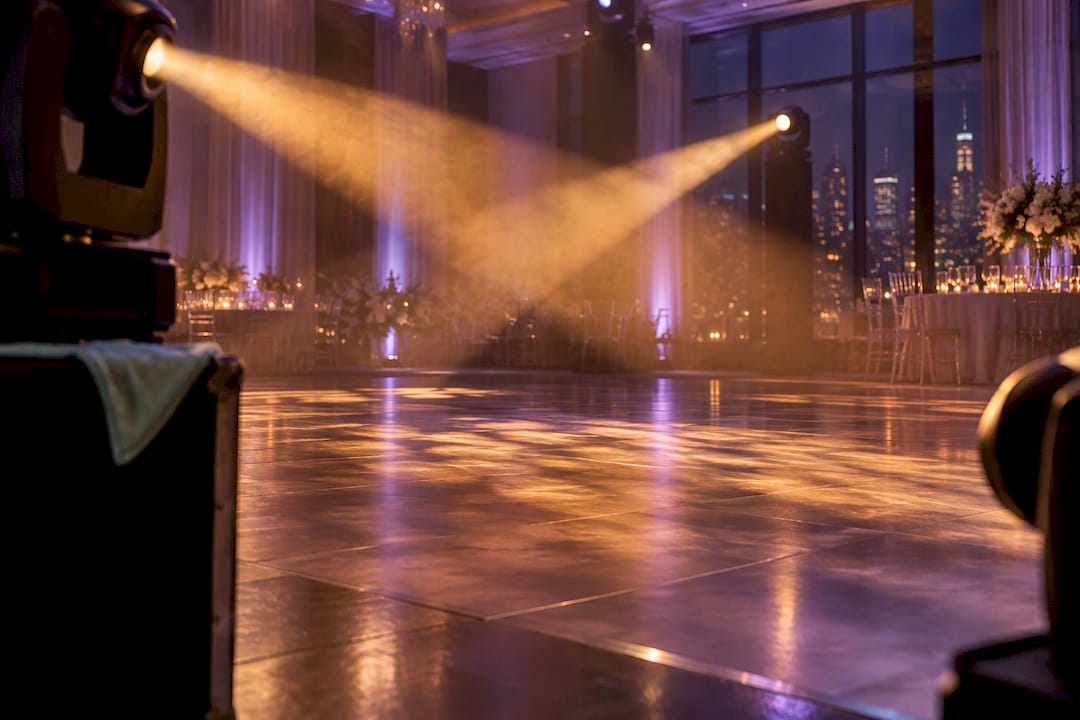
2. Moving head beams. Two fixtures positioned 7 to 10 feet high and angled downward give you sweeping color and motion once the dancing starts. This is the layer that turns a static room into one that feels alive.
3. Gobo monograms and patterns. A projected monogram with the couple’s initials or a company logo personalizes the floor without extra fixtures. Texture gobos (leaves, damask patterns) work well behind a cake table or gift display too.
4. LED dance floors. These become the visual centerpiece of the room, but they cost more and need more setup time. Reserve them for events where the floor itself is meant to be a talking point, not a background element.
5. Mirror ball and pinspots. Old school, low tech, and still charming for a first dance or a retro themed party. Pinspots also work great highlighting centerpieces on guest tables.
6. Canopy lights, fairy lights, and chandeliers. Overhead treatments make a tent or industrial venue feel intimate fast. String lights zigzagged across a ceiling are one of the cheapest ways to add warmth.
7. Custom neon signs. A neon “Mr. and Mrs.” sign or a company name in script adds a photo-worthy focal point near the dance floor entrance or behind the DJ booth.
8. Perimeter rope or flex lighting. Running LED strip lighting along the floor’s edge defines the dance space clearly, especially useful in a multipurpose room.
9. Strobes and lasers. These read as exciting on camera but need real caution (more on that below) and aren’t right for every crowd or venue.
10. DIY low-cost options. Battery powered uplights, plug-and-play derby lights, and string-light canopies let smaller budgets get a layered look without renting truss or hiring a lighting tech.
Placement makes or breaks even the best lighting plan. A few numbers to work from when you’re briefing a vendor or walking a venue:
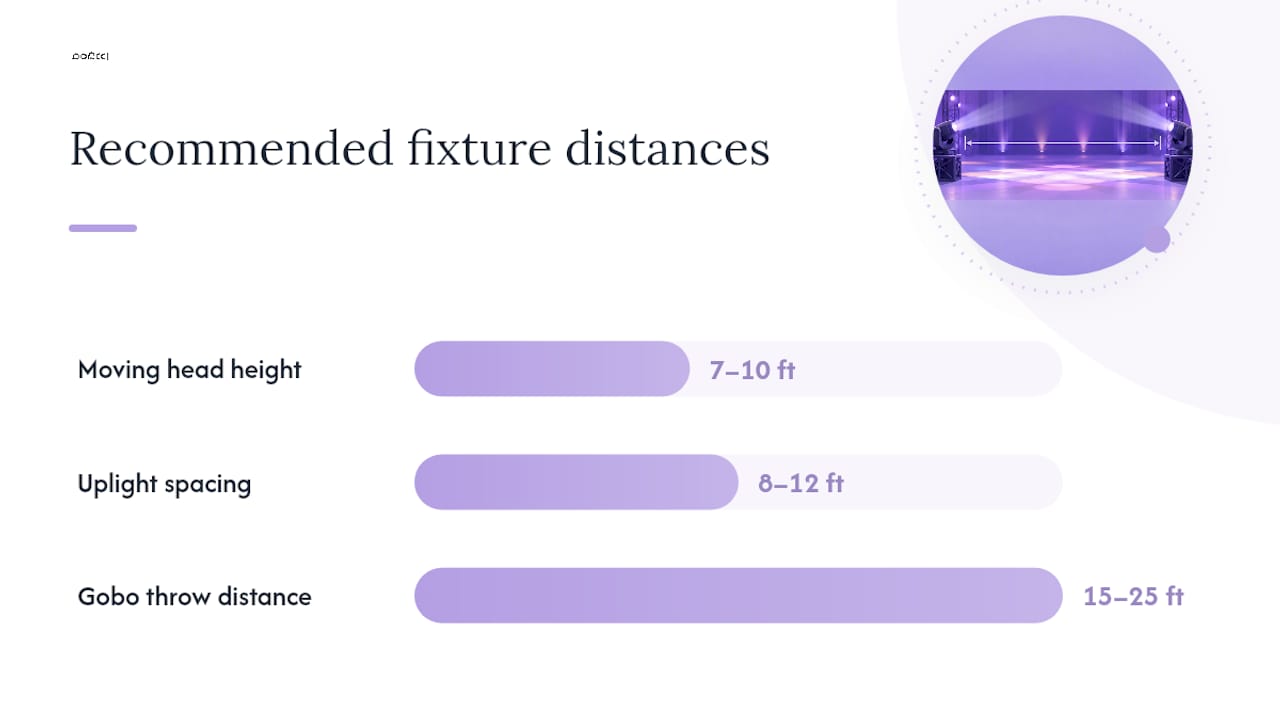
• Two moving heads on opposite stands or truss totems, positioned 7 to 10 feet high and angled downward, gives reliable coverage without blocking sightlines.
• Uplights every 8 to 12 feet around the room’s perimeter keep the color wash even instead of patchy.
• Pinspots aimed at centerpieces or cake tables add sparkle without competing with the dance floor’s main lighting.
• Gobos read best when projected from 15 to 25 feet away, so confirm your venue has that kind of throw distance before booking a monogram.
• Truss works for larger rooms with rigging points; totems or floor stands are the fallback in venues that won’t allow hanging points.
• Cable runs should be taped down, circuits labeled, and GFCI protection used anywhere near wet or public areas.
Most lighting rigs take 2 to 4 hours to set up depending on venue access and package size, so build that window into your day-of timeline.
Pro Tip: Ask your lighting vendor for a written lighting plot and a short pre-event run-through. It takes ten minutes and catches problems (a blocked sightline, a fixture aimed at a mirror) before your guests ever see the room.
Atmosphere does the heavy lifting here. Haze is what makes a moving head’s beam actually visible instead of just a colored dot on the wall, but plenty of venues restrict atmospheric effects, so confirm that early.
• Warm amber and soft white work best during dinner and speeches. They flatter skin tones and don’t fight with photography.
• Jewel tones (deep purple, magenta, sapphire) bring energy once dancing starts, but avoid oversaturated greens that can wash out skin in photos.
• Gobos work as image projections (a monogram) or as texture (a leafy pattern), and the effect changes a lot depending on which one you pick.
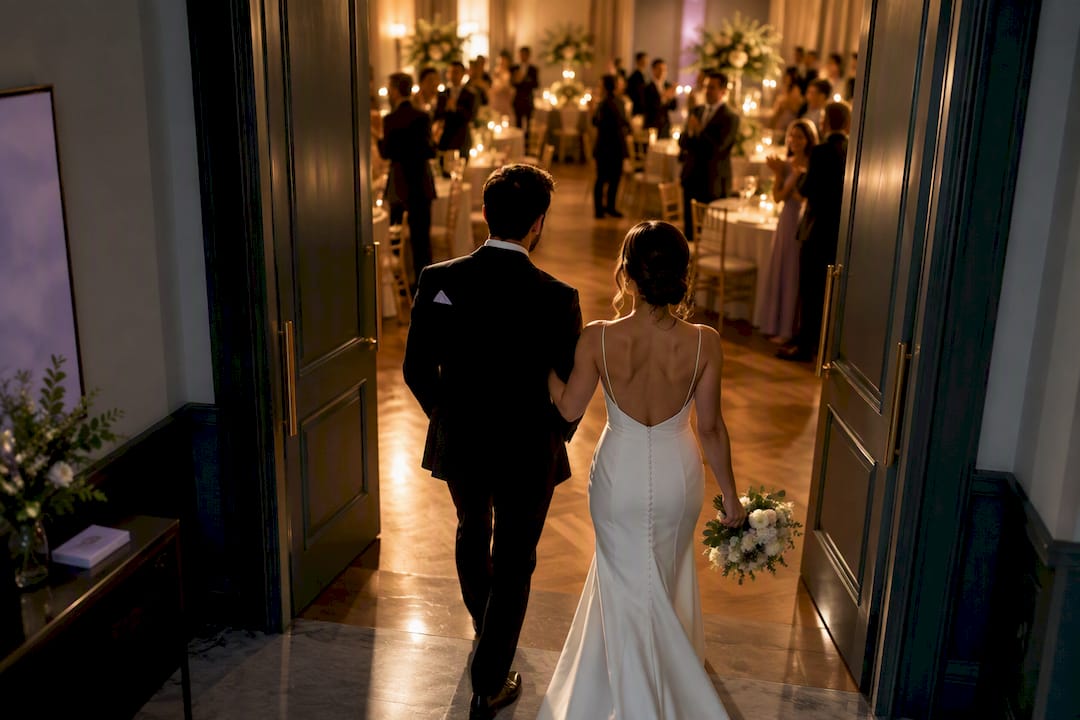
• Cue your lighting to the night: dim uplights during dinner, a single spotlight for the first dance, then bring intensity up as the floor fills.
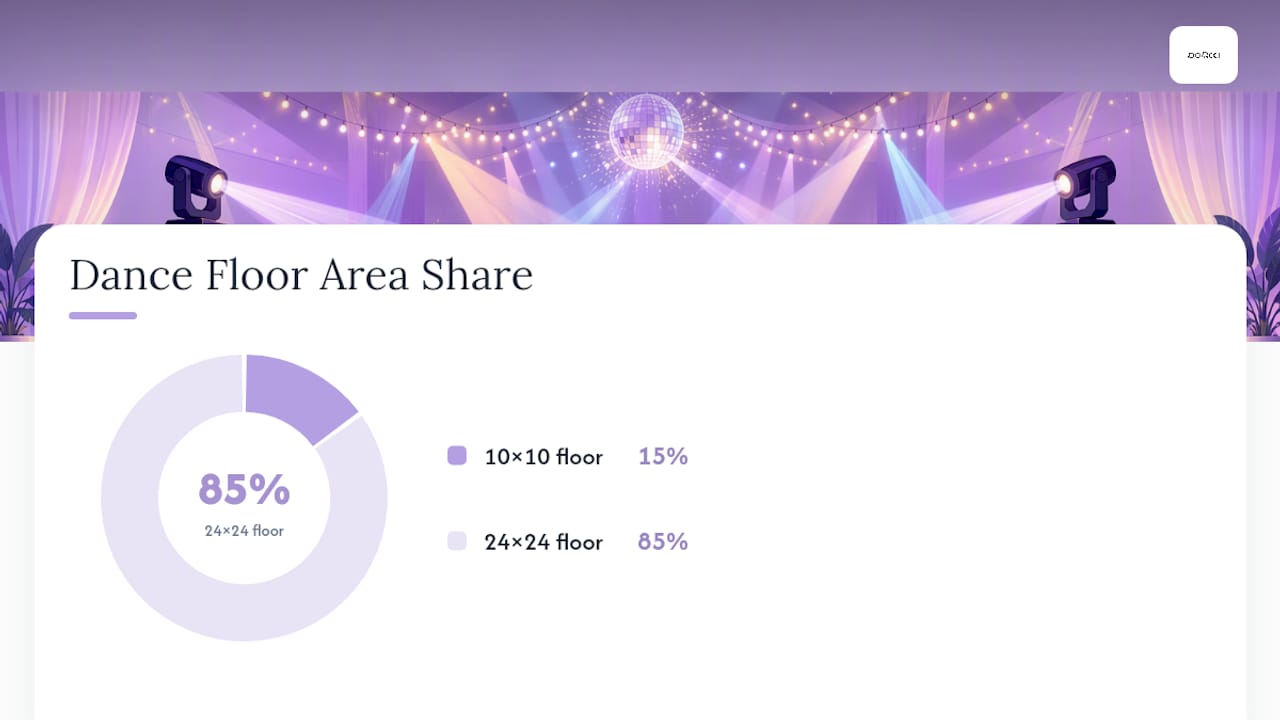
Scale drives everything about your lighting plan. A 10x10 dance area suits a smaller, more intimate gathering, while a 24x24 floor works well for larger receptions with more guests.
Cost ranges swing widely depending on whether you’re renting a basic uplight kit or a full rig with truss, moving heads, and a lighting tech running the board. A small DIY setup costs far less upfront but puts the setup, aiming, and troubleshooting on you. A rented package with tech staff costs more but removes the risk of a fixture pointed the wrong way during the first dance.
When requesting quotes, include:
• Room dimensions and ceiling height
• Expected guest count
• Event timeline, including load in and load out windows
• Power access (how many circuits, where they’re located)
• Photo and video needs, so the vendor can plan around your photographer
Every fixture on your dance floor is still an electrical device in a room full of people, so code compliance isn’t optional. Temporary event wiring in the US falls under NEC Article 525 and OSHA’s electrical standards, which cover GFCI protection in public areas and mechanical protection for any cable that could get stepped on or rolled over.
Strobe and flicker caution matters just as much. Flashing effects in the 3 to 30 Hz range raise real risk for guests with photosensitive epilepsy, so offer a reduced-intensity mode and give guests a heads up before a strobe segment starts. LED drivers can also introduce their own flicker through certain dimming methods, which IEEE research on LED flicker flags as a concern for a small at-risk population. Confirm fire marshal sign-off and rigging limits with your venue before locking in any atmospheric effects or hanging fixtures.
A pro lighting package typically starts with a site visit, a lighting plot mapped to your room, then delivery, setup, and a pre-event test run before guests arrive. That test matters more than people expect. It’s the difference between finding out a gobo is misaligned at 3pm versus during your first dance.
When you request a quote, hand over:
• Venue dimensions and ceiling height
• Expected guest count
• Your event timeline
• Photo and video priorities
• Power access details
Tech staff run the board during the event, adjusting cues as the night moves from dinner to speeches to open dancing, so nobody on your team has to think about it.
Layer your lighting for mood and motion together, not one or the other. Test on-site with your photographer present, since colors and beam visibility that look great to the eye can photograph flat or oversaturated. And never fight the room. If a venue has strong fixed lighting or big windows, work with it instead of trying to override it with more fixtures.
— PORCCI
Here’s the honest version: most of what makes dance floor lighting look professional isn’t the fixtures, it’s the setup, the testing, and having someone on-site who knows how to fix a problem before your guests notice. That’s the part Porcci NYC handles. We bundle lighting with DJ services so your sound and lighting cues actually sync, and our AV and sound system rental packages cover everything from a small party setup to a full rig with truss and tech staff.
When you request a quote, send us your room dimensions, guest count, timeline, and whether you’ve got a photographer or videographer on-site. We’ll come back with a plan and a fixture count that fits your room, not a generic package. A few prime weekend dates are already booking up for peak season, so if you’ve got a date in mind, get a quote now and we’ll take it from there.
• OSHA — Walking-Working Surfaces; Means of Egress; Electrical; and other Standards
• Epilepsy Society — Photosensitive epilepsy
• Lighting for Dance Floors That Wows Your Guests - 1021 Events
• What goes into wedding reception lighting - Techtonic Events
The strongest results come from layering uplights around the room, two moving heads angled downward for energy, and one personal touch like a gobo monogram or an LED dance floor. Haze helps make those beams visible, and pinspots add sparkle to centerpieces without extra cost.
Battery powered uplights, plug-and-play derby lights, and string-light canopies let you build a layered look without renting truss or hiring a tech. Battery uplights also cut down on trip hazards since there’s no cable to run across the floor.
Custom neon signs with a couple’s initials or a company name make a great photo backdrop near the dance floor entrance. Textured gobos, like a leafy or damask pattern projected onto a wall, add visual interest without the cost of a full LED floor.
For performance moments like a first dance, bring the room down to a single spotlight, then bring intensity and color back up as the crowd joins in. Cueing lights to match the music, dimming for slow songs and brightening for upbeat ones, keeps the room’s energy matched to what’s happening on the floor.
Pricing depends heavily on room size and how many fixtures you need, so ask any vendor for a quote based on your specific space. Porcci NYC’s AV and sound packages, which can include lighting, start at $210 for a small party setup, with larger packages available for bigger rooms and guest counts.
Planner ready checklist for dance floor lighting: exact placement, timing cues, and booking questions. Two moving heads, uplights, gobos, and haze.
The most reliable dance floor lighting ideas combine three layers: perimeter uplights for mood, two moving heads angled down for energy, and one personal touch like a gobo monogram or LED dance floor. Add haze so beams actually show up, test everything before guests walk in, and confirm your venue’s electrical and fire rules first. A pro rental package handles all of it, setup included.
TL;DR:
• Perimeter uplights should be placed every 8 to 12 feet to achieve even color wash and set the room’s overall mood effectively.
• Positioning two moving head fixtures 7 to 10 feet high and angled downward creates dynamic motion and energy on the dance floor.
• Gobos and textured projections should be aimed 15 to 25 feet away to ensure clear visibility and optimal visual impact.
• Atmosphere effects like haze are essential for beams to be visible but may be restricted by venue rules, requiring early confirmation.
• A professional lighting setup includes a site visit, a detailed plan, and on-site testing to avoid issues during the event, especially for complex layers.
• Dance Floor Lighting Ideas That Set the Right Mood
• Fixture Placement and Coverage: Getting the Setup Right
• Using Haze, Gobos, and Color to Set the Timeline
• Budget, Scale, and What to Ask For in a Quote
• Safety, Code Compliance, and Health Considerations
• What a Professional Setup Actually Looks Like
• Three Rules That Make Lighting Feel Professional
• Porcci NYC: How We Help You Get This Right
• Sources
• FAQ
Good dance floor lighting isn’t about throwing every fixture you own in the room. It’s about layering a few things that work together. Here’s how we’d rank the options, from foundational to “nice if your budget allows it.”
1. Color wash / uplighting. Placed around the room’s perimeter, uplights wash the walls in color and instantly change how a space feels. This is the foundation layer almost every event should have, since it sets the room’s overall foundation before anything else goes up.
2. Moving head beams. Two fixtures positioned 7 to 10 feet high and angled downward give you sweeping color and motion once the dancing starts. This is the layer that turns a static room into one that feels alive.
3. Gobo monograms and patterns. A projected monogram with the couple’s initials or a company logo personalizes the floor without extra fixtures. Texture gobos (leaves, damask patterns) work well behind a cake table or gift display too.
4. LED dance floors. These become the visual centerpiece of the room, but they cost more and need more setup time. Reserve them for events where the floor itself is meant to be a talking point, not a background element.
5. Mirror ball and pinspots. Old school, low tech, and still charming for a first dance or a retro themed party. Pinspots also work great highlighting centerpieces on guest tables.
6. Canopy lights, fairy lights, and chandeliers. Overhead treatments make a tent or industrial venue feel intimate fast. String lights zigzagged across a ceiling are one of the cheapest ways to add warmth.
7. Custom neon signs. A neon “Mr. and Mrs.” sign or a company name in script adds a photo-worthy focal point near the dance floor entrance or behind the DJ booth.
8. Perimeter rope or flex lighting. Running LED strip lighting along the floor’s edge defines the dance space clearly, especially useful in a multipurpose room.
9. Strobes and lasers. These read as exciting on camera but need real caution (more on that below) and aren’t right for every crowd or venue.
10. DIY low-cost options. Battery powered uplights, plug-and-play derby lights, and string-light canopies let smaller budgets get a layered look without renting truss or hiring a lighting tech.
Placement makes or breaks even the best lighting plan. A few numbers to work from when you’re briefing a vendor or walking a venue:
• Two moving heads on opposite stands or truss totems, positioned 7 to 10 feet high and angled downward, gives reliable coverage without blocking sightlines.
• Uplights every 8 to 12 feet around the room’s perimeter keep the color wash even instead of patchy.
• Pinspots aimed at centerpieces or cake tables add sparkle without competing with the dance floor’s main lighting.
• Gobos read best when projected from 15 to 25 feet away, so confirm your venue has that kind of throw distance before booking a monogram.
• Truss works for larger rooms with rigging points; totems or floor stands are the fallback in venues that won’t allow hanging points.
• Cable runs should be taped down, circuits labeled, and GFCI protection used anywhere near wet or public areas.
Most lighting rigs take 2 to 4 hours to set up depending on venue access and package size, so build that window into your day-of timeline.
Pro Tip: Ask your lighting vendor for a written lighting plot and a short pre-event run-through. It takes ten minutes and catches problems (a blocked sightline, a fixture aimed at a mirror) before your guests ever see the room.
Atmosphere does the heavy lifting here. Haze is what makes a moving head’s beam actually visible instead of just a colored dot on the wall, but plenty of venues restrict atmospheric effects, so confirm that early.
• Warm amber and soft white work best during dinner and speeches. They flatter skin tones and don’t fight with photography.
• Jewel tones (deep purple, magenta, sapphire) bring energy once dancing starts, but avoid oversaturated greens that can wash out skin in photos.
• Gobos work as image projections (a monogram) or as texture (a leafy pattern), and the effect changes a lot depending on which one you pick.
• Cue your lighting to the night: dim uplights during dinner, a single spotlight for the first dance, then bring intensity up as the floor fills.
Scale drives everything about your lighting plan. A 10x10 dance area suits a smaller, more intimate gathering, while a 24x24 floor works well for larger receptions with more guests.
Cost ranges swing widely depending on whether you’re renting a basic uplight kit or a full rig with truss, moving heads, and a lighting tech running the board. A small DIY setup costs far less upfront but puts the setup, aiming, and troubleshooting on you. A rented package with tech staff costs more but removes the risk of a fixture pointed the wrong way during the first dance.
When requesting quotes, include:
• Room dimensions and ceiling height
• Expected guest count
• Event timeline, including load in and load out windows
• Power access (how many circuits, where they’re located)
• Photo and video needs, so the vendor can plan around your photographer
Every fixture on your dance floor is still an electrical device in a room full of people, so code compliance isn’t optional. Temporary event wiring in the US falls under NEC Article 525 and OSHA’s electrical standards, which cover GFCI protection in public areas and mechanical protection for any cable that could get stepped on or rolled over.
Strobe and flicker caution matters just as much. Flashing effects in the 3 to 30 Hz range raise real risk for guests with photosensitive epilepsy, so offer a reduced-intensity mode and give guests a heads up before a strobe segment starts. LED drivers can also introduce their own flicker through certain dimming methods, which IEEE research on LED flicker flags as a concern for a small at-risk population. Confirm fire marshal sign-off and rigging limits with your venue before locking in any atmospheric effects or hanging fixtures.
A pro lighting package typically starts with a site visit, a lighting plot mapped to your room, then delivery, setup, and a pre-event test run before guests arrive. That test matters more than people expect. It’s the difference between finding out a gobo is misaligned at 3pm versus during your first dance.
When you request a quote, hand over:
• Venue dimensions and ceiling height
• Expected guest count
• Your event timeline
• Photo and video priorities
• Power access details
Tech staff run the board during the event, adjusting cues as the night moves from dinner to speeches to open dancing, so nobody on your team has to think about it.
Layer your lighting for mood and motion together, not one or the other. Test on-site with your photographer present, since colors and beam visibility that look great to the eye can photograph flat or oversaturated. And never fight the room. If a venue has strong fixed lighting or big windows, work with it instead of trying to override it with more fixtures.
— PORCCI
Here’s the honest version: most of what makes dance floor lighting look professional isn’t the fixtures, it’s the setup, the testing, and having someone on-site who knows how to fix a problem before your guests notice. That’s the part Porcci NYC handles. We bundle lighting with DJ services so your sound and lighting cues actually sync, and our AV and sound system rental packages cover everything from a small party setup to a full rig with truss and tech staff.
When you request a quote, send us your room dimensions, guest count, timeline, and whether you’ve got a photographer or videographer on-site. We’ll come back with a plan and a fixture count that fits your room, not a generic package. A few prime weekend dates are already booking up for peak season, so if you’ve got a date in mind, get a quote now and we’ll take it from there.
• OSHA — Walking-Working Surfaces; Means of Egress; Electrical; and other Standards
• Epilepsy Society — Photosensitive epilepsy
• Lighting for Dance Floors That Wows Your Guests - 1021 Events
• What goes into wedding reception lighting - Techtonic Events
The strongest results come from layering uplights around the room, two moving heads angled downward for energy, and one personal touch like a gobo monogram or an LED dance floor. Haze helps make those beams visible, and pinspots add sparkle to centerpieces without extra cost.
Battery powered uplights, plug-and-play derby lights, and string-light canopies let you build a layered look without renting truss or hiring a tech. Battery uplights also cut down on trip hazards since there’s no cable to run across the floor.
Custom neon signs with a couple’s initials or a company name make a great photo backdrop near the dance floor entrance. Textured gobos, like a leafy or damask pattern projected onto a wall, add visual interest without the cost of a full LED floor.
For performance moments like a first dance, bring the room down to a single spotlight, then bring intensity and color back up as the crowd joins in. Cueing lights to match the music, dimming for slow songs and brightening for upbeat ones, keeps the room’s energy matched to what’s happening on the floor.
Pricing depends heavily on room size and how many fixtures you need, so ask any vendor for a quote based on your specific space. Porcci NYC’s AV and sound packages, which can include lighting, start at $210 for a small party setup, with larger packages available for bigger rooms and guest counts.