Explore the top trends in event rentals 2026 shaping NYC and NJ. Get insights to stay ahead in a booming market full of opportunities!
TL;DR:
• The event rental market is projected to reach 23.21 billion dollars by 2026, driven by demand for personalized, quick-turnaround services.
• Clients in NYC and NJ expect fast, affordable options for micro-events or highly customized experiences requiring advanced technology.
• Success depends on strong local vendor relationships, reliable logistics, and leveraging tech like inventory management and AI forecasting.
The global event rental market is set to hit $23.21 billion in 2026, and the pressure on planners in New York City and New Jersey to keep up has never been higher. Clients want personalized experiences, they want them fast, and they want them flawlessly executed in some of the most logistically complex venues in the country. Whether you’re coordinating a rooftop wedding in Brooklyn, a corporate gala in Midtown, or a bar mitzvah in Bergen County, the rental landscape is shifting beneath your feet. This guide covers exactly what’s changing, what’s driving it, and how to stay ahead.
• Understanding the event rental boom: Why demand is skyrocketing
• Customization vs. speed: What clients expect in 2026
• Tech takes center stage: AI, software, and smart inventory in rentals
• Design trends and rental essentials: What’s hot (and what’s out)
• Managing NYC/NJ event rental challenges and risks
• What most event planners miss about NYC/NJ rental trends
• Next steps: Elevate your event with trusted NYC/NJ rentals
| Point | Details |
|---|---|
| Event rentals booming | The NYC and NJ event rental industry is growing rapidly, with demand for both speed and customization rising. |
| Tech is essential | AI, inventory software, and online customization are crucial for handling fast-paced, complex rental needs. |
| Customization vs. fast service | Planners must balance demand for unique experiences with clients’ expectations for quick turnaround and affordability. |
| NYC/NJ risks require planning | Lead time, labor, weather, and regulations in NYC/NJ require planners to manage risks with contracts and vendor relationships. |
| Rental trends shape design | Bold décor, interactive tech, and flexible furniture are leading event rental trends for 2026. |
The event rental industry is growing at a pace that demands your attention. The US party and event rental sector generated $5.9 billion in revenue in 2023, and global figures are accelerating well past that. Even niche categories are expanding fast. The global event furniture rental market alone was valued at $964 million in 2025 and is projected to reach $1.297 billion by 2034 at a compound annual growth rate of 4.2%.
What’s fueling this in NYC and NJ specifically? A few converging forces:
• Corporate events and team-building activations are back in full force, with companies investing heavily in in-person culture-building after years of remote work.
• The MICE sector (meetings, incentives, conferences, and exhibitions) is booking venues across Midtown Manhattan and Jersey City with higher frequency and higher budgets.
• Luxury weddings in New Jersey’s vineyard and estate venues are increasingly turning to rental companies for custom furniture, lighting rigs, and photo booths rather than relying solely on venue inventory.
• Micro-events and intimate gatherings are creating a new, high-margin segment for planners who can turn around boutique experiences quickly.
| Segment | 2023 Value | 2026 Projection |
|---|---|---|
| Global event rental market | N/A | $23.21B |
| US party & event rental revenue | $5.9B | Growing |
| Global event furniture rental | $964M (2025) | $1.297B (2034) |
Pro Tip: Target corporate team-building and city wedding clients early in the year. These segments book fast and expect premium rentals. Check out event rental examples specific to NYC and NJ to see what’s performing well in your market right now.
With the market expanding, the real challenge is meeting client expectations. Right now, the industry is splitting into two distinct service models, and understanding which one your client needs is half the job.
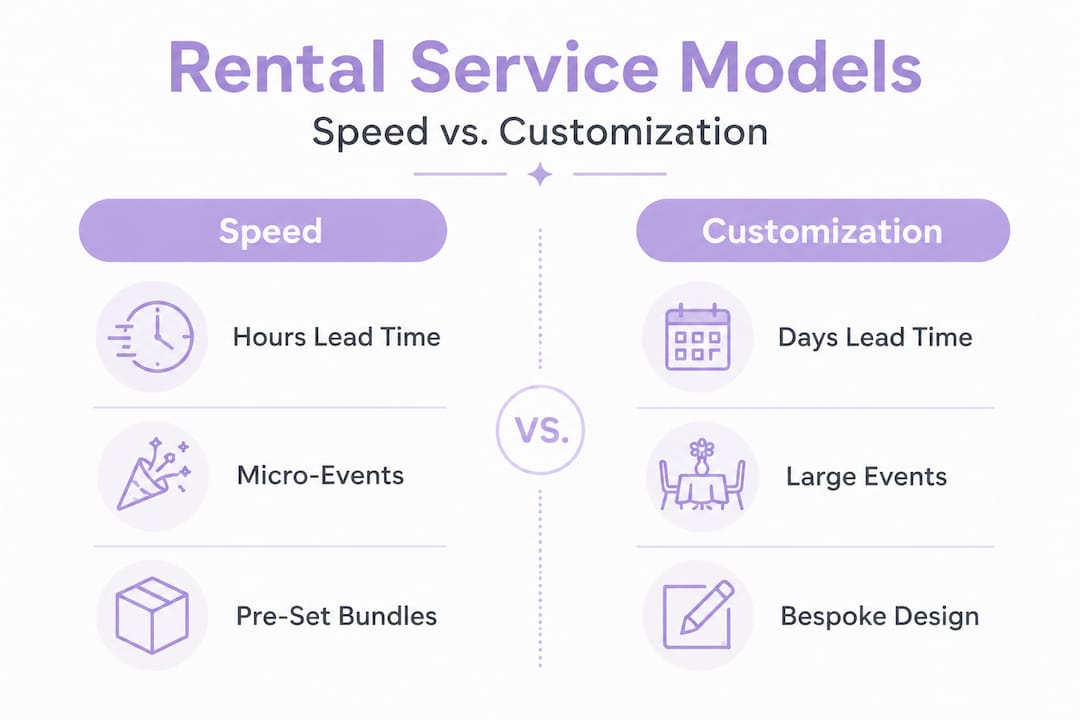
On one side, you have cost-conscious clients who need fast, affordable solutions with minimal friction. They want online booking, instant quotes, and next-day delivery. On the other side, you have clients demanding hyper-individualized experiences, where every table linen, lighting fixture, and photo booth skin reflects a specific theme. The event rental software landscape in 2026 confirms this split, with lead times shrinking to hours and the need for AI-powered customization engines becoming standard.
Here’s how to assess which model fits each event:
1. Ask about the guest count and timeline first. Events under 75 guests with short lead times are usually better served by a speed-first model. Larger, branded events need bespoke planning.
2. Clarify the client’s brand standards. Corporate clients often have strict visual guidelines. A generic tent or folding chair setup will not pass review.
3. Review the venue constraints. Some NYC venues have loading dock restrictions or elevator limitations that make highly customized setups impractical on short timelines.
4. Discuss budget ranges openly. Customization costs time and resources. Setting expectations early prevents last-minute scope changes.
5. Use online booking tools to streamline the speed-first option. This frees up your team to focus on the bespoke projects that actually need hands-on attention.
| Service model | Lead time | Best for | Key feature |
|---|---|---|---|
| Speed/standard | Hours to 48hrs | Micro-events, corporate pop-ups | Online booking, instant inventory |
| Bespoke/custom | 2 to 6 weeks | Weddings, galas, branded events | AI customization, dedicated planning |
Understanding the value of outsourcing event rentals becomes especially clear when you’re navigating both service models at the same time. Delegating the logistics to experienced vendors lets you stay focused on the client relationship.
Pro Tip: Use an AI-powered customization platform to build visual mockups for bespoke clients during the first consultation. It shortens approval cycles dramatically and reduces back-and-forth emails by up to 40%.
Meeting demands for speed and personalization would be impossible without technology. The numbers make this clear. According to current industry data, 80% of rental companies now use inventory management software, and 55% plan to implement AI forecasting tools in 2026. For NYC/NJ planners, this shift is not optional. It’s the baseline.
Here are the most useful tech tools for local planners right now:
• Real-time inventory platforms that show availability across multiple warehouse locations, critical when you’re pulling gear from both a Manhattan and a Newark facility.
• AI-driven demand forecasting to predict peak booking windows, especially around NYC’s high-density event calendar (Fashion Week, holiday parties, graduation season).
• Online booking and digital contracts that reduce the administrative lag between inquiry and confirmation.
• Route optimization software for delivery logistics in congested NYC streets, because a 45-minute delay at a loading dock can derail an entire event timeline.
• CRM integrations that track client preferences across repeat bookings, making it easier to offer personalized upgrades on the next order.
“Shrinking lead times mean that inventory visibility and booking speed are now just as important as the quality of the product itself. Planners who integrate tech early will outperform those who don’t.” — Industry outlook, Good Shuffle Pro 2026 Roadmap
Following a clear set of rental planning steps keeps your workflow tight when technology is moving fast around you.
Pro Tip: Build weather contingencies and permit timelines into your planning software as recurring task templates. In NYC, permit approvals can take 10 to 14 business days, and missing that window is a costly mistake.
Let’s translate these tech and customization shifts into real design essentials you can offer clients. In 2026, the aesthetic direction for NYC and NJ events is bold, experiential, and deeply personalized. Generic is officially out.
What’s trending in rentals this year:
• Dramatic lighting rigs including warm Edison arrays, color-wash LED systems, and programmable spotlights that transform plain venues into immersive environments.
• Flexible modular furniture that can reconfigure from a ceremony layout to a reception setup without a two-hour reset.
• Open-air and enclosed photo booths with branded overlays, GIF capabilities, and social sharing integrations.
• Interactive tech stations such as digital guest books, AI portrait generators, and live social media walls.
• Bold, contrasting color palettes and maximalist tablescapes replacing the muted, neutral tones of past years.
What’s losing ground fast:
• Mass-produced, identical decor that offers no differentiation between venues.
• Neutral minimalism as a default theme, especially for weddings and mitzvahs where personalization now drives client decisions.
• Ignoring micro-event potential. Small gatherings of 20 to 50 guests are profitable and growing in demand, particularly in New Jersey’s suburban market.
Most event planners we work with rent equipment for the flexibility and variety it provides. Only high-volume venues running 150-plus identical events annually find it cost-effective to buy. Knowing how to choose the right party equipment rental service makes the difference between a memorable event and a forgettable one.
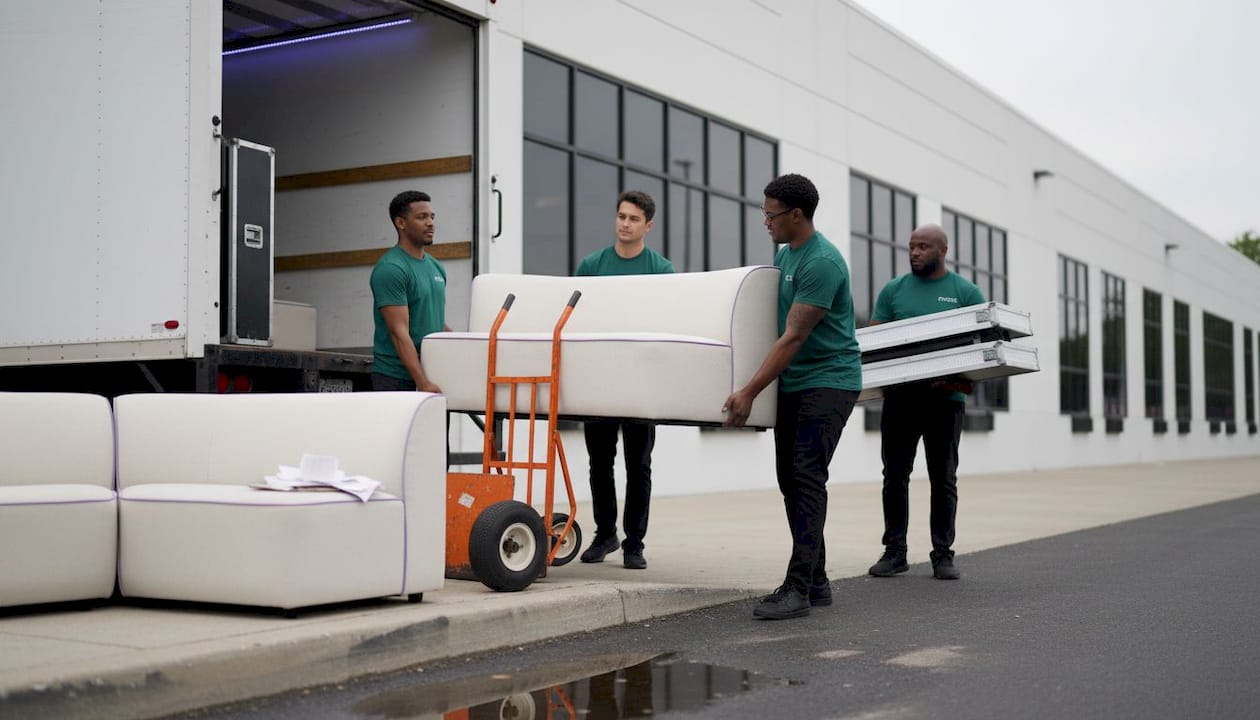
Trends are only useful if you can reliably deliver them. Here’s how top planners protect client events from NYC’s common pitfalls. Short lead times strain inventory, and local risks including permits, labor shortages, and unpredictable weather require proactive contract management.
Follow these steps to reduce exposure:
1. Book early and confirm inventory holds in writing. A verbal confirmation means nothing when three other planners are pulling from the same warehouse.
2. Obtain all permits at least three weeks in advance. NYC parks, rooftops, and sidewalk events each require separate filings with different city agencies.
3. Include force majeure language in every vendor contract. This protects both you and your client when weather or labor disruptions occur.
4. Build a backup vendor list. For high-stakes events, having a secondary supplier for critical items like generators or sound systems is non-negotiable.
5. Communicate risk clearly to clients. Clients who understand the variables are far less likely to panic when something needs to adjust on event day.
“Force majeure clauses and proactive risk transfer protocols are no longer legal formalities. In NYC’s event environment, they’re operational necessities.” — Event rental industry guidance, 2026
Planning rain-resistant events is a core skill for outdoor events in this market. Equally important is knowing the vendor selection red flags that signal a supplier won’t hold up under pressure.
Pro Tip: Always read the cancellation and weather contingency fine print before signing any rental agreement. Some vendors charge full fees for weather cancellations unless a specific clause protects you.
With the hazards in mind, here’s our honest perspective on what actually drives long-term success in this market. Most planners spend enormous energy chasing the newest trend. The real competitive edge is something quieter: reliable local relationships.
No AI platform or inventory software can replace a vendor who picks up the phone at 10 PM when a generator fails or a shipment is stuck in tunnel traffic. We’ve seen technically flawless plans fall apart because the vendor was anonymous and unreachable. And we’ve seen imperfect setups saved entirely because a trusted local team showed up early and problem-solved on site.
Flexibility also delivers more consistent value than trend-chasing alone. The planner who can pivot from a rooftop to an indoor backup seamlessly, because they’ve pre-negotiated flexible terms with their rental partners, earns more repeat business than the planner who delivered the most on-trend centerpiece last June.
There’s also an uncomfortable truth about inventory limits. NYC’s rental market is deep but not infinite. During peak season, May through October, popular items like high-end photo booths, specialty lighting, and modular lounge sets book out weeks in advance. Planners who over-promise to clients based on catalog photos rather than confirmed availability damage their own reputation, not the vendor’s. Set expectations clearly from the first meeting.
Finally, understanding how event staffing integrates with your rental strategy separates good events from truly memorable ones. The right staff keeps the rental equipment running, the guest experience flowing, and the timeline on track.
Ready to apply these trends to your next event? At Porcci NYC, we make it straightforward to source the most in-demand equipment and entertainment for weddings, corporate events, and private gatherings across New York City and New Jersey. Start with our simple booking process to check availability and get a fast quote. Explore our full lineup of NYC photo booth rentals that include branded overlays, GIF mode, and instant social sharing features your guests will love. For events that need energy and professional sound, our event DJ services come with full setup, breakdown, and experienced staff so your focus stays on the experience.
Photo booths, specialty lighting, modular furniture, and interactive tech elements are the top rentals for weddings, corporate events, and private parties, driven by a global market now valued at over $23 billion.
Lead times are shrinking to just a few hours for many vendors using online booking and real-time inventory platforms, though peak season availability can still be tight.
Inventory software and AI forecasting help planners manage complex timelines, predict availability gaps, and deliver both fast turnaround and custom experiences without manual back-and-forth.
Short lead times, city permit requirements, weather disruptions, and labor shortages are the primary risks. Always review contracts for force majeure protections before signing.
Most planners rent for flexibility and variety, while only high-volume venues running 150 or more identical events per year typically find purchasing cost-effective.
Explore the top trends in event rentals 2026 shaping NYC and NJ. Get insights to stay ahead in a booming market full of opportunities!
TL;DR:
• The event rental market is projected to reach 23.21 billion dollars by 2026, driven by demand for personalized, quick-turnaround services.
• Clients in NYC and NJ expect fast, affordable options for micro-events or highly customized experiences requiring advanced technology.
• Success depends on strong local vendor relationships, reliable logistics, and leveraging tech like inventory management and AI forecasting.
The global event rental market is set to hit $23.21 billion in 2026, and the pressure on planners in New York City and New Jersey to keep up has never been higher. Clients want personalized experiences, they want them fast, and they want them flawlessly executed in some of the most logistically complex venues in the country. Whether you’re coordinating a rooftop wedding in Brooklyn, a corporate gala in Midtown, or a bar mitzvah in Bergen County, the rental landscape is shifting beneath your feet. This guide covers exactly what’s changing, what’s driving it, and how to stay ahead.
• Understanding the event rental boom: Why demand is skyrocketing
• Customization vs. speed: What clients expect in 2026
• Tech takes center stage: AI, software, and smart inventory in rentals
• Design trends and rental essentials: What’s hot (and what’s out)
• Managing NYC/NJ event rental challenges and risks
• What most event planners miss about NYC/NJ rental trends
• Next steps: Elevate your event with trusted NYC/NJ rentals
| Point | Details |
|---|---|
| Event rentals booming | The NYC and NJ event rental industry is growing rapidly, with demand for both speed and customization rising. |
| Tech is essential | AI, inventory software, and online customization are crucial for handling fast-paced, complex rental needs. |
| Customization vs. fast service | Planners must balance demand for unique experiences with clients’ expectations for quick turnaround and affordability. |
| NYC/NJ risks require planning | Lead time, labor, weather, and regulations in NYC/NJ require planners to manage risks with contracts and vendor relationships. |
| Rental trends shape design | Bold décor, interactive tech, and flexible furniture are leading event rental trends for 2026. |
The event rental industry is growing at a pace that demands your attention. The US party and event rental sector generated $5.9 billion in revenue in 2023, and global figures are accelerating well past that. Even niche categories are expanding fast. The global event furniture rental market alone was valued at $964 million in 2025 and is projected to reach $1.297 billion by 2034 at a compound annual growth rate of 4.2%.
What’s fueling this in NYC and NJ specifically? A few converging forces:
• Corporate events and team-building activations are back in full force, with companies investing heavily in in-person culture-building after years of remote work.
• The MICE sector (meetings, incentives, conferences, and exhibitions) is booking venues across Midtown Manhattan and Jersey City with higher frequency and higher budgets.
• Luxury weddings in New Jersey’s vineyard and estate venues are increasingly turning to rental companies for custom furniture, lighting rigs, and photo booths rather than relying solely on venue inventory.
• Micro-events and intimate gatherings are creating a new, high-margin segment for planners who can turn around boutique experiences quickly.
| Segment | 2023 Value | 2026 Projection |
|---|---|---|
| Global event rental market | N/A | $23.21B |
| US party & event rental revenue | $5.9B | Growing |
| Global event furniture rental | $964M (2025) | $1.297B (2034) |
Pro Tip: Target corporate team-building and city wedding clients early in the year. These segments book fast and expect premium rentals. Check out event rental examples specific to NYC and NJ to see what’s performing well in your market right now.
With the market expanding, the real challenge is meeting client expectations. Right now, the industry is splitting into two distinct service models, and understanding which one your client needs is half the job.
On one side, you have cost-conscious clients who need fast, affordable solutions with minimal friction. They want online booking, instant quotes, and next-day delivery. On the other side, you have clients demanding hyper-individualized experiences, where every table linen, lighting fixture, and photo booth skin reflects a specific theme. The event rental software landscape in 2026 confirms this split, with lead times shrinking to hours and the need for AI-powered customization engines becoming standard.
Here’s how to assess which model fits each event:
1. Ask about the guest count and timeline first. Events under 75 guests with short lead times are usually better served by a speed-first model. Larger, branded events need bespoke planning.
2. Clarify the client’s brand standards. Corporate clients often have strict visual guidelines. A generic tent or folding chair setup will not pass review.
3. Review the venue constraints. Some NYC venues have loading dock restrictions or elevator limitations that make highly customized setups impractical on short timelines.
4. Discuss budget ranges openly. Customization costs time and resources. Setting expectations early prevents last-minute scope changes.
5. Use online booking tools to streamline the speed-first option. This frees up your team to focus on the bespoke projects that actually need hands-on attention.
| Service model | Lead time | Best for | Key feature |
|---|---|---|---|
| Speed/standard | Hours to 48hrs | Micro-events, corporate pop-ups | Online booking, instant inventory |
| Bespoke/custom | 2 to 6 weeks | Weddings, galas, branded events | AI customization, dedicated planning |
Understanding the value of outsourcing event rentals becomes especially clear when you’re navigating both service models at the same time. Delegating the logistics to experienced vendors lets you stay focused on the client relationship.
Pro Tip: Use an AI-powered customization platform to build visual mockups for bespoke clients during the first consultation. It shortens approval cycles dramatically and reduces back-and-forth emails by up to 40%.
Meeting demands for speed and personalization would be impossible without technology. The numbers make this clear. According to current industry data, 80% of rental companies now use inventory management software, and 55% plan to implement AI forecasting tools in 2026. For NYC/NJ planners, this shift is not optional. It’s the baseline.
Here are the most useful tech tools for local planners right now:
• Real-time inventory platforms that show availability across multiple warehouse locations, critical when you’re pulling gear from both a Manhattan and a Newark facility.
• AI-driven demand forecasting to predict peak booking windows, especially around NYC’s high-density event calendar (Fashion Week, holiday parties, graduation season).
• Online booking and digital contracts that reduce the administrative lag between inquiry and confirmation.
• Route optimization software for delivery logistics in congested NYC streets, because a 45-minute delay at a loading dock can derail an entire event timeline.
• CRM integrations that track client preferences across repeat bookings, making it easier to offer personalized upgrades on the next order.
“Shrinking lead times mean that inventory visibility and booking speed are now just as important as the quality of the product itself. Planners who integrate tech early will outperform those who don’t.” — Industry outlook, Good Shuffle Pro 2026 Roadmap
Following a clear set of rental planning steps keeps your workflow tight when technology is moving fast around you.
Pro Tip: Build weather contingencies and permit timelines into your planning software as recurring task templates. In NYC, permit approvals can take 10 to 14 business days, and missing that window is a costly mistake.
Let’s translate these tech and customization shifts into real design essentials you can offer clients. In 2026, the aesthetic direction for NYC and NJ events is bold, experiential, and deeply personalized. Generic is officially out.
What’s trending in rentals this year:
• Dramatic lighting rigs including warm Edison arrays, color-wash LED systems, and programmable spotlights that transform plain venues into immersive environments.
• Flexible modular furniture that can reconfigure from a ceremony layout to a reception setup without a two-hour reset.
• Open-air and enclosed photo booths with branded overlays, GIF capabilities, and social sharing integrations.
• Interactive tech stations such as digital guest books, AI portrait generators, and live social media walls.
• Bold, contrasting color palettes and maximalist tablescapes replacing the muted, neutral tones of past years.
What’s losing ground fast:
• Mass-produced, identical decor that offers no differentiation between venues.
• Neutral minimalism as a default theme, especially for weddings and mitzvahs where personalization now drives client decisions.
• Ignoring micro-event potential. Small gatherings of 20 to 50 guests are profitable and growing in demand, particularly in New Jersey’s suburban market.
Most event planners we work with rent equipment for the flexibility and variety it provides. Only high-volume venues running 150-plus identical events annually find it cost-effective to buy. Knowing how to choose the right party equipment rental service makes the difference between a memorable event and a forgettable one.
Trends are only useful if you can reliably deliver them. Here’s how top planners protect client events from NYC’s common pitfalls. Short lead times strain inventory, and local risks including permits, labor shortages, and unpredictable weather require proactive contract management.
Follow these steps to reduce exposure:
1. Book early and confirm inventory holds in writing. A verbal confirmation means nothing when three other planners are pulling from the same warehouse.
2. Obtain all permits at least three weeks in advance. NYC parks, rooftops, and sidewalk events each require separate filings with different city agencies.
3. Include force majeure language in every vendor contract. This protects both you and your client when weather or labor disruptions occur.
4. Build a backup vendor list. For high-stakes events, having a secondary supplier for critical items like generators or sound systems is non-negotiable.
5. Communicate risk clearly to clients. Clients who understand the variables are far less likely to panic when something needs to adjust on event day.
“Force majeure clauses and proactive risk transfer protocols are no longer legal formalities. In NYC’s event environment, they’re operational necessities.” — Event rental industry guidance, 2026
Planning rain-resistant events is a core skill for outdoor events in this market. Equally important is knowing the vendor selection red flags that signal a supplier won’t hold up under pressure.
Pro Tip: Always read the cancellation and weather contingency fine print before signing any rental agreement. Some vendors charge full fees for weather cancellations unless a specific clause protects you.
With the hazards in mind, here’s our honest perspective on what actually drives long-term success in this market. Most planners spend enormous energy chasing the newest trend. The real competitive edge is something quieter: reliable local relationships.
No AI platform or inventory software can replace a vendor who picks up the phone at 10 PM when a generator fails or a shipment is stuck in tunnel traffic. We’ve seen technically flawless plans fall apart because the vendor was anonymous and unreachable. And we’ve seen imperfect setups saved entirely because a trusted local team showed up early and problem-solved on site.
Flexibility also delivers more consistent value than trend-chasing alone. The planner who can pivot from a rooftop to an indoor backup seamlessly, because they’ve pre-negotiated flexible terms with their rental partners, earns more repeat business than the planner who delivered the most on-trend centerpiece last June.
There’s also an uncomfortable truth about inventory limits. NYC’s rental market is deep but not infinite. During peak season, May through October, popular items like high-end photo booths, specialty lighting, and modular lounge sets book out weeks in advance. Planners who over-promise to clients based on catalog photos rather than confirmed availability damage their own reputation, not the vendor’s. Set expectations clearly from the first meeting.
Finally, understanding how event staffing integrates with your rental strategy separates good events from truly memorable ones. The right staff keeps the rental equipment running, the guest experience flowing, and the timeline on track.
Ready to apply these trends to your next event? At Porcci NYC, we make it straightforward to source the most in-demand equipment and entertainment for weddings, corporate events, and private gatherings across New York City and New Jersey. Start with our simple booking process to check availability and get a fast quote. Explore our full lineup of NYC photo booth rentals that include branded overlays, GIF mode, and instant social sharing features your guests will love. For events that need energy and professional sound, our event DJ services come with full setup, breakdown, and experienced staff so your focus stays on the experience.
Photo booths, specialty lighting, modular furniture, and interactive tech elements are the top rentals for weddings, corporate events, and private parties, driven by a global market now valued at over $23 billion.
Lead times are shrinking to just a few hours for many vendors using online booking and real-time inventory platforms, though peak season availability can still be tight.
Inventory software and AI forecasting help planners manage complex timelines, predict availability gaps, and deliver both fast turnaround and custom experiences without manual back-and-forth.
Short lead times, city permit requirements, weather disruptions, and labor shortages are the primary risks. Always review contracts for force majeure protections before signing.
Most planners rent for flexibility and variety, while only high-volume venues running 150 or more identical events per year typically find purchasing cost-effective.