Discover how effective event setup and breakdown explained can transform your planning process, ensuring a seamless experience for all.
TL;DR:
• Proper planning of setup and breakdown is crucial for ensuring smooth event operations and preserving venue relationships. Including sufficient labor, timeline buffers, and a dedicated coordinator helps prevent safety risks, delays, and miscommunications. Investing in these operational aspects guarantees a professional and polished event experience for clients and guests alike.
Most event planners focus heavily on décor, catering, and entertainment, then treat setup and breakdown as an afterthought. That’s a costly assumption. Getting event setup and breakdown explained clearly, before your next event, separates a smooth experience from a chaotic one. These two phases directly affect your timeline, your venue relationship, your equipment condition, and your guests’ first and last impressions. Whether you’re organizing a wedding in New Jersey or a corporate gathering in Manhattan, what happens before and after the main event matters just as much as the event itself.
• Event setup and breakdown explained: roles and labor ratios
• Breaking down an event: challenges and safety risks
• Timeline planning: buffers, sequencing, and vendor windows
• Why coordination is the glue between setup phases
• Practical checklist for setup and breakdown success
• My take on setup and breakdown as the real event foundation
• How Porccinyc handles setup and breakdown for you
• FAQ
| Point | Details |
|---|---|
| Staff to space ratio matters | Plan one worker per 250–300 sq. ft. to avoid under-resourcing your setup crew. |
| Breakdown needs extra labor | Breakdown requires 20% more labor or a one-hour additional buffer compared to setup time. |
| Build timeline buffers in | Add a 25–30% time buffer to all setup schedules to absorb vendor delays and last-minute changes. |
| A coordinator is non-negotiable | A day-of coordinator manages vendor sequencing, preventing conflicts that vendors cannot resolve among themselves. |
| Safety during teardown is serious | Fatigue and time pressure make breakdown the riskiest phase. Rotation crews and safety marshals reduce injuries significantly. |
Understanding what is event setup and breakdown starts with knowing who does what and in what numbers. Setup is not just about moving furniture. It involves loaders and assemblers who handle physical placement of chairs, tables, staging, and equipment; certified lift operators who manage any elevated rigging or truss work; supervisors who oversee safety compliance and workflow sequencing; and runners who handle last-minute supply delivery between zones.
The staffing math matters here. The industry standard is one setup worker per 250 to 300 square feet of event space. For events involving rigging, elevated lighting systems, or complex AV installations, add another 10 to 15 percent on top of that baseline. A 3,000 square foot ballroom, for example, requires at least 10 to 12 setup crew members at minimum, and more if you’re flying speakers or installing heavy truss systems.

Certified lift operators and OSHA-trained supervisors are not optional for complex builds. Most venues require proof of certification before they allow elevated work to begin. Skipping this step can void your venue insurance coverage and delay your entire setup window.
Pro Tip: For corporate event staffing or large gatherings, create a role sheet that lists each crew member’s name, assigned zone, and certification status before the event day begins.
| Event size | Space (sq. ft.) | Minimum setup crew | Additional crew for rigging |
|---|---|---|---|
| Small private party | 500–800 | 2–3 | 1 |
| Mid-size corporate event | 1,500–2,500 | 6–10 | 2–3 |
| Large wedding or gala | 3,000–5,000 | 12–20 | 3–5 |
Breakdown is where events most commonly go wrong. Your crew is tired, the venue wants its space back quickly, and equipment that took hours to assemble needs to come down in a fraction of that time. That pressure creates risk.
Safety experts note that teardown is more dangerous than setup because fatigue and time pressure compound simultaneously. The steps for event breakdown should account for this reality directly. Here is how to handle it well:
1. Staff up for breakdown. Plan for 20% more labor or schedule an additional one-hour buffer beyond what setup required. This is not waste. It is protection against injuries and damage fees.
2. Assign rotation crews. Rotate your physically demanding roles, such as loading heavy AV cases or dismantling staging, every 45 to 60 minutes to manage fatigue.
3. Designate safety marshals. One person on every breakdown team should be responsible for enforcing PPE use, marking fall zones around elevated teardown areas, and monitoring crew fatigue.
4. Protect equipment during load-out. Cables should be coiled and labeled before they go into cases. Speakers, lighting rigs, and display screens need protective covers applied before any movement begins.
5. Document damage at the venue immediately. Walk the space with your venue contact before you leave and photograph anything that was pre-existing versus anything that occurred during your event.
Pro Tip: Assign a dedicated “clean as you go” crew during breakdown. This group trails the teardown team, clearing debris and restoring the venue floor so you’re not scrambling at the last minute to meet venue restoration deadlines.
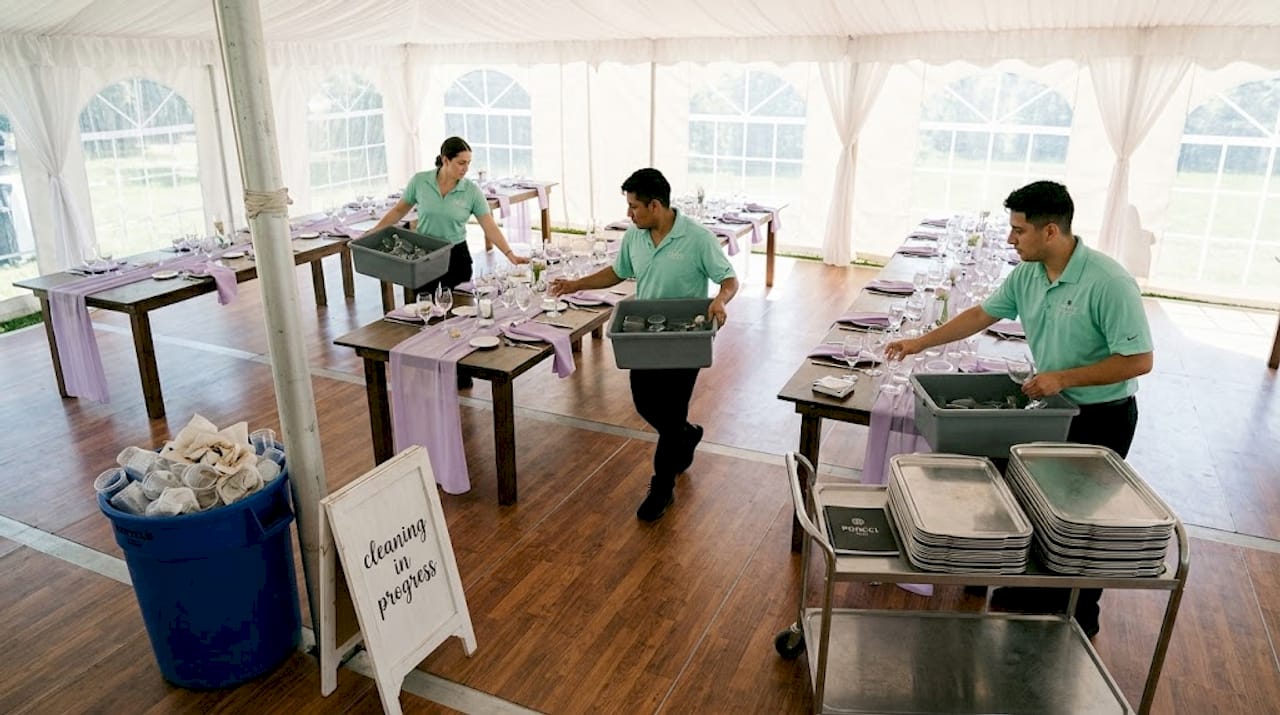
Event logistics simplified down to its core is really about time management. The most common timeline mistake planners make is building a schedule that assumes everything goes right. Nothing ever does completely, which is why adding 25 to 30 percent to your total setup time estimate is a professional best practice, not excessive caution.
How you sequence vendor arrivals is equally important. Coordinating vendor arrival windows carefully prevents dock congestion, where two or three trucks arrive simultaneously and block each other from unloading. Assign staggered arrival times in 20 to 30 minute increments.
Here’s a sample setup day framework for a mid-size event:
• T minus 6 hours: Venue access granted. Flooring, staging, and large structural elements go in first.
• T minus 4 hours: AV, lighting rigs, and sound systems installed. Cable management completed before any décor arrives.
• T minus 2.5 hours: Tables, chairs, and linens set. Décor and centerpieces installed.
• T minus 1 hour: Final AV sound check and lighting cues confirmed. Crew briefed on event flow.
• T minus 30 minutes: Walk-through with client or coordinator. Contingency buffer absorbed here.
For complex events like outdoor festivals or multi-room conferences, extend each phase by 30 to 40 percent and add a dedicated contingency block of at least 90 minutes. Review your event planning checklist before finalizing your day-of timeline to make sure no phase is unaccounted for.
Here’s a misconception worth confronting directly. Many people assume that once vendors are booked, setup handles itself. In practice, vendors focus on their own scope. The AV company sets up their gear. The florist arranges their tables. The caterer stocks their station. Nobody naturally manages the interaction between all of those moving parts unless someone is explicitly assigned to do it.
A day-of coordinator is that person. Their job during load-in and load-out includes:
• Directing vendor arrival order and access routes
• Resolving spatial conflicts when two vendors need the same area simultaneously
• Communicating timeline shifts to all vendors in real time
• Serving as the single point of contact so your client or host is not fielding logistics calls
“A single communication point during setup and breakdown prevents the kind of overlapping vendor conflicts that add hours to your timeline and damage to your equipment.”
For NY and NJ wedding events, particularly those with multiple vendors across large reception halls, having this role filled is the difference between a 6-hour setup and an 8-hour one.
Concrete preparation is what makes event planning tips actually useful. Here is a practical numbered process for your team:
1. Confirm all crew certifications and role assignments at least 48 hours before the event.
2. Draw detailed load-in and load-out maps for each vendor and crew team, showing access routes, staging zones, and equipment placement.
3. Organize all supplies and equipment into labeled zones before setup begins to reduce time spent searching.
4. Brief all crew on safety protocols, including PPE requirements and fall-zone procedures, at the start of both setup and breakdown shifts.
5. Monitor progress against your timeline every 30 minutes and adjust vendor sequencing in real time if delays occur.
Pro Tip: Create a shared digital timeline that all vendors and crew leads can access on their phones. When one phase shifts, everyone sees the update simultaneously without anyone needing to make multiple calls.
In my experience working events across New York City and New Jersey, setup and breakdown are where events are truly won or lost. Clients notice when the room feels polished and ready. They also notice, and remember, when breakdown leaves their guests picking through a half-dismantled space.
What I’ve seen too often is planners who excel at creative vision but underestimate the operational side. They book exceptional vendors and then leave them without coordination, without labor support, and without a realistic timeline. The result is a setup crew rushing, corners being cut on cable safety, and a breakdown that damages both equipment and the venue relationship.
The uncomfortable truth is that rushed teardown is where injury risk peaks and where liability exposure is highest. Investing in a safety marshal, a realistic breakdown buffer, and a coordinator who owns the process is not a luxury. It is the professional standard.
Champion the operational side of your events as fiercely as you do the creative side. Your clients will feel the difference even if they never know the specifics behind it.
— PORCCI
At Porccinyc, we’ve built our service model around one reality: most clients should not have to manage setup and breakdown logistics on their own. Our team provides full and day-of event planning services that include certified labor coordination, vendor sequencing, and timeline management from load-in through load-out. We also supply and install professional AV and sound equipment with our own trained crew, so you’re never relying on an outside team to handle your most technical setup needs. Whether your event is a 100-person corporate gathering or a 400-guest wedding reception, we tailor the staffing ratios and timeline to your specific venue and scope. Your focus stays on the experience. We take care of everything behind it.
Event setup refers to all preparation activities before guests arrive, including installing equipment, arranging furniture, and configuring AV systems. Breakdown covers the dismantling, removal, and venue restoration that follows the event.
The standard is one setup worker per 250 to 300 square feet of event space, with an additional 10 to 15 percent added for events involving rigging or elevated installations.
Breakdown typically requires 20 percent more labor or an extra hour compared to setup because crew fatigue and time pressure increase the risk of mistakes and injuries.
Yes. A day-of coordinator manages vendor sequencing, resolves spatial conflicts, and keeps the timeline on track during both load-in and load-out. Without one, vendors operate in isolation and conflicts are common.
Add 25 to 30 percent to your total estimated setup time as a buffer for unforeseen delays, vendor coordination gaps, and last-minute client changes.
Discover how effective event setup and breakdown explained can transform your planning process, ensuring a seamless experience for all.
TL;DR:
• Proper planning of setup and breakdown is crucial for ensuring smooth event operations and preserving venue relationships. Including sufficient labor, timeline buffers, and a dedicated coordinator helps prevent safety risks, delays, and miscommunications. Investing in these operational aspects guarantees a professional and polished event experience for clients and guests alike.
Most event planners focus heavily on décor, catering, and entertainment, then treat setup and breakdown as an afterthought. That’s a costly assumption. Getting event setup and breakdown explained clearly, before your next event, separates a smooth experience from a chaotic one. These two phases directly affect your timeline, your venue relationship, your equipment condition, and your guests’ first and last impressions. Whether you’re organizing a wedding in New Jersey or a corporate gathering in Manhattan, what happens before and after the main event matters just as much as the event itself.
• Event setup and breakdown explained: roles and labor ratios
• Breaking down an event: challenges and safety risks
• Timeline planning: buffers, sequencing, and vendor windows
• Why coordination is the glue between setup phases
• Practical checklist for setup and breakdown success
• My take on setup and breakdown as the real event foundation
• How Porccinyc handles setup and breakdown for you
• FAQ
| Point | Details |
|---|---|
| Staff to space ratio matters | Plan one worker per 250–300 sq. ft. to avoid under-resourcing your setup crew. |
| Breakdown needs extra labor | Breakdown requires 20% more labor or a one-hour additional buffer compared to setup time. |
| Build timeline buffers in | Add a 25–30% time buffer to all setup schedules to absorb vendor delays and last-minute changes. |
| A coordinator is non-negotiable | A day-of coordinator manages vendor sequencing, preventing conflicts that vendors cannot resolve among themselves. |
| Safety during teardown is serious | Fatigue and time pressure make breakdown the riskiest phase. Rotation crews and safety marshals reduce injuries significantly. |
Understanding what is event setup and breakdown starts with knowing who does what and in what numbers. Setup is not just about moving furniture. It involves loaders and assemblers who handle physical placement of chairs, tables, staging, and equipment; certified lift operators who manage any elevated rigging or truss work; supervisors who oversee safety compliance and workflow sequencing; and runners who handle last-minute supply delivery between zones.
The staffing math matters here. The industry standard is one setup worker per 250 to 300 square feet of event space. For events involving rigging, elevated lighting systems, or complex AV installations, add another 10 to 15 percent on top of that baseline. A 3,000 square foot ballroom, for example, requires at least 10 to 12 setup crew members at minimum, and more if you’re flying speakers or installing heavy truss systems.
Certified lift operators and OSHA-trained supervisors are not optional for complex builds. Most venues require proof of certification before they allow elevated work to begin. Skipping this step can void your venue insurance coverage and delay your entire setup window.
Pro Tip: For corporate event staffing or large gatherings, create a role sheet that lists each crew member’s name, assigned zone, and certification status before the event day begins.
| Event size | Space (sq. ft.) | Minimum setup crew | Additional crew for rigging |
|---|---|---|---|
| Small private party | 500–800 | 2–3 | 1 |
| Mid-size corporate event | 1,500–2,500 | 6–10 | 2–3 |
| Large wedding or gala | 3,000–5,000 | 12–20 | 3–5 |
Breakdown is where events most commonly go wrong. Your crew is tired, the venue wants its space back quickly, and equipment that took hours to assemble needs to come down in a fraction of that time. That pressure creates risk.
Safety experts note that teardown is more dangerous than setup because fatigue and time pressure compound simultaneously. The steps for event breakdown should account for this reality directly. Here is how to handle it well:
1. Staff up for breakdown. Plan for 20% more labor or schedule an additional one-hour buffer beyond what setup required. This is not waste. It is protection against injuries and damage fees.
2. Assign rotation crews. Rotate your physically demanding roles, such as loading heavy AV cases or dismantling staging, every 45 to 60 minutes to manage fatigue.
3. Designate safety marshals. One person on every breakdown team should be responsible for enforcing PPE use, marking fall zones around elevated teardown areas, and monitoring crew fatigue.
4. Protect equipment during load-out. Cables should be coiled and labeled before they go into cases. Speakers, lighting rigs, and display screens need protective covers applied before any movement begins.
5. Document damage at the venue immediately. Walk the space with your venue contact before you leave and photograph anything that was pre-existing versus anything that occurred during your event.
Pro Tip: Assign a dedicated “clean as you go” crew during breakdown. This group trails the teardown team, clearing debris and restoring the venue floor so you’re not scrambling at the last minute to meet venue restoration deadlines.
Event logistics simplified down to its core is really about time management. The most common timeline mistake planners make is building a schedule that assumes everything goes right. Nothing ever does completely, which is why adding 25 to 30 percent to your total setup time estimate is a professional best practice, not excessive caution.
How you sequence vendor arrivals is equally important. Coordinating vendor arrival windows carefully prevents dock congestion, where two or three trucks arrive simultaneously and block each other from unloading. Assign staggered arrival times in 20 to 30 minute increments.
Here’s a sample setup day framework for a mid-size event:
• T minus 6 hours: Venue access granted. Flooring, staging, and large structural elements go in first.
• T minus 4 hours: AV, lighting rigs, and sound systems installed. Cable management completed before any décor arrives.
• T minus 2.5 hours: Tables, chairs, and linens set. Décor and centerpieces installed.
• T minus 1 hour: Final AV sound check and lighting cues confirmed. Crew briefed on event flow.
• T minus 30 minutes: Walk-through with client or coordinator. Contingency buffer absorbed here.
For complex events like outdoor festivals or multi-room conferences, extend each phase by 30 to 40 percent and add a dedicated contingency block of at least 90 minutes. Review your event planning checklist before finalizing your day-of timeline to make sure no phase is unaccounted for.
Here’s a misconception worth confronting directly. Many people assume that once vendors are booked, setup handles itself. In practice, vendors focus on their own scope. The AV company sets up their gear. The florist arranges their tables. The caterer stocks their station. Nobody naturally manages the interaction between all of those moving parts unless someone is explicitly assigned to do it.
A day-of coordinator is that person. Their job during load-in and load-out includes:
• Directing vendor arrival order and access routes
• Resolving spatial conflicts when two vendors need the same area simultaneously
• Communicating timeline shifts to all vendors in real time
• Serving as the single point of contact so your client or host is not fielding logistics calls
“A single communication point during setup and breakdown prevents the kind of overlapping vendor conflicts that add hours to your timeline and damage to your equipment.”
For NY and NJ wedding events, particularly those with multiple vendors across large reception halls, having this role filled is the difference between a 6-hour setup and an 8-hour one.
Concrete preparation is what makes event planning tips actually useful. Here is a practical numbered process for your team:
1. Confirm all crew certifications and role assignments at least 48 hours before the event.
2. Draw detailed load-in and load-out maps for each vendor and crew team, showing access routes, staging zones, and equipment placement.
3. Organize all supplies and equipment into labeled zones before setup begins to reduce time spent searching.
4. Brief all crew on safety protocols, including PPE requirements and fall-zone procedures, at the start of both setup and breakdown shifts.
5. Monitor progress against your timeline every 30 minutes and adjust vendor sequencing in real time if delays occur.
Pro Tip: Create a shared digital timeline that all vendors and crew leads can access on their phones. When one phase shifts, everyone sees the update simultaneously without anyone needing to make multiple calls.
In my experience working events across New York City and New Jersey, setup and breakdown are where events are truly won or lost. Clients notice when the room feels polished and ready. They also notice, and remember, when breakdown leaves their guests picking through a half-dismantled space.
What I’ve seen too often is planners who excel at creative vision but underestimate the operational side. They book exceptional vendors and then leave them without coordination, without labor support, and without a realistic timeline. The result is a setup crew rushing, corners being cut on cable safety, and a breakdown that damages both equipment and the venue relationship.
The uncomfortable truth is that rushed teardown is where injury risk peaks and where liability exposure is highest. Investing in a safety marshal, a realistic breakdown buffer, and a coordinator who owns the process is not a luxury. It is the professional standard.
Champion the operational side of your events as fiercely as you do the creative side. Your clients will feel the difference even if they never know the specifics behind it.
— PORCCI
At Porccinyc, we’ve built our service model around one reality: most clients should not have to manage setup and breakdown logistics on their own. Our team provides full and day-of event planning services that include certified labor coordination, vendor sequencing, and timeline management from load-in through load-out. We also supply and install professional AV and sound equipment with our own trained crew, so you’re never relying on an outside team to handle your most technical setup needs. Whether your event is a 100-person corporate gathering or a 400-guest wedding reception, we tailor the staffing ratios and timeline to your specific venue and scope. Your focus stays on the experience. We take care of everything behind it.
Event setup refers to all preparation activities before guests arrive, including installing equipment, arranging furniture, and configuring AV systems. Breakdown covers the dismantling, removal, and venue restoration that follows the event.
The standard is one setup worker per 250 to 300 square feet of event space, with an additional 10 to 15 percent added for events involving rigging or elevated installations.
Breakdown typically requires 20 percent more labor or an extra hour compared to setup because crew fatigue and time pressure increase the risk of mistakes and injuries.
Yes. A day-of coordinator manages vendor sequencing, resolves spatial conflicts, and keeps the timeline on track during both load-in and load-out. Without one, vendors operate in isolation and conflicts are common.
Add 25 to 30 percent to your total estimated setup time as a buffer for unforeseen delays, vendor coordination gaps, and last-minute client changes.