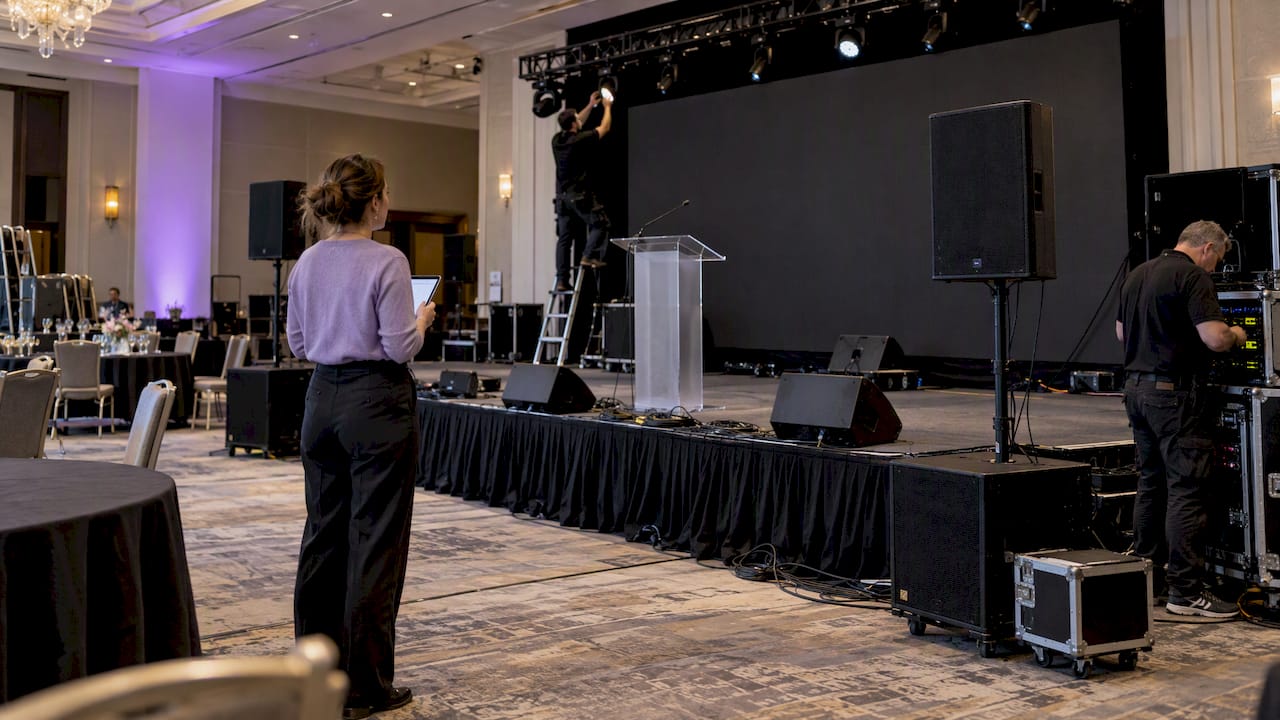
Master your event with our comprehensive event timeline planning guide. Stay organized and avoid chaos from start to finish.
TL;DR:
• An event timeline planner maps every task, deadline, and milestone to ensure smooth event execution. Backward scheduling from the event date reveals dependencies and realistic lead times, preventing last-minute chaos. Dividing planning into phases and adding buffer time help address delays and ensure successful results.
An event timeline planning guide is a structured schedule that maps every task, deadline, and milestone from the first planning step to the final guest exit. Without one, even well-funded events collapse into last-minute chaos. The industry term for this practice is event project scheduling, and it applies equally to a backyard birthday party and a 500-person corporate conference. This guide covers the core methodology, phase structure, common pitfalls, and the communication tools that keep every stakeholder aligned and on track.
Backward scheduling is the most effective method for building an event timeline. You start from the confirmed event date and work backward, assigning each task a deadline based on how long it actually takes. This approach reveals dependencies early and forces planners to confront real lead times before they become emergencies.
Forward scheduling, the alternative, starts from today and assigns tasks in sequence. The problem is that it hides bottlenecks. You might not realize the venue requires a 90-day deposit until you are already 60 days out. Backward scheduling eliminates that risk entirely.
The practical steps look like this:
• Write the event date at the top of your planning document.
• List every major task: venue booking, catering, AV setup, invitations, rehearsals.
• Assign each task a realistic completion deadline, working backward from event day.
• Identify which tasks depend on others finishing first (dependencies).
• Flag the task with the longest lead time. That item controls your entire timeline length.
Pro Tip: The longest lead-time item on your list, often the venue or a keynote speaker, sets the true start date for your planning. Book that first, then build everything else around it.
Different event scales require different planning durations. Large conferences need 9–12 months. Mid-size events need 4–6 months. Smaller gatherings can be planned in 6–12 weeks. Knowing your scale before you start scheduling prevents unrealistic timelines from the beginning.
Dividing your timeline into phases keeps planning focused and prevents the last-minute rush that derails most events. Professional timelines segment planning into four main phases, each with specific deliverables.

| Phase | Timing | Key tasks |
|---|---|---|
| Foundation | 6–12 months out | Set goals, confirm budget, book venue, hire key vendors |
| Logistics | 4–6 months out | Finalize catering, AV, entertainment, and staffing |
| Communication | 2–3 months out | Send invitations, confirm RSVPs, finalize program |
| Execution prep | 1 month out | Confirm all vendors, run rehearsals, prepare run-of-show |
The foundation phase is where most planners underinvest. Locking in the venue and primary vendors early gives every downstream task a firm anchor. Skipping this phase or rushing it creates a domino effect of rescheduling and cost overruns.

The execution prep phase deserves special attention. Detailed schedules prepared 1–2 weeks before the event give vendors, staff, and clients a shared reference point. At this stage, your master timeline should be complete and distributed to every stakeholder. Any open items at this point are red flags, not to-do list items.
One often-overlooked consideration is the event’s energy arc. Attentive scheduling means avoiding back-to-back heavy sessions and planning the exit flow deliberately. Guests who leave energized and satisfied remember the event positively. Guests who leave exhausted and confused do not.
The most common timeline mistake is treating ideal timing as real timing. Industry professionals add significant buffer time to every transition because equipment glitches, late arrivals, and parking delays are not exceptions. They are the norm.
The rule that veteran planners follow: add 50% more time than your ideal estimate for any transition task. If you think room changeover takes 10 minutes, schedule 15. If guest seating usually takes 20 minutes, block 30. This padding is not inefficiency. It is the cushion that keeps the rest of your schedule intact.
Common pitfalls to watch for:
• Underestimating transitions. Moving guests between rooms, setting up AV, and clearing catering all take longer than expected.
• No contingency plan. Every major segment needs a documented Plan B for vendor delays, technical failures, or weather issues.
• Static timelines. A timeline that never gets updated after the first draft is a liability, not an asset.
“Veteran planners actively try to break the timeline in advance by simulating worst-case scenarios. This stress-testing reveals hidden dependencies that could collapse the schedule on event day.”
Experienced planners document a contingency Plan B for every major timeline segment. This is not pessimism. It is the practice that allows teams to make calm, fast decisions when something goes wrong, and something always does.
Pro Tip: Run a tabletop simulation of your event timeline two weeks before the event. Walk through each segment with your core team and ask: “What breaks if this runs 15 minutes late?” The answers will tell you exactly where to add buffer or build a backup plan.
A timeline no one can access is useless. Effective implementation means putting the right version of the schedule in front of the right people at the right time. Here is a practical approach:
1. Build a master timeline in a shared digital tool like Google Sheets or Trello. This document covers the full planning period from start to event day and is owned by the lead planner.
2. Create a run-of-show document for event day operations. Run-of-show documents include columns for segment duration, task owner, and technical cues. This is the operational schedule your AV team, DJ, and emcee actually use on the day.
3. Share phase-appropriate versions with vendors, staff, and clients. Vendors need their specific call times and setup windows. Clients need the guest-facing program. Staff need the full operational run-of-show.
4. Schedule weekly reviews in the final month before the event. Confirm task ownership, update deadlines, and flag any items at risk.
5. Maintain a dynamic document. Static timelines hide critical bottlenecks. Update the master timeline every time a vendor confirms, a deadline shifts, or a new task is added.
A well-structured event planning checklist works alongside your timeline to make sure no task falls through the cracks. The checklist tracks completion. The timeline tracks sequence and timing. Both are necessary.
For events with complex staffing needs, aligning your staffing workflow with the timeline phases prevents gaps in coverage and ensures every role is filled before the event day arrives.
A well-built event timeline, structured with backward scheduling and maintained as a live document, is the single most reliable factor in successful event execution.
| Point | Details |
|---|---|
| Start with backward scheduling | Work from the event date backward to reveal real lead times and dependencies. |
| Divide planning into four phases | Foundation, logistics, communication, and execution prep each have specific deliverables. |
| Add buffer to every transition | Plan 50% more time than ideal estimates for room changes, seating, and logistics. |
| Stress-test before event day | Simulate worst-case scenarios to find hidden risks and build contingency plans. |
| Maintain a dynamic run-of-show | Update the operational schedule regularly and share the right version with each stakeholder. |
The biggest mistake we see planners make is treating the timeline as a document they create once and file away. A timeline is a living tool. The moment you stop updating it, it starts working against you.
We have also noticed that planners consistently underestimate the emotional weight of the execution phase. By the time event day arrives, you have already made hundreds of decisions. The timeline is what lets you stop making decisions and start executing. When it is clear, specific, and in everyone’s hands, the team moves with confidence. When it is vague or outdated, every small problem becomes a crisis.
The other thing we believe strongly: flexibility is not the opposite of planning. The most detailed timelines we have ever built were also the ones that absorbed the most unexpected changes without breaking. Detailed planning creates the structure that makes flexibility possible.
— PORCCI
Planning a great event means knowing exactly when your entertainment arrives, sets up, and goes live. Porcci NYC’s DJ services in NYC and NJ come with professional setup coordination built in, so your run-of-show stays on schedule from the first song to the last. Whether you need a karaoke machine rental for a private party or a photo booth for a corporate event, every Porcci NYC service includes delivery, setup, and breakdown. That means one fewer vendor to chase and one fewer timeline gap to manage. Reach out to Porcci NYC to build entertainment into your event schedule from day one.
An event timeline is a structured schedule that lists every planning task, deadline, and milestone from the start of planning through the end of the event. It keeps planners, vendors, and staff aligned on what happens and when.
Backward scheduling starts from the confirmed event date and assigns task deadlines working backward, which reveals dependencies and realistic lead times before they become problems.
Large conferences require 9–12 months of planning. Mid-size events need 4–6 months. Smaller events can be planned in 6–12 weeks, depending on complexity and vendor availability.
A run-of-show is the operational schedule used on event day. It includes segment durations, task owners, and technical cues, and it differs from the master timeline, which covers the full planning period.
Add 50% more time than your ideal estimate for any transition task. A 10-minute room changeover should be scheduled as 15 minutes to absorb real-world delays like late arrivals and equipment setup.
Master your event with our comprehensive event timeline planning guide. Stay organized and avoid chaos from start to finish.
TL;DR:
• An event timeline planner maps every task, deadline, and milestone to ensure smooth event execution. Backward scheduling from the event date reveals dependencies and realistic lead times, preventing last-minute chaos. Dividing planning into phases and adding buffer time help address delays and ensure successful results.
An event timeline planning guide is a structured schedule that maps every task, deadline, and milestone from the first planning step to the final guest exit. Without one, even well-funded events collapse into last-minute chaos. The industry term for this practice is event project scheduling, and it applies equally to a backyard birthday party and a 500-person corporate conference. This guide covers the core methodology, phase structure, common pitfalls, and the communication tools that keep every stakeholder aligned and on track.
Backward scheduling is the most effective method for building an event timeline. You start from the confirmed event date and work backward, assigning each task a deadline based on how long it actually takes. This approach reveals dependencies early and forces planners to confront real lead times before they become emergencies.
Forward scheduling, the alternative, starts from today and assigns tasks in sequence. The problem is that it hides bottlenecks. You might not realize the venue requires a 90-day deposit until you are already 60 days out. Backward scheduling eliminates that risk entirely.
The practical steps look like this:
• Write the event date at the top of your planning document.
• List every major task: venue booking, catering, AV setup, invitations, rehearsals.
• Assign each task a realistic completion deadline, working backward from event day.
• Identify which tasks depend on others finishing first (dependencies).
• Flag the task with the longest lead time. That item controls your entire timeline length.
Pro Tip: The longest lead-time item on your list, often the venue or a keynote speaker, sets the true start date for your planning. Book that first, then build everything else around it.
Different event scales require different planning durations. Large conferences need 9–12 months. Mid-size events need 4–6 months. Smaller gatherings can be planned in 6–12 weeks. Knowing your scale before you start scheduling prevents unrealistic timelines from the beginning.
Dividing your timeline into phases keeps planning focused and prevents the last-minute rush that derails most events. Professional timelines segment planning into four main phases, each with specific deliverables.
| Phase | Timing | Key tasks |
|---|---|---|
| Foundation | 6–12 months out | Set goals, confirm budget, book venue, hire key vendors |
| Logistics | 4–6 months out | Finalize catering, AV, entertainment, and staffing |
| Communication | 2–3 months out | Send invitations, confirm RSVPs, finalize program |
| Execution prep | 1 month out | Confirm all vendors, run rehearsals, prepare run-of-show |
The foundation phase is where most planners underinvest. Locking in the venue and primary vendors early gives every downstream task a firm anchor. Skipping this phase or rushing it creates a domino effect of rescheduling and cost overruns.
The execution prep phase deserves special attention. Detailed schedules prepared 1–2 weeks before the event give vendors, staff, and clients a shared reference point. At this stage, your master timeline should be complete and distributed to every stakeholder. Any open items at this point are red flags, not to-do list items.
One often-overlooked consideration is the event’s energy arc. Attentive scheduling means avoiding back-to-back heavy sessions and planning the exit flow deliberately. Guests who leave energized and satisfied remember the event positively. Guests who leave exhausted and confused do not.
The most common timeline mistake is treating ideal timing as real timing. Industry professionals add significant buffer time to every transition because equipment glitches, late arrivals, and parking delays are not exceptions. They are the norm.
The rule that veteran planners follow: add 50% more time than your ideal estimate for any transition task. If you think room changeover takes 10 minutes, schedule 15. If guest seating usually takes 20 minutes, block 30. This padding is not inefficiency. It is the cushion that keeps the rest of your schedule intact.
Common pitfalls to watch for:
• Underestimating transitions. Moving guests between rooms, setting up AV, and clearing catering all take longer than expected.
• No contingency plan. Every major segment needs a documented Plan B for vendor delays, technical failures, or weather issues.
• Static timelines. A timeline that never gets updated after the first draft is a liability, not an asset.
“Veteran planners actively try to break the timeline in advance by simulating worst-case scenarios. This stress-testing reveals hidden dependencies that could collapse the schedule on event day.”
Experienced planners document a contingency Plan B for every major timeline segment. This is not pessimism. It is the practice that allows teams to make calm, fast decisions when something goes wrong, and something always does.
Pro Tip: Run a tabletop simulation of your event timeline two weeks before the event. Walk through each segment with your core team and ask: “What breaks if this runs 15 minutes late?” The answers will tell you exactly where to add buffer or build a backup plan.
A timeline no one can access is useless. Effective implementation means putting the right version of the schedule in front of the right people at the right time. Here is a practical approach:
1. Build a master timeline in a shared digital tool like Google Sheets or Trello. This document covers the full planning period from start to event day and is owned by the lead planner.
2. Create a run-of-show document for event day operations. Run-of-show documents include columns for segment duration, task owner, and technical cues. This is the operational schedule your AV team, DJ, and emcee actually use on the day.
3. Share phase-appropriate versions with vendors, staff, and clients. Vendors need their specific call times and setup windows. Clients need the guest-facing program. Staff need the full operational run-of-show.
4. Schedule weekly reviews in the final month before the event. Confirm task ownership, update deadlines, and flag any items at risk.
5. Maintain a dynamic document. Static timelines hide critical bottlenecks. Update the master timeline every time a vendor confirms, a deadline shifts, or a new task is added.
A well-structured event planning checklist works alongside your timeline to make sure no task falls through the cracks. The checklist tracks completion. The timeline tracks sequence and timing. Both are necessary.
For events with complex staffing needs, aligning your staffing workflow with the timeline phases prevents gaps in coverage and ensures every role is filled before the event day arrives.
A well-built event timeline, structured with backward scheduling and maintained as a live document, is the single most reliable factor in successful event execution.
| Point | Details |
|---|---|
| Start with backward scheduling | Work from the event date backward to reveal real lead times and dependencies. |
| Divide planning into four phases | Foundation, logistics, communication, and execution prep each have specific deliverables. |
| Add buffer to every transition | Plan 50% more time than ideal estimates for room changes, seating, and logistics. |
| Stress-test before event day | Simulate worst-case scenarios to find hidden risks and build contingency plans. |
| Maintain a dynamic run-of-show | Update the operational schedule regularly and share the right version with each stakeholder. |
The biggest mistake we see planners make is treating the timeline as a document they create once and file away. A timeline is a living tool. The moment you stop updating it, it starts working against you.
We have also noticed that planners consistently underestimate the emotional weight of the execution phase. By the time event day arrives, you have already made hundreds of decisions. The timeline is what lets you stop making decisions and start executing. When it is clear, specific, and in everyone’s hands, the team moves with confidence. When it is vague or outdated, every small problem becomes a crisis.
The other thing we believe strongly: flexibility is not the opposite of planning. The most detailed timelines we have ever built were also the ones that absorbed the most unexpected changes without breaking. Detailed planning creates the structure that makes flexibility possible.
— PORCCI
Planning a great event means knowing exactly when your entertainment arrives, sets up, and goes live. Porcci NYC’s DJ services in NYC and NJ come with professional setup coordination built in, so your run-of-show stays on schedule from the first song to the last. Whether you need a karaoke machine rental for a private party or a photo booth for a corporate event, every Porcci NYC service includes delivery, setup, and breakdown. That means one fewer vendor to chase and one fewer timeline gap to manage. Reach out to Porcci NYC to build entertainment into your event schedule from day one.
An event timeline is a structured schedule that lists every planning task, deadline, and milestone from the start of planning through the end of the event. It keeps planners, vendors, and staff aligned on what happens and when.
Backward scheduling starts from the confirmed event date and assigns task deadlines working backward, which reveals dependencies and realistic lead times before they become problems.
Large conferences require 9–12 months of planning. Mid-size events need 4–6 months. Smaller events can be planned in 6–12 weeks, depending on complexity and vendor availability.
A run-of-show is the operational schedule used on event day. It includes segment durations, task owners, and technical cues, and it differs from the master timeline, which covers the full planning period.
Add 50% more time than your ideal estimate for any transition task. A 10-minute room changeover should be scheduled as 15 minutes to absorb real-world delays like late arrivals and equipment setup.