Master outdoor stage setup for public events with this practical guide. Ensure safety, engagement, and success for your next performance!
TL;DR:
• Choosing the right stage type depends on audience size, site access, and build schedule for outdoor events.
• Proper site preparation, weather planning, and safety measures are essential to ensure smooth, safe performances.
Outdoor stage setup for public events is the process of planning, constructing, and safely deploying a temporary performance platform to maximize audience engagement and event success. Done right, it transforms any open space into a professional venue. Done poorly, it creates safety hazards, sound problems, and unhappy crowds. The decisions you make before the first truss goes up, including stage type, site orientation, power supply, and weather planning, determine whether your event runs smoothly or falls apart. This guide walks you through every critical step so your focus stays on delivering a great show.
The right stage type depends on your audience size, site access, and build schedule. Three formats dominate outdoor event staging: mobile trailer stages, modular deck stages, and ground-level platforms.
| Stage Type | Best For | Typical Size | Setup Time |
|---|---|---|---|
| Mobile trailer stage | Festivals, fairs, tight schedules | 24x16 ft to 32x24 ft | 1–4 hours |
| Modular trussed stage | Concerts, large public events | 40x32 ft to 60x40 ft+ | 4–6 hours |
| Ground-level platform | Community events, speeches | 16x12 ft to 24x16 ft | Under 2 hours |
Stage sizes scale with audience: small events need roughly 24x16 ft, mid-size events need 40x32 ft, and large festivals require 60x40 ft or more. Recommended side wing spaces of 8–16 ft give your crew room to store gear and move safely between sets.
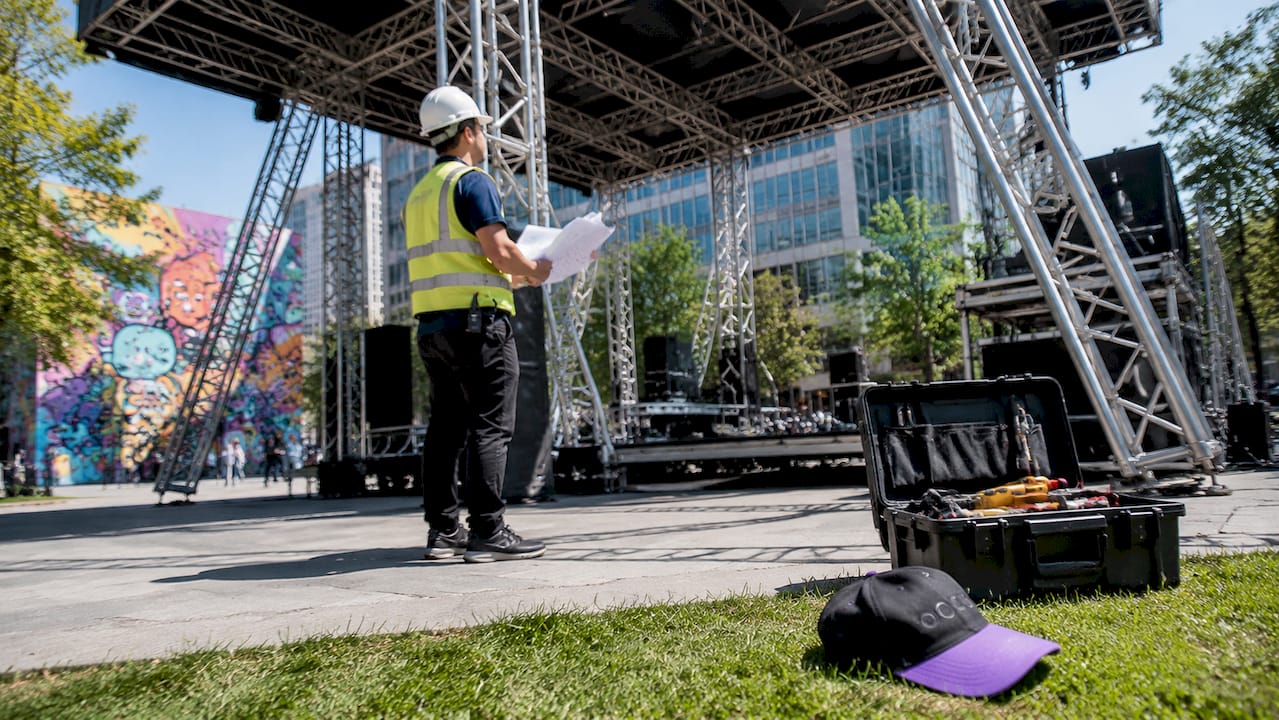
Roof structures matter more than most organizers expect. A covered roof protects equipment from sudden weather changes and improves sight lines for elevated lighting rigs. For any event over 500 attendees, a roof structure is not optional. It is a practical necessity.
Pro Tip: Always confirm that your stage rental includes engineered drawings. Local permit offices require load calculations before approving temporary structures.
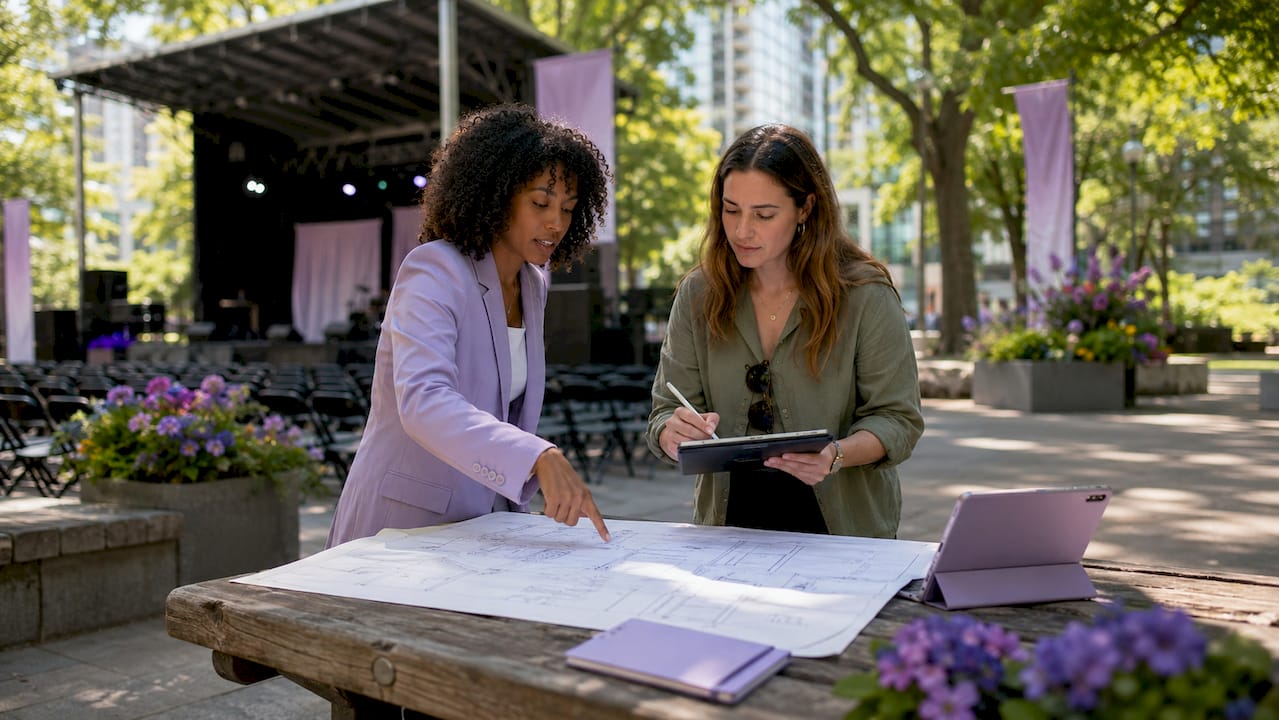
Site preparation is where most outdoor staging projects run into trouble. Organizers underestimate how much the ground surface affects the entire build.
1. Assess the ground surface. Grass, asphalt, and gravel each behave differently under load. Soft or uneven ground requires leveling plates or additional base support before any stage component goes down.
2. Orient the stage correctly. Stage orientation should avoid placing the audience in direct sunlight during peak performance hours. Sun and wind direction both affect audience comfort and how sound carries across the site.
3. Plan your power supply early. Generators should be sized at 125% of total load and positioned at least 100 feet from the stage. That distance reduces engine noise interference with microphones and live audio.
4. Mark cable routes before setup begins. Every power and audio cable needs a defined path that keeps crew and audience safe from trip hazards.
5. Build contingency time into your schedule. Industry standards recommend at least two hours of buffer for ground prep delays. Uneven or soft surfaces are the most common cause of setup running late.
Coordinating logistics like crowd flow and event parking planning alongside your stage layout prevents bottlenecks that frustrate attendees before the first note plays.
Pro Tip: Walk the site at the same time of day as your event. You will see exactly where the sun hits the stage and where wind channels between buildings or trees.
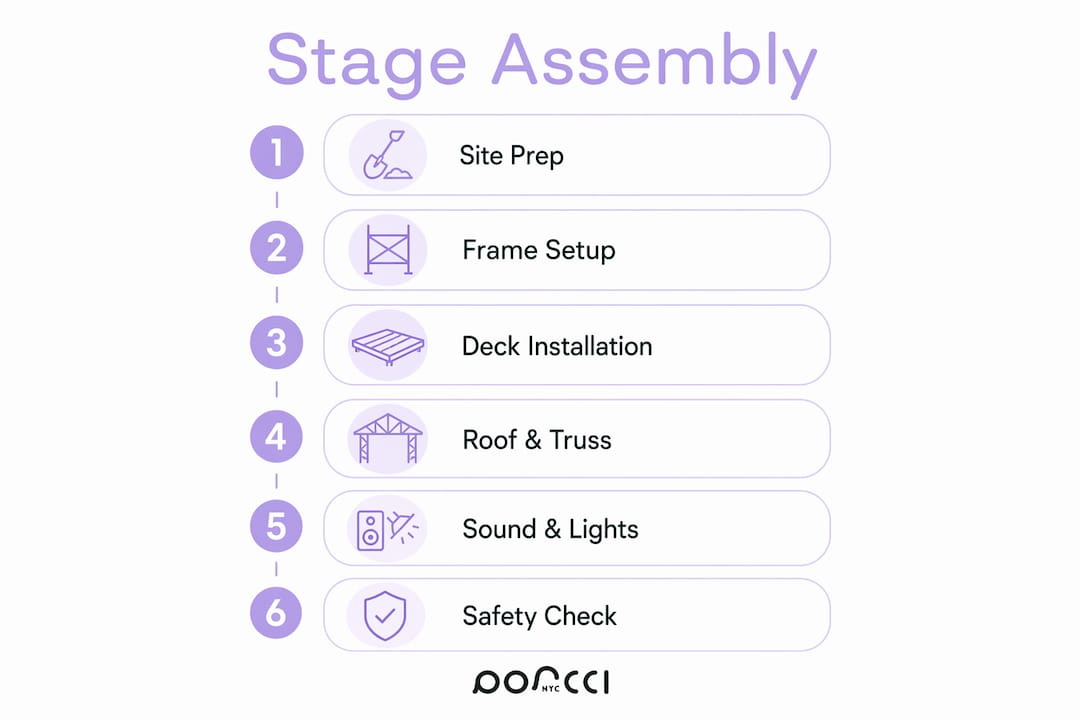
Assembly follows a fixed sequence. Skipping steps or reordering them creates structural risk and wastes time.
1. Clear and level the footprint. Remove debris, mark the stage corners, and confirm the ground is stable enough to hold the rated load.
2. Set the base frames and decking. Work from the center outward. Lock each deck section before moving to the next.
3. Install the roof structure and rigging points. Attach truss sections according to the engineer’s drawings. Never improvise rigging attachment points.
4. Run power distribution. Connect generator output to a power distribution unit, then route circuits to stage, front-of-house, and monitor positions.
5. Place and connect speakers. Sound and staging must be planned as an integrated system because outdoor venues lack the natural acoustic reflection of indoor spaces. For larger crowds, delay towers extend coverage without pushing main speakers to damaging volumes.
6. Conduct a full load and safety check. Walk every connection point before any performer or crew member steps on stage.
Common mistakes to avoid during assembly:
• Skipping the engineer’s load calculations for rigging
• Placing monitors before speaker positions are finalized
• Running audio cables parallel to power cables, which causes hum and interference
• Failing to secure loose cable runs before the public enters the site
For detailed guidance on sound system integration, the sequence above pairs directly with speaker placement principles that apply to any event size.
Outdoor stages are legally classified as temporary structures. That classification carries real obligations. Temporary structures require engineering packages for local permits, with load types documented for code compliance, including dead load, live load, imposed load, and wind load. Skipping this step exposes you to liability and potential shutdown on event day.
A formal Weather Action Plan is the single most important safety document for any outdoor event. It must define specific wind speed thresholds that trigger pausing the event, clearing the stage, or full evacuation. Wind is the primary structural risk for temporary outdoor stages, and a written plan with assigned roles removes guesswork when conditions change fast.
Key safety requirements to address before your event:
• Obtain all required permits with stamped engineering drawings
• Confirm the stage’s rated wind load capacity with your rental provider
• Assign a designated weather monitor with authority to call an evacuation
• Place crowd barriers at a safe distance from the stage perimeter
• Identify and mark emergency exit routes from the stage area
Pair your safety planning with solid event atmosphere planning so safety measures integrate naturally into the audience experience rather than feeling like obstacles.
A successful outdoor stage setup requires matching stage type to event scale, preparing the site before any structure goes up, and documenting safety plans before the first attendee arrives.
| Point | Details |
|---|---|
| Match stage to audience size | Small events need 24x16 ft; large festivals need 60x40 ft or more with side wings. |
| Orient the stage with sun and wind in mind | Position the stage so the audience avoids direct sun and sound carries toward the crowd. |
| Size generators at 125% load capacity | Place generators 100 feet from the stage to prevent noise interference with audio. |
| Build two hours of contingency into setup | Ground prep delays are the most common cause of outdoor stage builds running late. |
| Document a Weather Action Plan | Define wind speed thresholds for pausing or evacuating before the event day arrives. |
The detail that trips up even experienced organizers is not the stage itself. It is the relationship between the stage and everything around it: the power source, the speaker positions, the sun angle, and the crowd flow. We have seen technically correct stage builds fail because the generator was too close, the monitors faced the wrong direction, or nobody checked the afternoon sun path before locking in the stage orientation.
The other lesson we keep relearning is that sound and staging are one system, not two separate vendor responsibilities. When the audio team and the staging crew plan independently, you end up with speaker towers that block sight lines or rigging points that conflict with lighting positions. The events that run best are the ones where every vendor sees the same site plan from the start.
Contingency time is not padding. It is the difference between a smooth show and a frantic scramble. Two hours of buffer sounds like a lot until the ground is softer than expected or a delivery arrives late. Build it in, protect it, and you will almost never need it. That is exactly the outcome you want.
— PORCCI
Planning a public event stage involves more than the platform itself. The right audio and visual equipment makes the difference between a performance that reaches every attendee and one that loses half the crowd to poor sound coverage. Porcci NYC provides professional AV equipment rentals in Jersey City and across the New York metro area, including sound systems, stage lighting, and full setup support. Our team handles delivery, installation, and breakdown so you can focus on the event itself. Whether you are producing a community festival or a large public concert, we match the right equipment to your stage size and audience. Contact Porcci NYC to discuss your event needs and get a custom quote.
Small events need roughly 24x16 ft, mid-size events need 40x32 ft, and large festivals require 60x40 ft or more. Add 8–16 ft of side wing space for crew and equipment storage.
Mobile trailer stages take 1–4 hours. Modular trussed stages require 4–6 hours, plus at least two hours of contingency time for site preparation delays.
Yes. Outdoor stages are classified as temporary structures and require engineering packages with load calculations for local permit approval. Confirm requirements with your local building authority before the event.
Place generators at least 100 feet from the stage and size them at 125% of your total power load. That distance prevents engine noise from interfering with microphones and live audio.
A Weather Action Plan is a written document that defines wind speed thresholds for pausing, clearing, or evacuating an outdoor event. Every outdoor stage event needs one before doors open.
Master outdoor stage setup for public events with this practical guide. Ensure safety, engagement, and success for your next performance!
TL;DR:
• Choosing the right stage type depends on audience size, site access, and build schedule for outdoor events.
• Proper site preparation, weather planning, and safety measures are essential to ensure smooth, safe performances.
Outdoor stage setup for public events is the process of planning, constructing, and safely deploying a temporary performance platform to maximize audience engagement and event success. Done right, it transforms any open space into a professional venue. Done poorly, it creates safety hazards, sound problems, and unhappy crowds. The decisions you make before the first truss goes up, including stage type, site orientation, power supply, and weather planning, determine whether your event runs smoothly or falls apart. This guide walks you through every critical step so your focus stays on delivering a great show.
The right stage type depends on your audience size, site access, and build schedule. Three formats dominate outdoor event staging: mobile trailer stages, modular deck stages, and ground-level platforms.
| Stage Type | Best For | Typical Size | Setup Time |
|---|---|---|---|
| Mobile trailer stage | Festivals, fairs, tight schedules | 24x16 ft to 32x24 ft | 1–4 hours |
| Modular trussed stage | Concerts, large public events | 40x32 ft to 60x40 ft+ | 4–6 hours |
| Ground-level platform | Community events, speeches | 16x12 ft to 24x16 ft | Under 2 hours |
Stage sizes scale with audience: small events need roughly 24x16 ft, mid-size events need 40x32 ft, and large festivals require 60x40 ft or more. Recommended side wing spaces of 8–16 ft give your crew room to store gear and move safely between sets.
Roof structures matter more than most organizers expect. A covered roof protects equipment from sudden weather changes and improves sight lines for elevated lighting rigs. For any event over 500 attendees, a roof structure is not optional. It is a practical necessity.
Pro Tip: Always confirm that your stage rental includes engineered drawings. Local permit offices require load calculations before approving temporary structures.
Site preparation is where most outdoor staging projects run into trouble. Organizers underestimate how much the ground surface affects the entire build.
1. Assess the ground surface. Grass, asphalt, and gravel each behave differently under load. Soft or uneven ground requires leveling plates or additional base support before any stage component goes down.
2. Orient the stage correctly. Stage orientation should avoid placing the audience in direct sunlight during peak performance hours. Sun and wind direction both affect audience comfort and how sound carries across the site.
3. Plan your power supply early. Generators should be sized at 125% of total load and positioned at least 100 feet from the stage. That distance reduces engine noise interference with microphones and live audio.
4. Mark cable routes before setup begins. Every power and audio cable needs a defined path that keeps crew and audience safe from trip hazards.
5. Build contingency time into your schedule. Industry standards recommend at least two hours of buffer for ground prep delays. Uneven or soft surfaces are the most common cause of setup running late.
Coordinating logistics like crowd flow and event parking planning alongside your stage layout prevents bottlenecks that frustrate attendees before the first note plays.
Pro Tip: Walk the site at the same time of day as your event. You will see exactly where the sun hits the stage and where wind channels between buildings or trees.
Assembly follows a fixed sequence. Skipping steps or reordering them creates structural risk and wastes time.
1. Clear and level the footprint. Remove debris, mark the stage corners, and confirm the ground is stable enough to hold the rated load.
2. Set the base frames and decking. Work from the center outward. Lock each deck section before moving to the next.
3. Install the roof structure and rigging points. Attach truss sections according to the engineer’s drawings. Never improvise rigging attachment points.
4. Run power distribution. Connect generator output to a power distribution unit, then route circuits to stage, front-of-house, and monitor positions.
5. Place and connect speakers. Sound and staging must be planned as an integrated system because outdoor venues lack the natural acoustic reflection of indoor spaces. For larger crowds, delay towers extend coverage without pushing main speakers to damaging volumes.
6. Conduct a full load and safety check. Walk every connection point before any performer or crew member steps on stage.
Common mistakes to avoid during assembly:
• Skipping the engineer’s load calculations for rigging
• Placing monitors before speaker positions are finalized
• Running audio cables parallel to power cables, which causes hum and interference
• Failing to secure loose cable runs before the public enters the site
For detailed guidance on sound system integration, the sequence above pairs directly with speaker placement principles that apply to any event size.
Outdoor stages are legally classified as temporary structures. That classification carries real obligations. Temporary structures require engineering packages for local permits, with load types documented for code compliance, including dead load, live load, imposed load, and wind load. Skipping this step exposes you to liability and potential shutdown on event day.
A formal Weather Action Plan is the single most important safety document for any outdoor event. It must define specific wind speed thresholds that trigger pausing the event, clearing the stage, or full evacuation. Wind is the primary structural risk for temporary outdoor stages, and a written plan with assigned roles removes guesswork when conditions change fast.
Key safety requirements to address before your event:
• Obtain all required permits with stamped engineering drawings
• Confirm the stage’s rated wind load capacity with your rental provider
• Assign a designated weather monitor with authority to call an evacuation
• Place crowd barriers at a safe distance from the stage perimeter
• Identify and mark emergency exit routes from the stage area
Pair your safety planning with solid event atmosphere planning so safety measures integrate naturally into the audience experience rather than feeling like obstacles.
A successful outdoor stage setup requires matching stage type to event scale, preparing the site before any structure goes up, and documenting safety plans before the first attendee arrives.
| Point | Details |
|---|---|
| Match stage to audience size | Small events need 24x16 ft; large festivals need 60x40 ft or more with side wings. |
| Orient the stage with sun and wind in mind | Position the stage so the audience avoids direct sun and sound carries toward the crowd. |
| Size generators at 125% load capacity | Place generators 100 feet from the stage to prevent noise interference with audio. |
| Build two hours of contingency into setup | Ground prep delays are the most common cause of outdoor stage builds running late. |
| Document a Weather Action Plan | Define wind speed thresholds for pausing or evacuating before the event day arrives. |
The detail that trips up even experienced organizers is not the stage itself. It is the relationship between the stage and everything around it: the power source, the speaker positions, the sun angle, and the crowd flow. We have seen technically correct stage builds fail because the generator was too close, the monitors faced the wrong direction, or nobody checked the afternoon sun path before locking in the stage orientation.
The other lesson we keep relearning is that sound and staging are one system, not two separate vendor responsibilities. When the audio team and the staging crew plan independently, you end up with speaker towers that block sight lines or rigging points that conflict with lighting positions. The events that run best are the ones where every vendor sees the same site plan from the start.
Contingency time is not padding. It is the difference between a smooth show and a frantic scramble. Two hours of buffer sounds like a lot until the ground is softer than expected or a delivery arrives late. Build it in, protect it, and you will almost never need it. That is exactly the outcome you want.
— PORCCI
Planning a public event stage involves more than the platform itself. The right audio and visual equipment makes the difference between a performance that reaches every attendee and one that loses half the crowd to poor sound coverage. Porcci NYC provides professional AV equipment rentals in Jersey City and across the New York metro area, including sound systems, stage lighting, and full setup support. Our team handles delivery, installation, and breakdown so you can focus on the event itself. Whether you are producing a community festival or a large public concert, we match the right equipment to your stage size and audience. Contact Porcci NYC to discuss your event needs and get a custom quote.
Small events need roughly 24x16 ft, mid-size events need 40x32 ft, and large festivals require 60x40 ft or more. Add 8–16 ft of side wing space for crew and equipment storage.
Mobile trailer stages take 1–4 hours. Modular trussed stages require 4–6 hours, plus at least two hours of contingency time for site preparation delays.
Yes. Outdoor stages are classified as temporary structures and require engineering packages with load calculations for local permit approval. Confirm requirements with your local building authority before the event.
Place generators at least 100 feet from the stage and size them at 125% of your total power load. That distance prevents engine noise from interfering with microphones and live audio.
A Weather Action Plan is a written document that defines wind speed thresholds for pausing, clearing, or evacuating an outdoor event. Every outdoor stage event needs one before doors open.