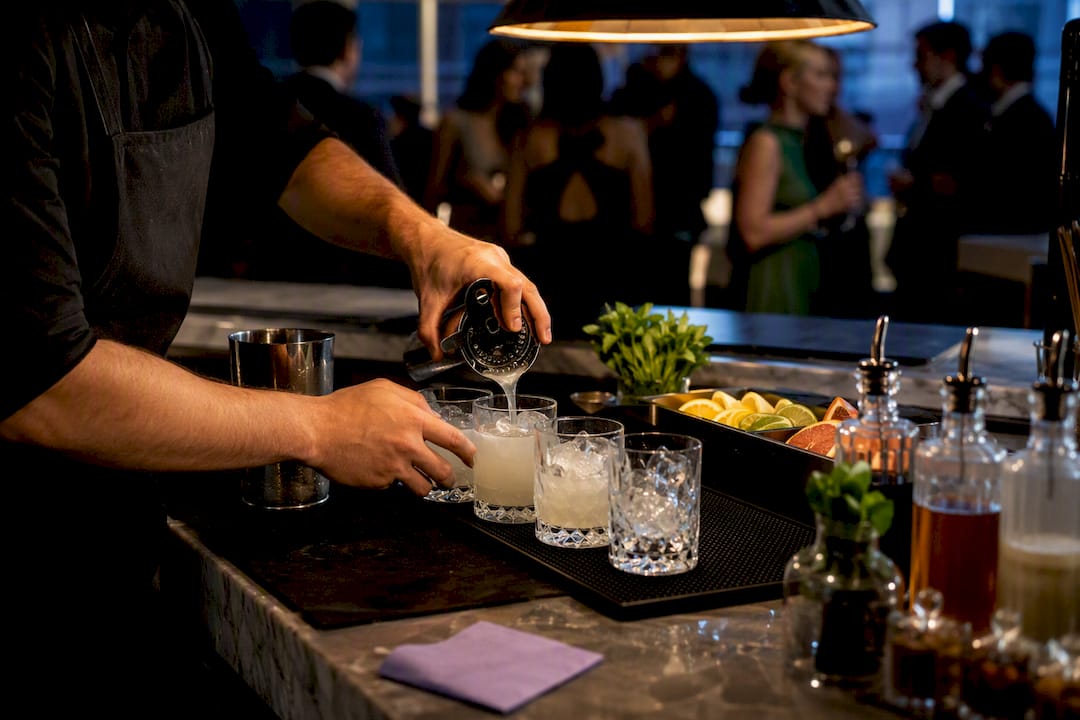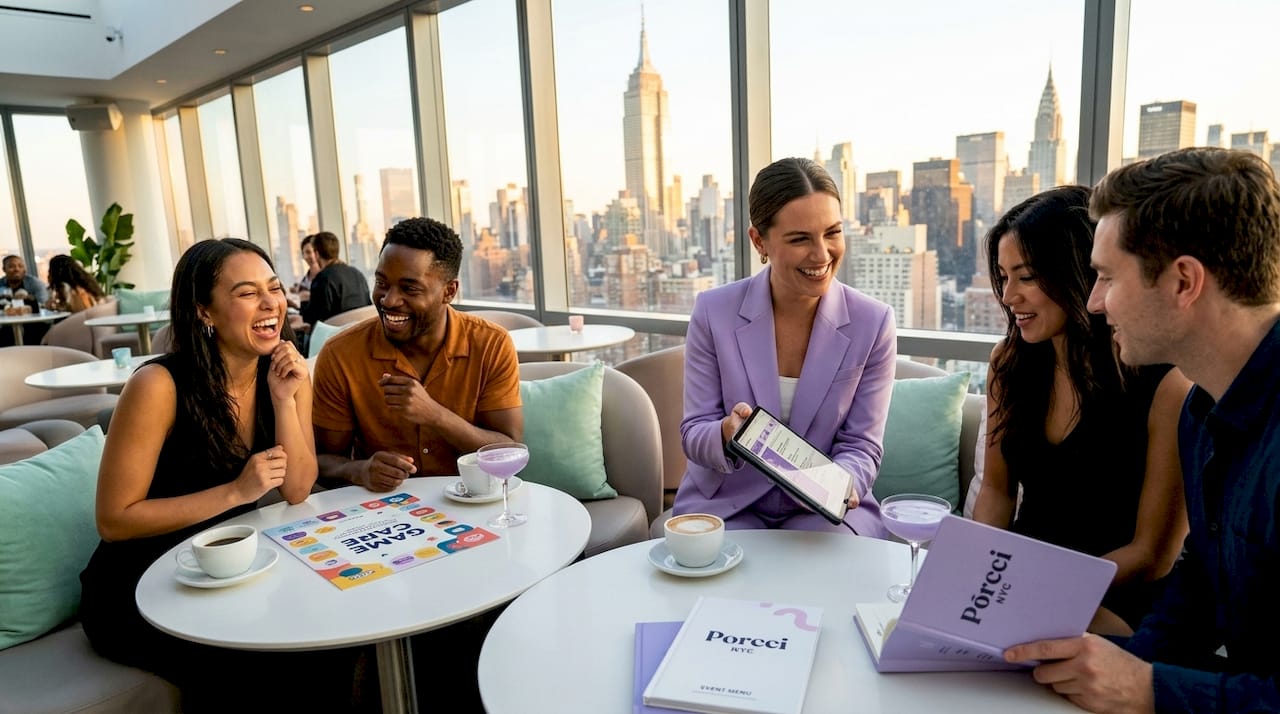
Discover what is interactive event entertainment and how it transforms your events. Engage guests directly and elevate their experience!
TL;DR:
• Interactive entertainment transforms guests from passive observers into active participants, enhancing engagement. It uses simple or technology-driven formats like trivia, karaoke, or live polls, tailored to the event size and tone. Proper planning and moderation ensure a fun, inclusive experience that boosts networking, energy, and guest satisfaction.
Most event planners assume entertainment means booking something for guests to watch. A band plays, a speaker presents, guests applaud and move on. But what is interactive event entertainment, really? It’s the opposite of that model entirely. Instead of filling space with performance, interactive entertainment puts the experience directly in your guests’ hands. This article breaks down the definition, the formats that work best, why engagement outcomes improve, and how to implement it confidently at your next event.
• What interactive event entertainment actually means
• Why interactive entertainment matters for engagement
• Types of interactive entertainment planners use most
• How to plan interactive entertainment successfully
• My honest take on what actually works
• How Porccinyc supports your interactive event vision
• FAQ
| Point | Details |
|---|---|
| Participation over observation | Interactive entertainment turns guests into active participants, not just an audience. |
| Subtle is often stronger | Low-pressure, opt-in formats produce better engagement than forced stage participation. |
| Tech expands the options | QR codes, live voting, and real-time requests let entire rooms participate without any awkward spotlight. |
| Format must match the event | Trivia works differently than karaoke; match the format to your audience size, tone, and goals. |
| Moderation protects the experience | Live digital input tools need active moderation to keep content appropriate and the program running smoothly. |
Interactive event entertainment turns attendees from passive observers into active participants who experience the entertainment, rather than simply watch it. That distinction matters more than it sounds. A live band performing a setlist is entertainment. A live band where guests vote on the next song in real time is interactive entertainment. Same room, same performers, completely different energy.
The core characteristic is participation. Guests contribute something: a vote, a guess, a song request, a physical action, or a response. That contribution changes the experience for everyone in the room.
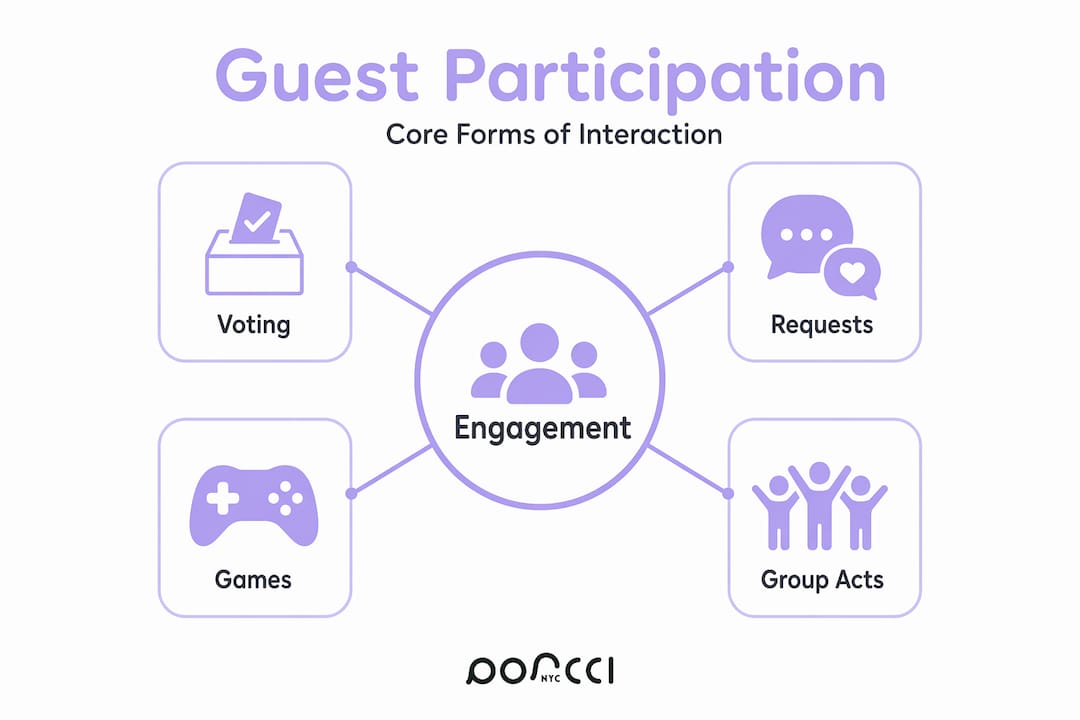
Here’s where planners often overcomplicate it. You do not need a massive production or elaborate technology to create genuine interactivity. Some of the most effective formats are low-tech. A simple trivia game where tables compete, a live poll projected on screen, or a photo booth with themed props all qualify. The defining factor is whether guests are reacting and contributing, not just observing.
Technology has expanded what’s possible considerably. Attendees can scan a QR code to submit song requests and vote on setlists that update live based on audience demand. No app download required, no complicated setup. The crowd shapes the experience as it happens.
• Interactive entertainment invites participation, conversation, and reaction
• It can be tech-enabled (live polls, QR requests) or low-tech (trivia, game shows)
• It works in small rooms and large venues alike
• The experience changes based on who is in the room that night
Pro Tip: You do not need guests to be on a stage for something to feel interactive. Room-wide participation through phones or table teams keeps the energy high without putting anyone on the spot.
Think about the last event you attended where the entertainment felt flat. Chances are, guests were sitting back, waiting for something to hold their attention. That energy dip is the real enemy of a successful event, and interactive formats prevent exactly that by requiring active participation rather than passive waiting.
The benefits extend well beyond keeping people awake during cocktail hour.
• Networking becomes natural. When guests are grouped into trivia teams or competing in a game show format, introductions happen without anyone forcing them. Interactive entertainment reduces social pressure at networking events by giving people a structured reason to engage beyond small talk.
• Shared moments stick. A guest who watched a keynote will forget most of it within a week. A guest who won a trivia round, or whose song request played at just the right moment, will remember that event.
• Energy stays consistent. Slow transitions and lulls between program segments are where events lose momentum. Interactive elements fill those gaps productively.
• Guests feel valued. When the entertainment responds to what the audience wants, it signals that their presence matters. That feeling translates directly into how guests talk about your event afterward.
“Interactive entertainment provides a genuine alternative to small talk at networking events by encouraging collaborative, team-based participation that makes engagement feel natural instead of forced.” — Why Interactive Entertainment Works So Well for Networking Events
Different formats serve different event goals. The table below covers the most commonly used types, what they require, and which event contexts they fit best.
| Format | Participation style | Best event type | Key requirement |
|---|---|---|---|
| Live trivia or game show | Team-based, competitive | Corporate, networking, private parties | Host or emcee, AV setup |
| Karaoke | Voluntary individual performance | Private parties, weddings, casual events | Sound system, song library |
| Photo booth | Self-directed, social sharing | Any event type | Booth equipment, props |
| Live request band or DJ | Voting and real-time requests | Weddings, corporate, milestone events | QR or app-based request tool |
| Mixology or cocktail demo | Group activity with guided steps | Corporate, private parties | Supplies and a skilled host |
| Live audience Q&A with voting | Digital input and upvoting | Conferences, panels, corporate events | Moderated digital platform |
Audience-driven performances give guests control over what happens next, which deepens their sense of inclusion and ownership over the experience. This works especially well at corporate events with karaoke or DJ services where song choices reflect the room’s mood in real time.
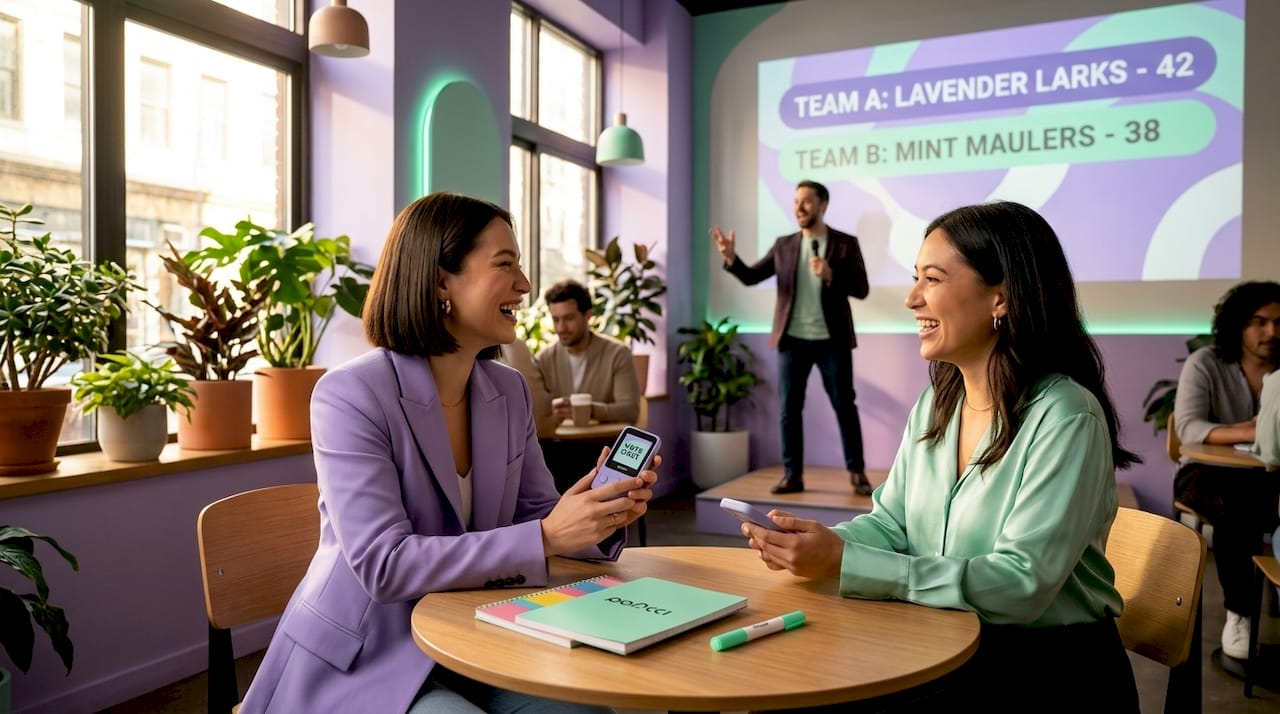
Popular options like trivia, mixology demos, and cocktail sessions can all be customized to your event theme and guest profile, which is one of their strongest practical advantages.
Getting the format right is only half the job. Execution makes or breaks the guest experience. These steps will help you implement interactive entertainment with confidence.
1. Match the format to your audience first. A 200-person corporate gala and a 40-person birthday party need very different approaches. Trivia scales well. Karaoke works better in casual, smaller settings. Audience Q&A suits conference formats.
2. Design for opt-in participation. Successful implementation requires giving guests control over their comfort level. Use roaming prompts and room-wide formats rather than pulling individuals onto a stage unprepared. Guests who feel safe to participate will engage far more freely.
3. Build in moderation for digital tools. If you are using live audience input platforms, moderation is critical to prevent inappropriate content and maintain smooth program flow. Pre-moderation or trusted audience settings give you control without slowing the experience.
4. Anchor it to a natural program moment. Drop interactive entertainment during transitions, slow segments, or after a dense presentation. It re-energizes the room exactly when you need it.
5. Brief your entertainment providers clearly. Tell them the room size, the audience demographic, the formality level, and what outcome you want. A good entertainment partner adapts accordingly.
Pro Tip: Live audience Q&A with upvoting requires no app download and lets guests vote popular questions to the top. It’s one of the quietest but most effective interactive formats for conferences and panels.
I’ve seen a lot of planners overcorrect when they discover interactive entertainment. They go all in on elaborate formats, thinking bigger always means better. In my experience, that’s where things fall apart. A game show with buzzers, a theatrical host, and a 20-minute setup window is only as good as your audience’s willingness to play along. If the room isn’t warm yet, you’ve built a production no one asked for.
What I’ve found actually works is starting smaller and scaling based on the room. A well-run trivia segment between dinner and dessert does more for a corporate event than a forced improv performance ever will. The best interactive entertainment doesn’t feel like entertainment at all. It feels like the guests took over the night.
Technology is a tool, not a trick. QR-based song requests and live polls work because they give everyone a way to participate without any individual feeling exposed. That’s the design principle worth internalizing. The lowest-friction path to participation is almost always the most effective one.
And don’t underestimate karaoke. I know it gets dismissed as a novelty, but a multilingual karaoke setup with a capable host and solid sound creates some of the most genuine guest engagement I’ve ever seen at private events.
— PORCCI
When you are ready to put interactive entertainment into practice, Porccinyc makes it straightforward. We offer professional event planning services across NYC and New Jersey, with entertainment options built specifically for guest engagement. Our karaoke machine rentals include multilingual song libraries and full sound support, and our photo booth options cover everything from 360 booths to mirror setups. For events requiring reliable AV infrastructure to power live polls, game shows, or audience request tools, our NYC sound and AV rentals handle the technical side so your focus stays on the guest experience.
Interactive event entertainment is any format where guests actively participate rather than passively observe. Examples include live trivia, karaoke, audience voting, photo booths, and real-time song request platforms.
It reduces the social pressure of forced introductions by giving guests a shared activity to focus on. Team-based formats like game shows create natural conversation and group energy without awkward ice-breakers.
Trivia, karaoke, photo booths, live request DJs or bands, mixology demos, and digital audience Q&A platforms are among the most frequently used formats across corporate events, weddings, and private parties.
Not always. Many effective formats require only a microphone, a screen, and a skilled host. Tech-enabled options like QR-based voting and live request platforms add depth but are not required for successful interactivity.
Use a platform that supports pre-moderation or a trusted audience mode. Active moderation tools allow you to screen submissions before they go live, keeping the program appropriate and on pace.
Discover what is interactive event entertainment and how it transforms your events. Engage guests directly and elevate their experience!
TL;DR:
• Interactive entertainment transforms guests from passive observers into active participants, enhancing engagement. It uses simple or technology-driven formats like trivia, karaoke, or live polls, tailored to the event size and tone. Proper planning and moderation ensure a fun, inclusive experience that boosts networking, energy, and guest satisfaction.
Most event planners assume entertainment means booking something for guests to watch. A band plays, a speaker presents, guests applaud and move on. But what is interactive event entertainment, really? It’s the opposite of that model entirely. Instead of filling space with performance, interactive entertainment puts the experience directly in your guests’ hands. This article breaks down the definition, the formats that work best, why engagement outcomes improve, and how to implement it confidently at your next event.
• What interactive event entertainment actually means
• Why interactive entertainment matters for engagement
• Types of interactive entertainment planners use most
• How to plan interactive entertainment successfully
• My honest take on what actually works
• How Porccinyc supports your interactive event vision
• FAQ
| Point | Details |
|---|---|
| Participation over observation | Interactive entertainment turns guests into active participants, not just an audience. |
| Subtle is often stronger | Low-pressure, opt-in formats produce better engagement than forced stage participation. |
| Tech expands the options | QR codes, live voting, and real-time requests let entire rooms participate without any awkward spotlight. |
| Format must match the event | Trivia works differently than karaoke; match the format to your audience size, tone, and goals. |
| Moderation protects the experience | Live digital input tools need active moderation to keep content appropriate and the program running smoothly. |
Interactive event entertainment turns attendees from passive observers into active participants who experience the entertainment, rather than simply watch it. That distinction matters more than it sounds. A live band performing a setlist is entertainment. A live band where guests vote on the next song in real time is interactive entertainment. Same room, same performers, completely different energy.
The core characteristic is participation. Guests contribute something: a vote, a guess, a song request, a physical action, or a response. That contribution changes the experience for everyone in the room.
Here’s where planners often overcomplicate it. You do not need a massive production or elaborate technology to create genuine interactivity. Some of the most effective formats are low-tech. A simple trivia game where tables compete, a live poll projected on screen, or a photo booth with themed props all qualify. The defining factor is whether guests are reacting and contributing, not just observing.
Technology has expanded what’s possible considerably. Attendees can scan a QR code to submit song requests and vote on setlists that update live based on audience demand. No app download required, no complicated setup. The crowd shapes the experience as it happens.
• Interactive entertainment invites participation, conversation, and reaction
• It can be tech-enabled (live polls, QR requests) or low-tech (trivia, game shows)
• It works in small rooms and large venues alike
• The experience changes based on who is in the room that night
Pro Tip: You do not need guests to be on a stage for something to feel interactive. Room-wide participation through phones or table teams keeps the energy high without putting anyone on the spot.
Think about the last event you attended where the entertainment felt flat. Chances are, guests were sitting back, waiting for something to hold their attention. That energy dip is the real enemy of a successful event, and interactive formats prevent exactly that by requiring active participation rather than passive waiting.
The benefits extend well beyond keeping people awake during cocktail hour.
• Networking becomes natural. When guests are grouped into trivia teams or competing in a game show format, introductions happen without anyone forcing them. Interactive entertainment reduces social pressure at networking events by giving people a structured reason to engage beyond small talk.
• Shared moments stick. A guest who watched a keynote will forget most of it within a week. A guest who won a trivia round, or whose song request played at just the right moment, will remember that event.
• Energy stays consistent. Slow transitions and lulls between program segments are where events lose momentum. Interactive elements fill those gaps productively.
• Guests feel valued. When the entertainment responds to what the audience wants, it signals that their presence matters. That feeling translates directly into how guests talk about your event afterward.
“Interactive entertainment provides a genuine alternative to small talk at networking events by encouraging collaborative, team-based participation that makes engagement feel natural instead of forced.” — Why Interactive Entertainment Works So Well for Networking Events
Different formats serve different event goals. The table below covers the most commonly used types, what they require, and which event contexts they fit best.
| Format | Participation style | Best event type | Key requirement |
|---|---|---|---|
| Live trivia or game show | Team-based, competitive | Corporate, networking, private parties | Host or emcee, AV setup |
| Karaoke | Voluntary individual performance | Private parties, weddings, casual events | Sound system, song library |
| Photo booth | Self-directed, social sharing | Any event type | Booth equipment, props |
| Live request band or DJ | Voting and real-time requests | Weddings, corporate, milestone events | QR or app-based request tool |
| Mixology or cocktail demo | Group activity with guided steps | Corporate, private parties | Supplies and a skilled host |
| Live audience Q&A with voting | Digital input and upvoting | Conferences, panels, corporate events | Moderated digital platform |
Audience-driven performances give guests control over what happens next, which deepens their sense of inclusion and ownership over the experience. This works especially well at corporate events with karaoke or DJ services where song choices reflect the room’s mood in real time.
Popular options like trivia, mixology demos, and cocktail sessions can all be customized to your event theme and guest profile, which is one of their strongest practical advantages.
Getting the format right is only half the job. Execution makes or breaks the guest experience. These steps will help you implement interactive entertainment with confidence.
1. Match the format to your audience first. A 200-person corporate gala and a 40-person birthday party need very different approaches. Trivia scales well. Karaoke works better in casual, smaller settings. Audience Q&A suits conference formats.
2. Design for opt-in participation. Successful implementation requires giving guests control over their comfort level. Use roaming prompts and room-wide formats rather than pulling individuals onto a stage unprepared. Guests who feel safe to participate will engage far more freely.
3. Build in moderation for digital tools. If you are using live audience input platforms, moderation is critical to prevent inappropriate content and maintain smooth program flow. Pre-moderation or trusted audience settings give you control without slowing the experience.
4. Anchor it to a natural program moment. Drop interactive entertainment during transitions, slow segments, or after a dense presentation. It re-energizes the room exactly when you need it.
5. Brief your entertainment providers clearly. Tell them the room size, the audience demographic, the formality level, and what outcome you want. A good entertainment partner adapts accordingly.
Pro Tip: Live audience Q&A with upvoting requires no app download and lets guests vote popular questions to the top. It’s one of the quietest but most effective interactive formats for conferences and panels.
I’ve seen a lot of planners overcorrect when they discover interactive entertainment. They go all in on elaborate formats, thinking bigger always means better. In my experience, that’s where things fall apart. A game show with buzzers, a theatrical host, and a 20-minute setup window is only as good as your audience’s willingness to play along. If the room isn’t warm yet, you’ve built a production no one asked for.
What I’ve found actually works is starting smaller and scaling based on the room. A well-run trivia segment between dinner and dessert does more for a corporate event than a forced improv performance ever will. The best interactive entertainment doesn’t feel like entertainment at all. It feels like the guests took over the night.
Technology is a tool, not a trick. QR-based song requests and live polls work because they give everyone a way to participate without any individual feeling exposed. That’s the design principle worth internalizing. The lowest-friction path to participation is almost always the most effective one.
And don’t underestimate karaoke. I know it gets dismissed as a novelty, but a multilingual karaoke setup with a capable host and solid sound creates some of the most genuine guest engagement I’ve ever seen at private events.
— PORCCI
When you are ready to put interactive entertainment into practice, Porccinyc makes it straightforward. We offer professional event planning services across NYC and New Jersey, with entertainment options built specifically for guest engagement. Our karaoke machine rentals include multilingual song libraries and full sound support, and our photo booth options cover everything from 360 booths to mirror setups. For events requiring reliable AV infrastructure to power live polls, game shows, or audience request tools, our NYC sound and AV rentals handle the technical side so your focus stays on the guest experience.
Interactive event entertainment is any format where guests actively participate rather than passively observe. Examples include live trivia, karaoke, audience voting, photo booths, and real-time song request platforms.
It reduces the social pressure of forced introductions by giving guests a shared activity to focus on. Team-based formats like game shows create natural conversation and group energy without awkward ice-breakers.
Trivia, karaoke, photo booths, live request DJs or bands, mixology demos, and digital audience Q&A platforms are among the most frequently used formats across corporate events, weddings, and private parties.
Not always. Many effective formats require only a microphone, a screen, and a skilled host. Tech-enabled options like QR-based voting and live request platforms add depth but are not required for successful interactivity.
Use a platform that supports pre-moderation or a trusted audience mode. Active moderation tools allow you to screen submissions before they go live, keeping the program appropriate and on pace.